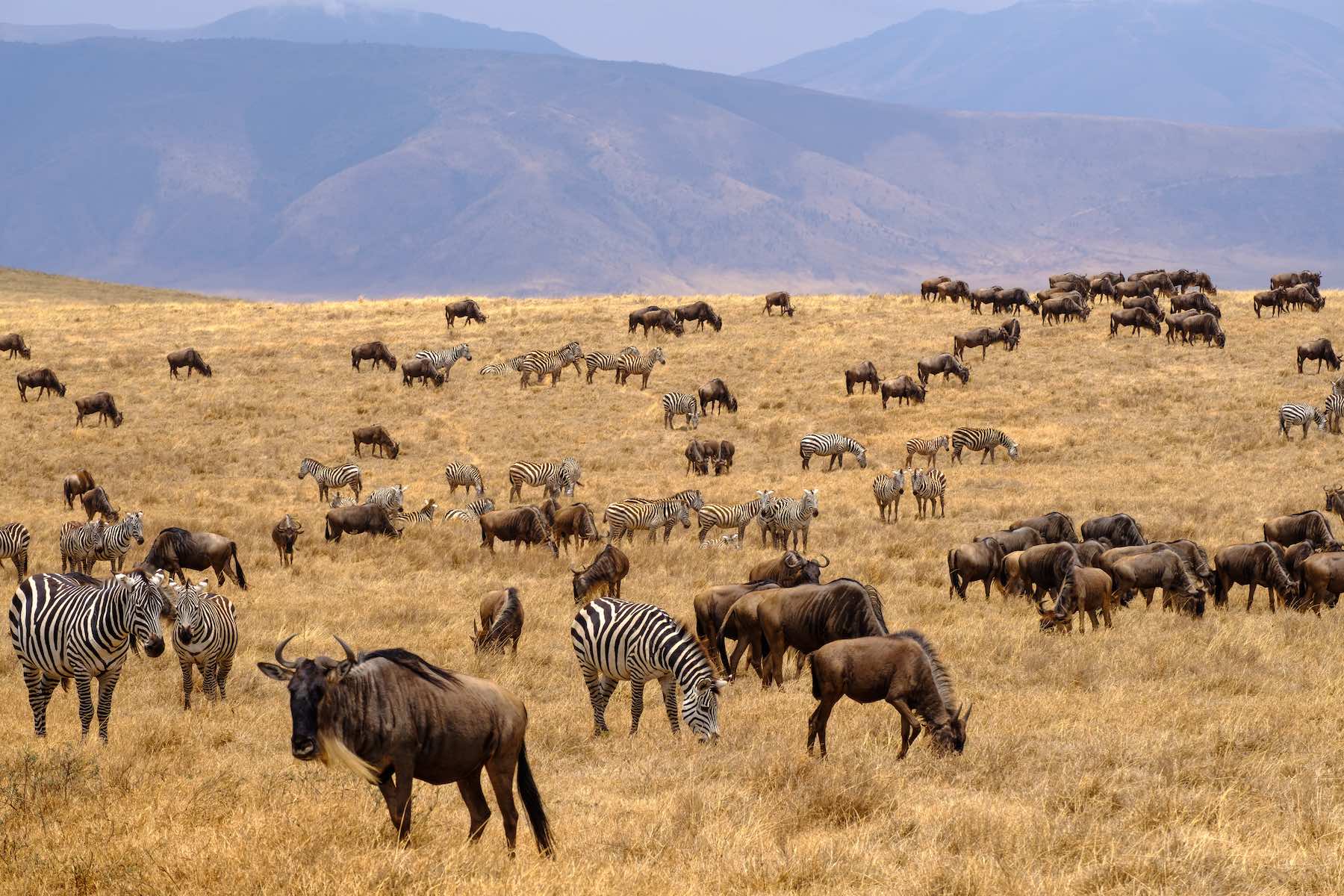
In September I fulfilled one of my biggest travel dreams – Safari in Tanzania. Due to work schedule we could only go for one week and it had to be September. In Tanzania at that time it’s dry season when it comes to weather and low season when it comes to tourism. But surprisingly, both points turned out to be beneficial for us. Below I will explain why!
Why you should go to Tanzania?
In general there are 3 reasons why People go to Tanzania – Safari, Zanzibar and Kilimanjaro. Especially first point is the most popular – Tanzania is well-known as a Safaris destination and has two of probably the best national parks when it comes to Safari – Serengeti and Ngorongoro crater.

Kilimanjaro on the other hand is more of a sport challenge – to get to the top of the highest mountain in Africa you should reserve around 7 days. It’s mainly due to the difference in altitude – land around Kilimanjaro is rather flat, so the main challenge is to avoid altitude sickness when going to the top.
Zanzibar is an island located in the southern part of Tanzania and is well known for its white sand beaches and emerald water. There used to be some religious extremism there, but as far as I heard during my visit in Tanzania nowadays it’s not a problem anymore.
How to organise the trip in general?
In general you will compose your trip with Safari, Kilimanjaro and Zanzibar. The best Safari parks are located in the north part of the country – you can reach them either from the Arusha or from Moshi. Close to both cities there is Kilimanjaro airport – quite small, but with some bigger airlines landing there (for example KLM). Arusha is better for Safari, Moshi is better for Kilimanjaro.
For Safari you will need around 5-7 days to make it really valuable. You can do shorter ones, but that will mean shorter time in Serengeti, which is located quite a long drive from Arusha. Regarding Kilimanjaro you can go to the top (then you need around 7 days) or do it like us – just one day trek around the bottom of the mountain. When it comes to Zanzibar it’s your choice how many days you want to spend on the beach relaxing.
Proper organisation of the trip depends on your airlines schedule. A lot of people fly to to Der-el-Salam and then takes a local flight / ferry to Zanzibar and for the second week they take a bus from Der-el-Salam to the north part of the country (mainly Arusha) to do Safari there. However, be aware that such bus ride is very long and with my knowledge about Tanzania roads – not very comfortable. So you may check for local flights on this route. For people from Europe who have access to Amsterdam airport there is a very easy way – fly to Kilimanjaro airport, spend time on Safari and / or Kilimanjaro, afterwards fly to Der-er-Salam for Zanzibar and then come back with KLM directly to Amsterdam.
How to organise Safari?
When to go
Tanzania is located on the southern hemisphere, so the seasons are reversed – for them the warmest month is December and the coldest one is June. Dry season is between June and October and in my opinion is the best moment to go there – as there is not a lot of water all the animals must gather around remaining water sources. Together with the fact that there is no tall grass it makes it easier to spot great variety of animals that normally are less visible/ Additional benefit is that during dry season there is not a lot of insects, so you will enjoy time in the car much more and it will be easier to protect yourself from malaria and denga. Also temperatures are much more bearable during dry season – for us it was rarely more than 30 degrees, staying rather in lower twenties. On the other hand landscapes are probably much nicer during the wet season and you don’t have so much dust during that period.

Within dry season I think September is the best moment to go – it’s a low season as European tourists visit Tanzania mainly in August and Chinese are coming only in December / February. That will make your price for Safari cheaper and most probably your car will be more empty – for us it was only 2 of us in the car that can accommodate up to 8 people. It increases comfort quite a lot!
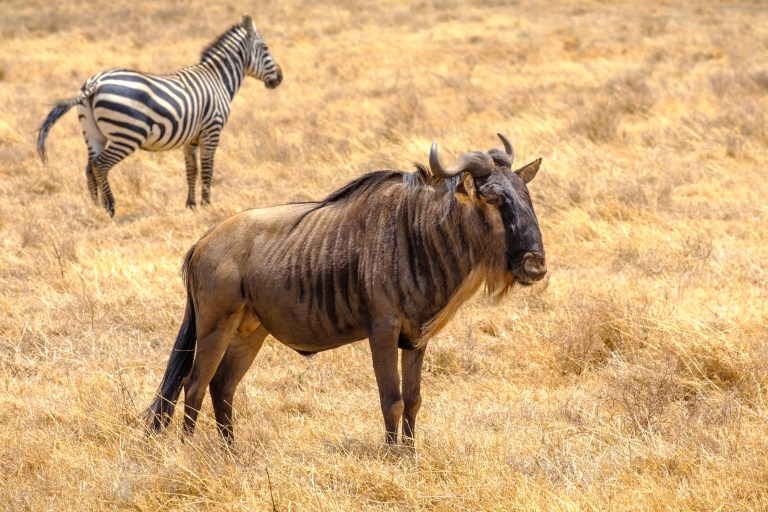
Tanzania is also well known for its Wildebeest migrations. It’s famous, because you can see herds of thousands of animals migrating in endless flow. It creates a lot of opportunities for predators trying to hunt some of the wildebeest, which gives much more chances to see hunting. However, the most spectacular and known moment of migration is river crossing during which crocodiles try to get their share of food. Unfortunately, it’s really hard for me to say when exactly you should go to see migrations – wildebeests are migrating constantly and ability to see them depends only on how much north you will have to travel. So the best thing is to contact Safari tour operator and asked them for this topic.
Amount of days and which parks to see
The amount of days you need to spent on the Safari is flexible – you can go as low as one day up to even several weeks. I would highly recommend going for something like 5-6 days unless you try to track the Wildebeest migrations – then you should aim for more. In general 5-6 days is an optimal choice between ability to see the best parks (which are located further away), being able to see most animals and not being tired of days spend in a dusty car.
There are several national parks in all parties of Tanzania, but I think the most reasonable is to concentrate on the parks in the Northern part of the country as they are the most famous. My ranking of the best parks is the following:
- Serengeti – it’s legendary place for Safari. Many National Geographic movies were shoot there. It’s size of 1/3 of whole Netherlands and it’s one of the parks where you can meet almost all the animals (only Rhino is a challenge as they only have around 30 of them left). It’s located almost a day drive from Arusha and it’s pure wilderness – excluding the buildings of park administration in the center and few builded lodges there is no other concrete human settlement. It’s my personal favourite park as it has everything – variety of different animals, different habitats and changing landscapes. This park really lives up to its legend!
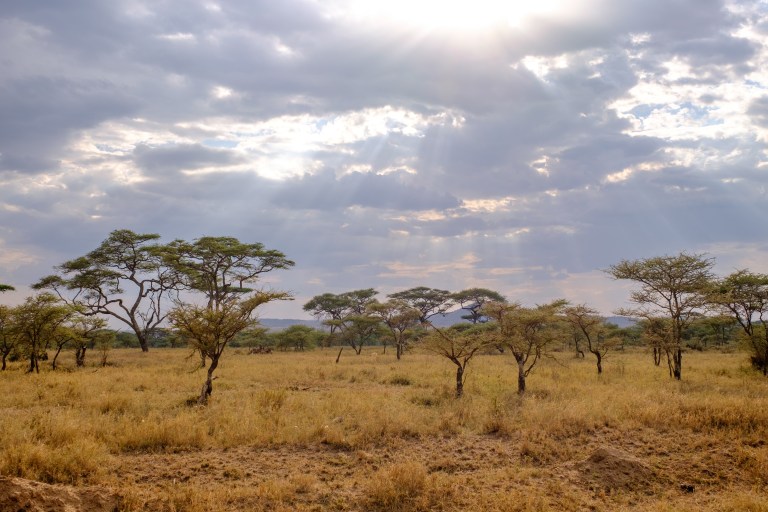
- Ngorongoro crater – it’s one of the most unique places in the world. Old volcano which collapsed creating a crater in which life flourished due to a very specific microclimate. Not only there are a lot of animals there, but also landscape is absolutely amazing. In my private ranking it’s very close to Serengeti. And it’s the best place in Tanzania to see a rhino – they have the biggest population per area of national park. However, you will rather not find here leopards or cheetahs (even tough we saw one leopard there).

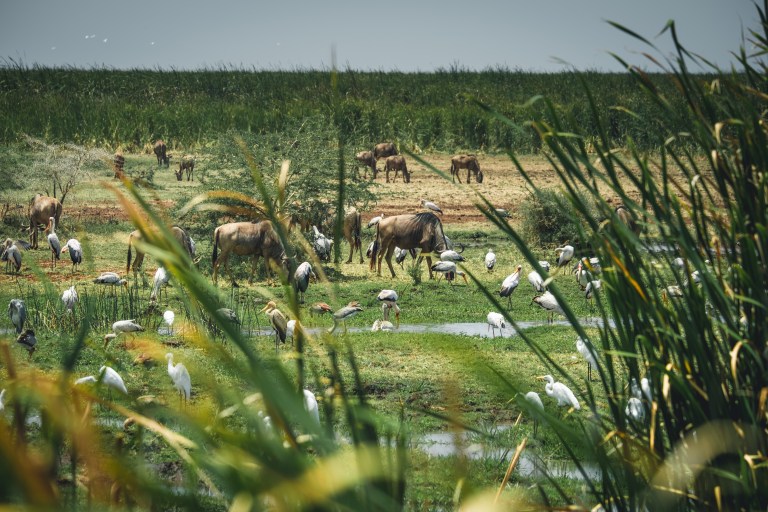
- Lake Manyara – it’s famous due to the possibility of noticing lion on the tree (unfortunately we didn’t see one!). It’s really nice park as it has access to water coming down there even during the dry season – so you will see completely different landscapes then in the
other parks. I guess that is how Tanzania looks during rainy season. On the other hand – landscape is really nice, but bush and swamps makes it hard to spot animals and approach them closely.
- Tarangire National Park – out of the 4 parks we visited, this one for me was clearly worse than the others. Lake Manyara Park is different than Serengeti thanks to constant water access, but Tarangire felt like just smaller and less cool version of the Serengeti. I can imagine that I had such feeling because it was the last park we visited and I didn’t have anymore the excitement over every animal I used to have at the beginning of the Safari. However, to be fair – it’s still really cool place and if it’s the only park you will visit – you will be still very happy. Even after 5 days, we still saw some new things there.
Tour operators and drivers
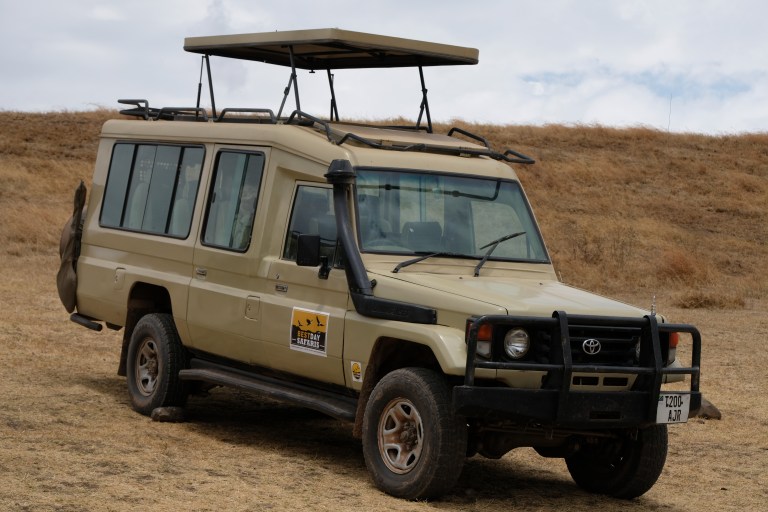
There are many tour operators in Arusha that you can choose from. We decided to go with Best Safari as my friends recommend them and we didn’t have time to search for any other options. I would rather not go with companies that are very cheap or are not recommended by someone / have a lot of good reviews. Your tour operator will organise your schedule, car, entrances, accommodation, meals and most of all – good driver. And driver is really crucial for your experience during Safari. Your safety will depend on his skills and I can tell you that you will relay on his ability to spot animals as he will spot things you would never notice by yourself. You will spend with this person 6 days (almost whole day), so you want him to be reliable. So the quality of your experience is really depending on the company you will choose. If you spend 1000$ for amazing experience, don’t try to cut 100$ to get cheaper but not verified company – it will probably backfire on you and your 900$ experience will be much worse. And if you will decide to go with Best Day Safaris ask if you can go with driver called Dullah. He was our driver and he was absolutely amazing – really skilful off-road driver, with eagle eye-sight and knowledge about all the parks that allowed him to show us really a lot of rare animals. Plus he was just cool to drive around and laugh! He made this really exceptional experience for us!
Accommodation during Safari
There are several levels of accommodation during Safari – if the night is outside national park then you can have choice between basic tents and lodges. While being inside the park the choice is rather between basic tents and “glamping” tents (of course there are also some lodges, but they are very expensive). As you can imagine lodges and glamping tents are more expensive than the basic tents (I guess around 200-300$ on the 5-6 days trip). Personally I would make a choice based on the amount of days you are going to spend on Safari. If it’s 2-3 nights you may go for cheaper version, but if longer – I would rather try to go for what BestDay called “Medium standard” (I think it was way above medium to be honest) as spending whole day in the car is not making it easy for your legs and back – better accommodation will help you survive in much better shape. If you have bigger group you can try negotiate mixing better and lower standard accommodations within one trip – my friends did it, but for us it was not possible.
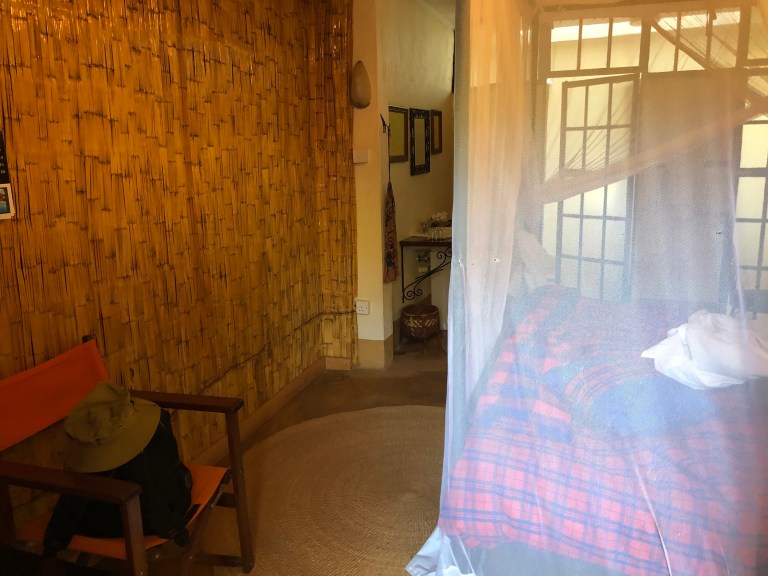
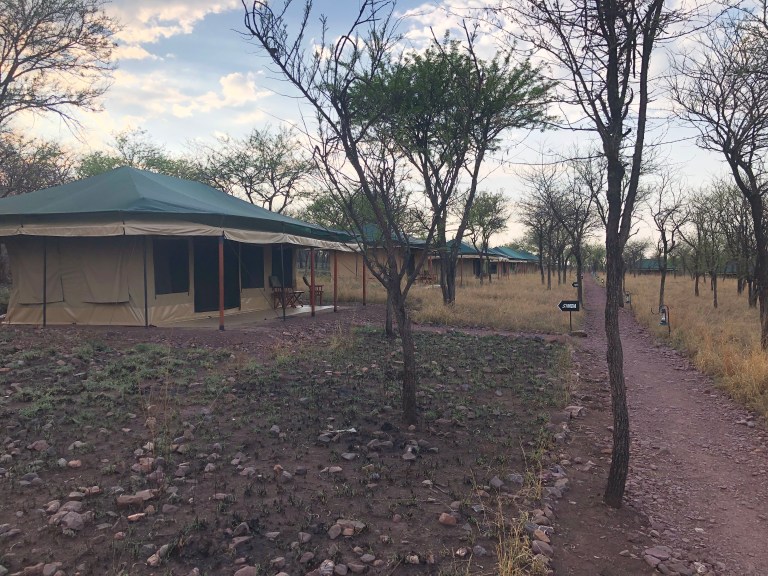
When it comes to accommodation in the “glamping” tents inside the park – it must be mentioned that they are really impressive. They have showers and toilets inside, light and normal furnitures. They look like different version of cottage house. You will even get WiFi and electricity in the middle of wilderness – using radio / satellite and solar energy. But one interesting thing is that the tents are not protected in any way against the predators. The only thing is that the road has lights next to it and when you want to go to the restaurant tent after the sunset one of the camp stuff will go to your tent to pick you up and bring you to the dinner. However, even the camp stuff does not hold any weapon or even a stick – the only thing they have is a torch. We had discussed this with several people and they told us that predators are scared of light as they connect it with human hunting them down. But we also heard that the main trick is that animals just accepted that this territory is owned by humans and the older is the camp the lesser is the chance of any attack. But during first nights of setting a camp, it’s necessary to protect it with fire as otherwise animals would attack. Apparently, despite the light on the road and fact that camp is treated as human territory attacks are still happening even if very rarely. We heard story of cheetah attacking one of the chefs or elephants destroying one of the camps as a vengeance for not allowing them to drink water from the tank. So even tough these camps are generally safe, there is an element of adventure when sleeping there! And one more thing – predators may be afraid to attack, but many other animals will be walking around – be ready for close meeting with some antelopes or monkeys!

Prices
Prices depends heavily on the amount of days, season, level of accommodation and which parks you are going to visit. As an benchmark we paid around 1400 EUR per person for 6 days in the middle level accommodation (lodges and glamping tents). On one hand it is a lot, but on the other it’s for 6 days of car (+ fuel) and driver taking care of you, 5 nights of really good accommodation, all the meals, entrance fees for the National Parks and complimentary 1 night in the hotel in Arusha before or after the Safari. So it’s quite a lot and most of all – the experience is worth it (especially in the case like ours when we were alone in the car and had super cool driver). We didn’t try to negotiate the price due to time pressure, but you may try to do so, especially if you are going with a bigger group.
It’s also important to remember that it is expected to tip driver around 15-25$ per day of driving plus you will probably tip some people at the accommodation spots. So the final price will be slightly higher than the quote you will get from your tour operator.
When paying for the Safari you have two options – paying upfront through bank transfer or after arrival. In general it’s better not to carry such amount of cash with you, but be aware that local Tanzanian banks may charge the fee on bank transfers. In our case 3 transfers were not charged and all of a sudden next one was charged with 50$ fee. And I highly encourage you to transfer smaller amount first to check that everything is going through without a problem.
What you can see during Safari
Cheetah / Leopard
It’s pretty rare to see any of these big cats. As I heard – you usually see one of them once every two – three Safaris. We were quite lucky because we saw 3 cheetahs and 4 leopards. Cheetahs you may find sleeping next to the bottom of the small trees, while leopards are usually sitting in the top part of the tree. We were quite lucky, because one morning leopard jumped out of the bush next to our car and run in front of us, so we saw it from around 1 meter distance. Seeing how these perfect killers move is really something! I think out of all animals seen during Safari, cheetah was the cutest one and leopard was the most impressive one – it’s super strong and amazingly agile. It sleeps in the trees, but is capable to drag his pray (like antelope) to the top of the tree as well!


Lions
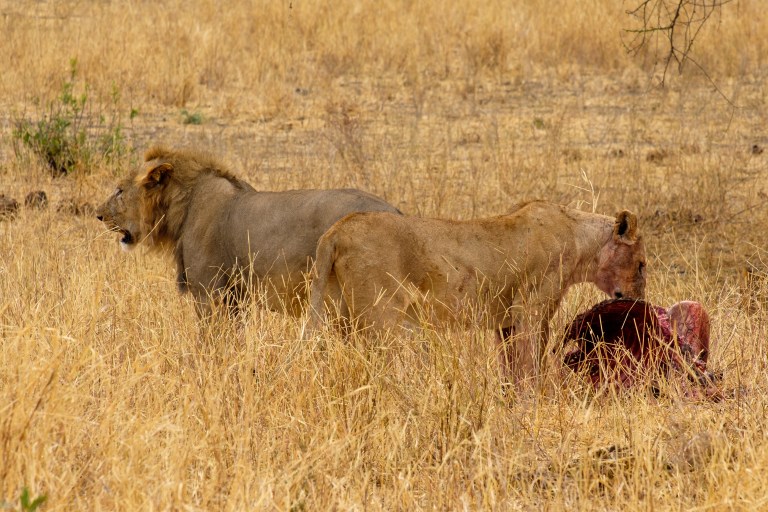
We saw quite a lot of groups of lions – something like nine times. But each time it was really impressive. You can easily see that male lion is one of the few animals in savannah that cannot be challenged by any other animal (expect of other lions) – he really walks like he doesn’t care about the surrounding. Lions live in the prides in which there is one male (or two brothers), a lot of females and young cubs, which have to leave pride when they will become adult. Females hunt and male lion protect the pride from other males.
Interestingly enough lions are hunting mostly during night and they use very elaborate tactics in order to take down animals. It’s something hard to believe after seeing all National Geographic movies, but day hunt is really exceptional. That’s why there is very limited chance you will see hunting during your trip.

Rhino
Unfortunately we didn’t see even one rhino. It’s because they are really on the verge of extinction due to illegal poaching for their horns which are especially popular in China. Nowadays Tanzanian government tries to adopt a lot of measures to protect rhinos – all of them are tracked and there is special police unit to fight with the poachers. It helps as the population of rhinos is finally not shrinking, but we will see if it will be possible to rebuild it in the future.
Hippos
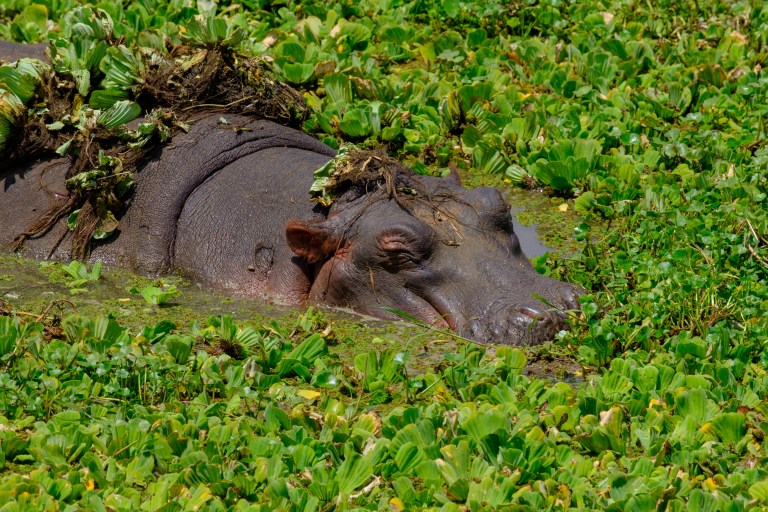
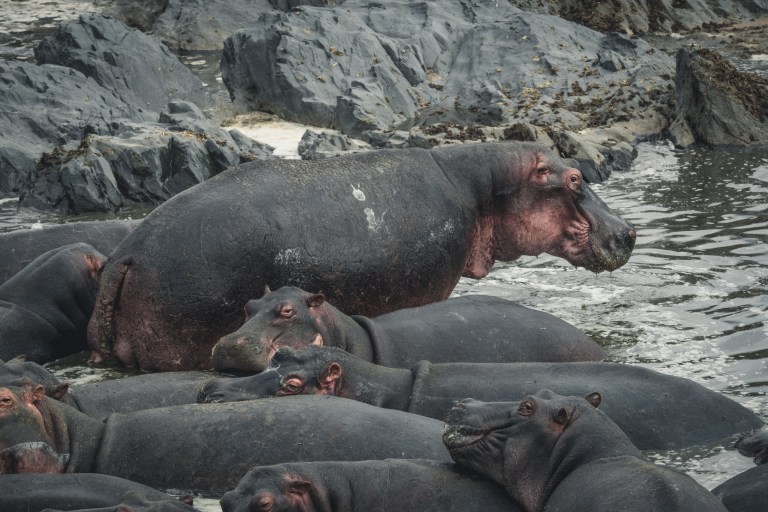
Hippos are the most dangerous specie in Africa – they are responsible for the highest number of human deaths across all of the wild animals. Surprisingly, they are not predators – they feed on plants. However, they are very territorial and very strong – this combination makes them so dangerous. They can spend long time in the water during the day and during the night they get out to land for feeding on the grass. They don’t swim, they just walk to the shallow part of the pool so that they can get above water and get the air before immersing again. Interestingly enough, it’s so automatic for them that they can do it even while asleep.
Zebras
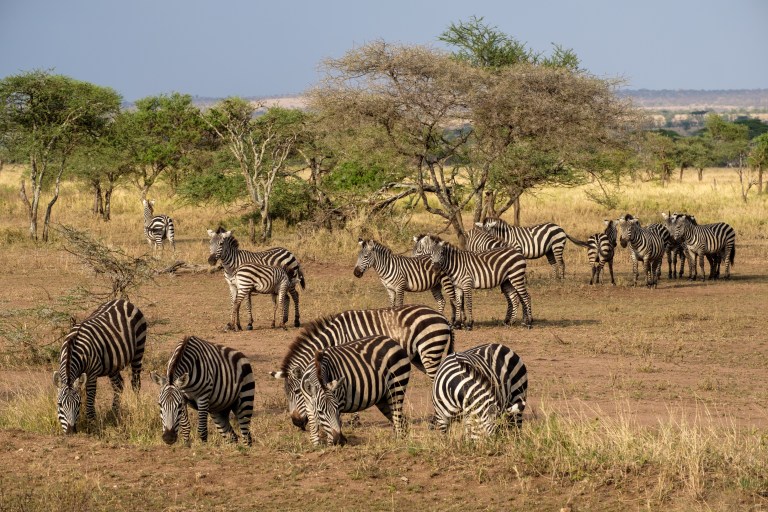
Really abstract animals. Somehow their stripes completely do not suit environment like savannah, but on the other hand they are really wide spread there. They have very good eye-sight so they can easier spot predator. They make really funny sound – something like barking of a dog. They are very resilient – they can eat almost everything, so they have less problems in surviving hard conditions than other animals (and almost always have rounded bellies!).

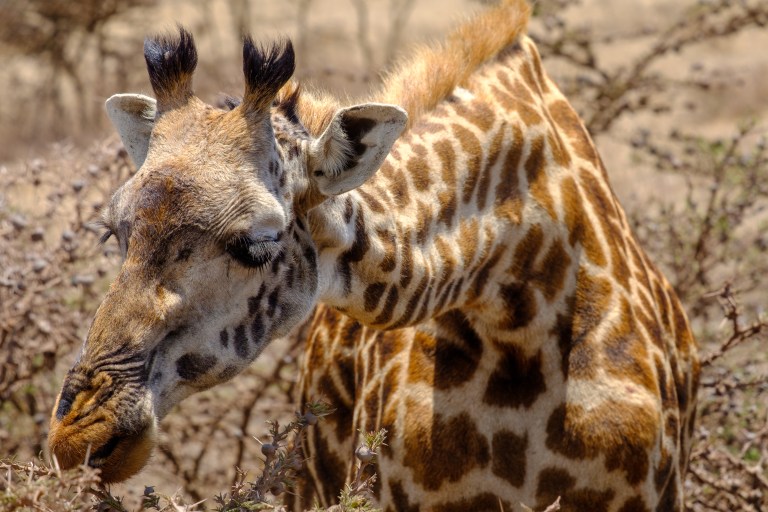
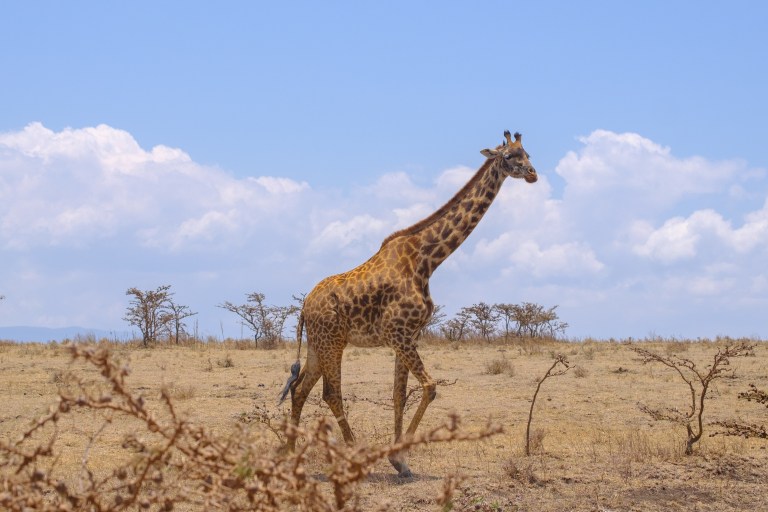
Giraffes
You will see quite a lot of them during your trip – they are wide spread and live in each national park. Similar to zebras they look like very abstract animal and somehow it’s hard to believe they are real. It’s really beautiful view to see several giraffes in distance in the afternoon sun!
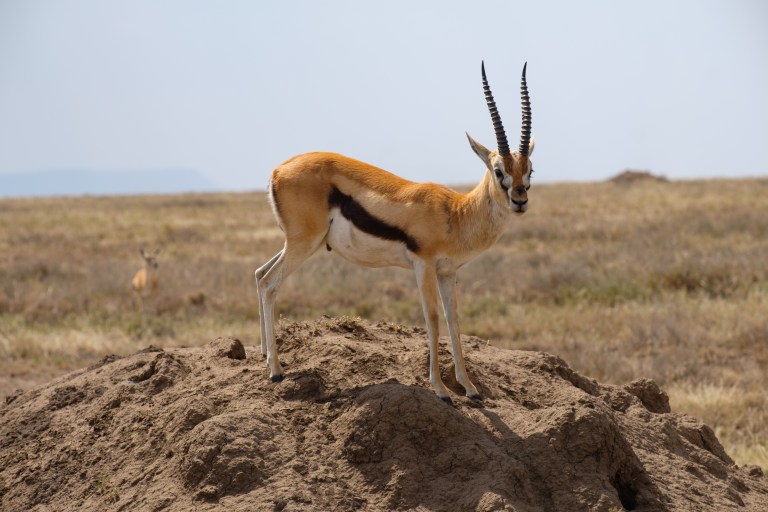
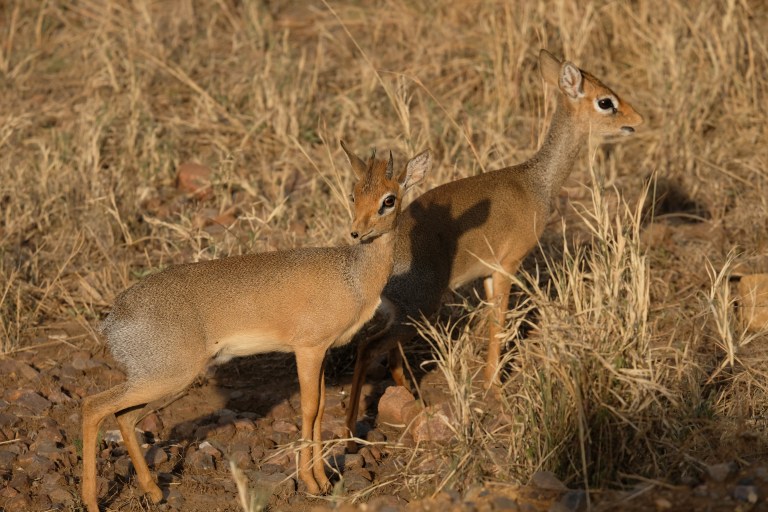
Antilopes
There are so many different types of antelopes in Tanzania that I lost count at some point which type is which. You will see as many of them as you wish. You will probably even stop noticing them at the end of your trip – even tough most of them are really cute!
Elephants
Several years ago Elephants population was in big decline. Thanks to measures undertaken by the Tanzanian government, nowadays it’s much better – we saw a lot of elephants in all the parks. They are really impressive animals and you can see their high intelligence – for example when all the animals were walking to find the water, elephants just dug a hole in the river to get to the underground source of water. We also have seen one of the young elephants being really curious what the safari car is – he even tried to put his trunk inside!


Buffalo
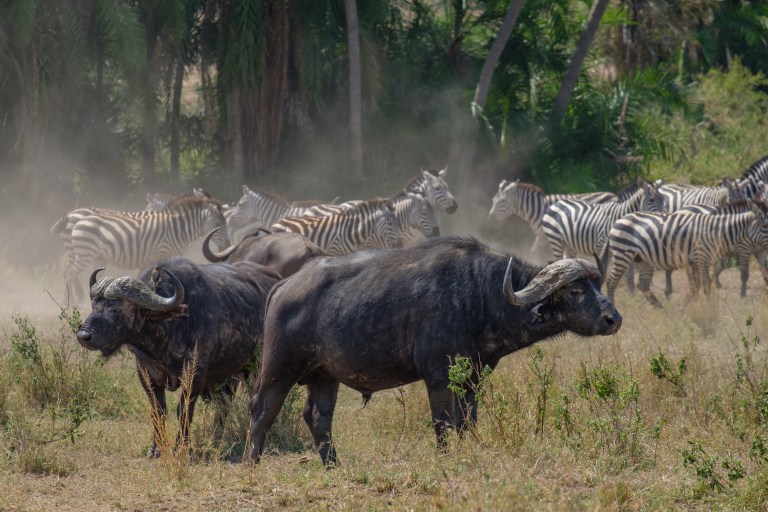
Very big, very strong. Part of big 5, one of the few animals that are dangerous even for lions.
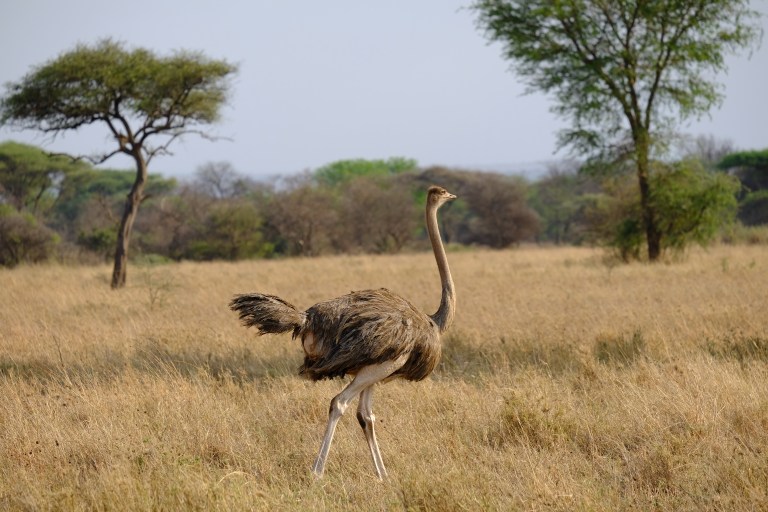
Ostrich and other birds
We were lucky enough to see ostriches mating, which is rather rare dance spectacle. Ostrich is really well spreader in Tanzania and you will see several of them. But don’t forget about many other birds that are not so popular, yet very interesting – for example Secretary bird or the bird that looked like a living dinosaur!

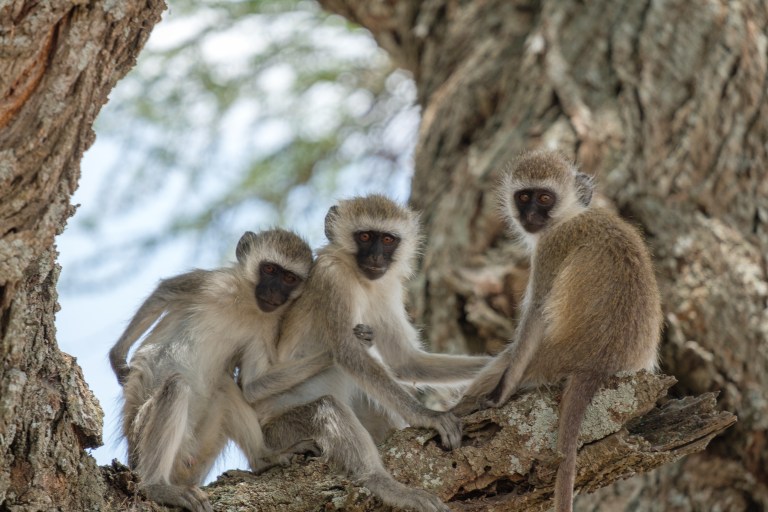
Monkeys
You will see different types of monkeys during your trip, but majority of them will be baboons. Sometimes you can even see them trying to get to the camps and tents or lying in front of camp centres. There is one basic rule – don’t get close to them! They may be cute, but if they bite – you have a big problem as you must get from wilderness to hospital as soon as possible. And I saw one guy trying to make a selfie with the baboon and got bite. Also be careful in picnic spots – blue monkeys really like to steal food from tourists the moment the guide is not with them! We had such situation there!

Pumbas
I’m not even sure what is the real name of this animal. We also just called him “Pumba” based on the Lion King movie. I think officially it’s a warthog. We saw Pumbas few times close to lions and we were completely sure that it will end up in tasty meal for the pride. But fortunately for Pumbas, they didn’t get close enough!

Crocodiles
It’s not that easy to see crocodile during Safari as it’s hard to get with the car close enough to water spots. However, thanks to our driver we had one occasion to see them! I can imagine that in northern part of Serengeti you can see way more of them!
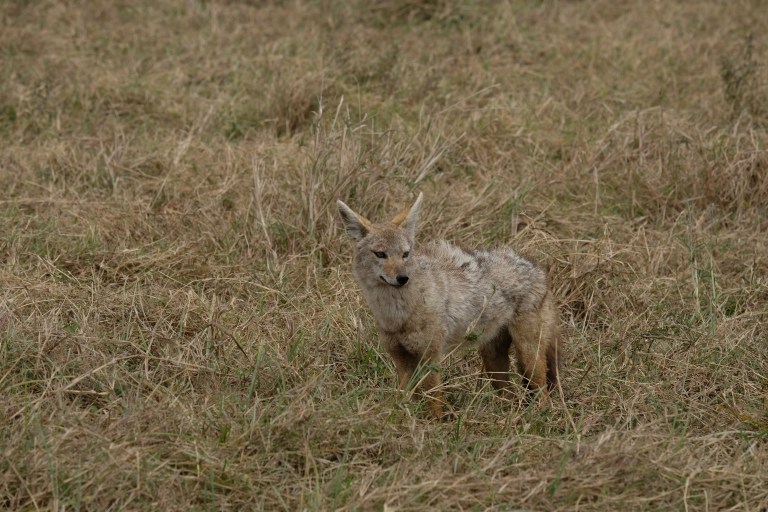
Hyenas and Jackos
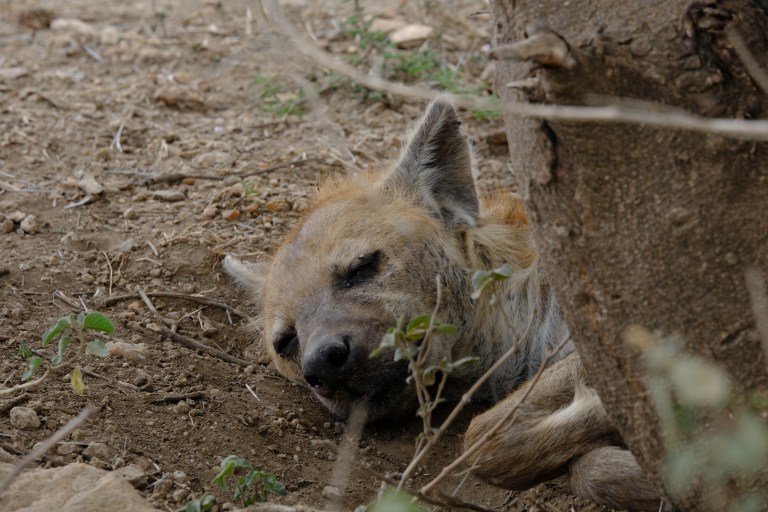
Two scavengers that are really ugly and hard to like. Hyenas are really not something that you will like to look at. On the other hand, they are the only animals on Savannah that while in a group can threaten male lion!
Hyrax
That was one of our discovery in Tanzania. It looks like bigger version of guinea pig, but it has nothing to do with rodents. Apparently it’s one of the closest living relatives of elephants!

Other
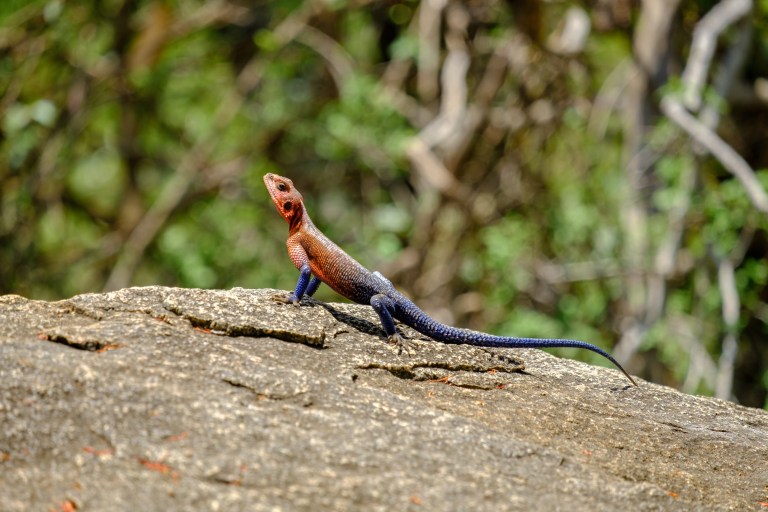
There are several other animals you can see in Tanzania – one of our favourite was mongoose! But you also have a chance to meet super rare species – for example Python! Or just meet fancy lizards!

How to organize Kilimanjaro
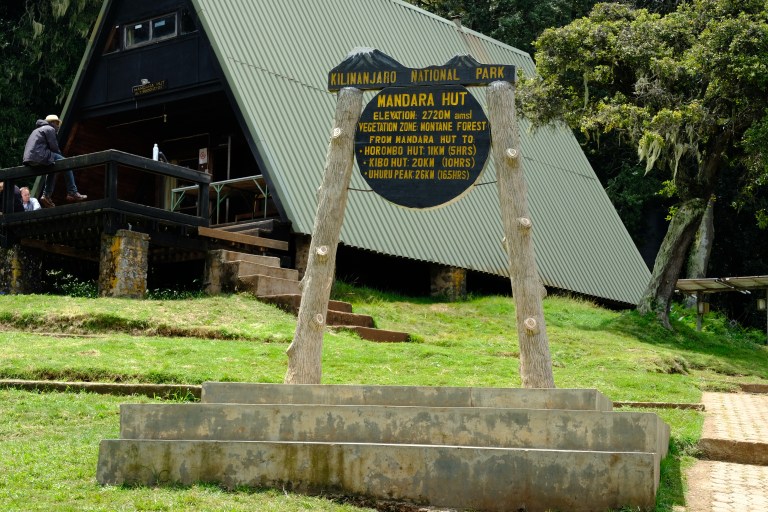
As I already mentioned Kilimanjaro trip takes several days (around 7) and means quite heavy altitude change, which can easily cause sickness. However there are also shorter option, but then you have to accept you will not go to the top. For example we booked one day trip and within such time range you are able only to go to the level of accommodation and then come back to the bottom. You will see only one level out of 4 different landscapes areas, but it’s still quite nice! It takes around 3,5 hours to get to Kilimanjaro from Arusha, so you will arrive back in the night!
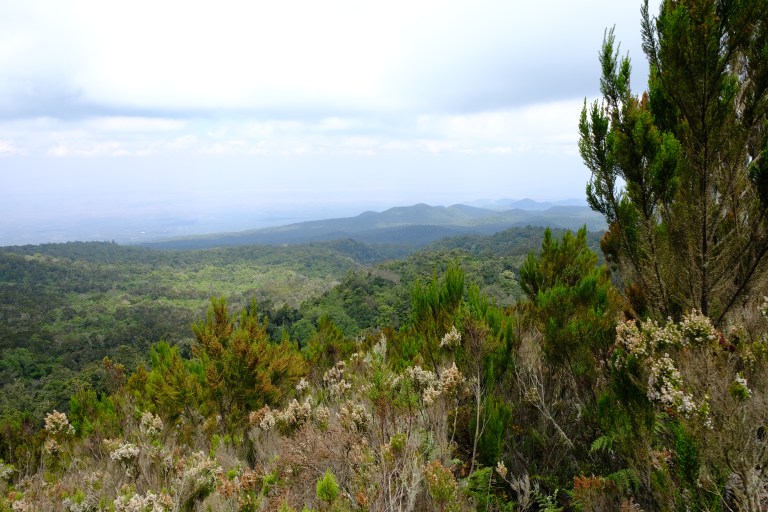
Surprisingly, at the bottom of Kilimanjaro everything is lush green! A lot of sun and water coming from Kilimanjaro glacier create microclimate where plants can grow very fast! It’s completely different impression than what you expect from distance pictures of Kilimanjaro seen on the Internet!

We booked our day trip with BestDay Safari, but they just hired independent guide to take us to the mountain. So if you would like to book full trip, I would rather advise you to check Lonely Planet recommendations or ask someone else for specialised company!
Our itinerary
As I mentioned above there are many dimensions that you have to take into account while planning your trip – mainly how you want to split time between Safari, Kilimanjaro and Zanzibar. So probably every trip will look completely different. However, for reference below there is itinerary we did in Tanzania:
- Day 0 – arrival to Arusha (flying to Kilimanjaro airport directly from Amsterdam)
- Day 1 [Safari] – starting Safari, Lake Manyara (a lot of bushes and monkeys)
- Day 2 [Safari] – driving to Serengeti, half a day of Safari there (sleeping in glamping tents)
- Day 3 [Safari] – whole day of Safari in Serengeti (sleeping in glamping tents)
- Day 4 [Safari] – half a day Safari at Serengeti and driving back closer to Arusha
- Day 5 [Safari] – full day of Safari at Ngorongoro crater
- Day 6 [Safari] – half a day Safari at Tarangire National Park, coming back to Arusha
- Day 7 [Kilimanjaro]- one day trek at the bottom of Kilimanjaro and coming back to Arusha
- Day 8 – half a day in the city center of Arusha (don’t do it – it’s not that secure without guide!) and coming back to Amsterdam
Practicalities
Visa
You have to check requirements for the Visa for your country, but most of the countries have to obtain Visa. You may apply for it upfront or get it on the arrival. We tried the second option and it turned out to be the wrong choice – airport is not ready for such a big plane and process of obtaining VISA took us almost 2 hours of standing in different lines. It’s way faster to get visa upfront.
Vaccinations
You need to get quite some vaccinations before coming to Tanzania (especially yellow fever!). Some of them need to be taken quite some time upfront, so try to get them as soon as you will know you are going to Tanzania. It’s also very important to get malaria medications – in Tanzania there is a specific type of malaria that is even harder to treat, so most probably your doctor will advise you to take malaria pills during the whole trip. Fortunately, during dry season there is not so many mosquitos and the mosquitos which spread malaria are rather rare, but still it’s better to be safe than sorry and take these medications. Don’t forget about the DETT – it’s the strongest insect repellent and will help you not only with mosquitos, but also with other types of insects. In the hotels you will be also provided with mosquito net for sleeping. If you go outside dry season you may also decide to buy special type of clothes which are light, but have special material that protects you from insects bites.
Plastic bags ban
It was a little bit surprising, but cool at the same time to get information that Tanzania completely banned plastic bags in the whole country. You can try to replace them with cotton or silicon bags, but remember about this ban as otherwise you may get fine. Even the airport plastic bag for liquids cannot be taken inside Tanzania (you have to leave them in the aircraft).
Hygiene
Tanzania is generally clean country, but still for Europeans it’s important to take some precautions as we are not used to bacterias in that country. Main rule – don’t use tap water for drinking. Always buy bottled water and use it also for brushing your teeth. Take also some stomach medication with you in case you will react badly for some food (and you don’t want this during Safari without access to toilet and wild animals around you). Also don’t forget to take with you the hand cleaning gel and wet wipes – they will help to clean your hands for eating lunch during Safari.
Currency
In most touristic places you will be able to use American Dollars. As far as I know it’s a little bit hassle to get them from ATM, so it’s better to bring them with you. Local currency is not needed in most of the places, but sometimes you may need it – to give tips, pay cheaper price or go somewhere where dollars are not accepted. So it will be good to exchange at the beginning of the trip something like 70$ (depending how long you stay). You can always take more as you can use this money for tips.
Electricity
Plug is the same as the British one, so remember to take a converter with you if you are not from UK.
Language
Official language in Tanzania is Swahili, but many people speak English and in general you should have no problem in any touristic place (and also in less touristic places it should be okey).
Safety
In general Tanzania is a safe country as long as you are in touristic places or with someone local. During Safari we felt very safe, the same for Kilimanjaro trip and during our stay in the hotel. However, on the last day we decided to go for few hours to the Arusha city and during that trip I felt a little bit insecure. There were a lot of people “hunting” for tourists and walking next to them to sell something / guide them to the dark alley or take their smartphone to “help” them to take a picture with a landmark. It was really disturbing as there was no way to get rid of them – they tried to walk next to us for a long time. So if you would like to go the city center – think it twice or try to hire some local guide through hotel. Also try to always arrange transportation from airport / hotel with your safari agency or the hotel itself. Taxis are much more risky.
Tipping
It is expected from Western people to tip. In some hotels it was solved by “tipping boxes” where you could put money for the whole stuff at the end of your stay. In general I think it’s very important to tip your guides (it’s even mentioned by the Safari operator in their onboarding email that you should do it) – it’s between 15-25$ per day. All the rest is optional – we left tips in some places, but skipped in many others. However, it was easy to feel that tip was expected for almost everything anyone did for us.
Hotel
When it comes to Safari accommodation I described the options above in the chapter about organising Safari. In regard to stay in Arusha before and after Safari, we decided to stay in Crest Safaris Lodge. It was hotel that was also booked for us for complimentary night before Safari by our tour operator, so we decided to trust their choice and we booked it also for the time after coming back from Safari. On the side not – you don’t need hotel during Safari – you can leave bags in the tour operator office.
Other interesting spots in Tanzania
There are many other interesting spots in Tanzania, not only 3 I mentioned above (Serengeti, Kilimanjaro and Zanzibar). I can imagine for example that visiting Der-er-Salam may be very interesting. Also on the eastern part of Tanzania there are many nice travel destinations. One of the biggest highlights is of course Gombe Stream National Park where Jane Goodall was studying Chimpanzees. Also surroundings of Lake Victoria or Lake Malawi must be very interesting. But be aware that it’s much harder to get to these spots – it requires long travels (Tanzania is pretty big country) and very tailored tour operators. Therefore, I would highly recommend to go to the most popular spots during your first visit and come back next time for the rest. I’m pretty sure to be back in Tanzania one day to see all these spots (especially Gombe Stream Park)!
 Ultimate Traveler