On this page you can find details on how to travel around Japan – when to go, what are the prices, etc. Technical details, but super important when you are traveling!
When to go and for how long?
Usually people go during cherry blossoming (usually March / April), but in that period prices are the highest and you will encounter a lot of tourists. The trick is also that blossoming starts at different moments in different parts of the country so it may be that after booking the tickets you will have to travel within the country to see this spectacle. People who seen it were really amazed, so if it’s something important for you – go ahead! We went in the period of May / June due to lower prices and ability to climb Fuji. Be aware that the second part of June is usually the start of rain season and then you won’t enjoy stay in Japan too much. Rain season can also start a little bit earlier, so take this into account when planning your holiday. Remember to avoid golden week (at the end of April and beginning of May), when thanks to series of public holidays almost the whole population of Japan is travelling around making it almost impossible to book tickets and hotels for tourists. And the last remark – during second half of the year you will have much higher chance of typhoons that may interfere with your holiday, so try to aim towards the first half.
Regarding the length – typical period is 2 weeks. 1 week is not enough (then you have to stick only to Tokyo and Kyoto) and 2 weeks is enough to see main highlight. Having 3 weeks open possibility to visit also other islands than the main one.
How to move around?
The main way of transportation between cities are trains. As a foreigner you are entitled to buy so called JR-pass. You pay flat fee for it and then you can travel as much as you want by trains during the validity of the ticket. Important things to know about JR pass:
- It’s valid on almost all trains operated by Japan Railway (JR) with the exception of the fastest bullet trains (Shinkansens) – but remember that still most of the bullet trains are allowed. The fastest trains operate between the biggest metropolis, so always be aware of this when moving between these megacities. Also small local trains or city transportation systems may require you to purchase separate ticket.
- You have to buy it before going to Japan, but no earlier than 3 months before. Once you will order it online you will get the voucher that you will be able to exchange to ticket once you will enter Japan. This voucher is valid above-mentioned period of 3 months and cannot be purchased inside Japan. I can recommend this online shop where I bought my voucher: LINK
- Once you arrive in Japan you can exchange your voucher at the spot at the airport or in one of the centres in Tokyo. Once you will do it, you can start using the ticket for travelling. In order to get to the train normally you have to go through automatic gates, but with JR pass you should go to the side where there is a open gate next to the station personnel. You will need to show them JR pass and they will let you go through.
- For certain trains you will have to have booking of the seats. It’s especially case for Shinkansens (bullet trains), but also for some other lines. In order to do so you have to go to the ticket counter at the station. You can’t do it online or before coming to Japan. It’s not a big problem as we had no issue with getting spots in any of the trains, but if you will feel unsure, you can always book seat the day before.
Regarding transportation within the cities – metro and trains are the most popular ones. In order to use metro or bus you will have to buy prepaid card (for example Pasmo or Suica cards) and top it up. Good information is that card bought in one place is useable in any other city, but bad information is that in many buses you will have to have cash with you and exact amount as they don’t have change. Funny thing is that for buses you often pay only at the end of the trip when you leave the bus, not before.
Don’t buy the transportation card (Pasmo or Suica) upfront, it’s easy to get it at the spot.
What to take for photography?
Just normal lenses for street photography and landscapes. Probably rather one with stabilisation as many pictures you will be taking after dark.
Where to sleep?
There are many different hotels around Japan and you will be able to easily find the ones that will suit you the most. However, there are 2 types of accommodation that are very unique for Japan so I decide to make honourable mention of them:
- Capsule hotels. It sounds crazy at the beginning, but in reality it’s quite a nice idea. I was sure there is not a lot of space in the capsule, but surprisingly it was quite comfortable – I could easily sit in them, there was air conditioning and even TV. Bearing in mind the cheap cost, in my opinion it’s really nice alternative for European dormitories in hostel – you will not meet new people, but you will have much more privacy and comfort. The only problem is if you travel as a couple as capsule hotels have gender split dormitories.
- Temples in Koyasan. It’s really amazing possibility to sleep in the temple with monks, eat their cousin and join their morning prayers. If you will decide to go to Koyasan, you should definitely book a spot in one of the many temples. On booking.com you can easily find at least the one we slept in – Ekoin.
What are the prices?
Japan is considered as a very expensive country. However, I must admit that in comparison to Netherlands I didn’t find it so expensive as people claim. Some examples of the prices:
- Capsule hotel – around 25 EUR / person / night
- Bigger lunch or Dinner – around 15 – 20 EUR / person
- Coffee in a cafe – 3,5 EUR
- Bus ticket / metro ride – 3 – 4 EUR / ride
- JR pass – 350 EUR / 14 days
- Taxi – 10 EUR for 10 minutes ride
- Museum entrance – usually something around 10 EUR, but heavily depend on the museum type
What to eat?
I already described the food in the main part of the blog, but let me repeat it here:
- Sushi. I am not going to write too much about it – it’s obvious one. However, be aware that sushi in Japan is something different than sushi in Europe! Especially fishes can be very different… But still very tasty (with some exceptions).

- Sweets. I didn’t know about this before, but Japanese sweets are of the highest regard in other Asian countries. Every spot with sweets look like art gallery! And often in the touristic spots you will find no souvenirs, but crazy amount of local sweets to bring home. I brought full bag of sweets back Europe! The most amazing ones are Tokyo bananas (biscuit with banana cream), Pokies (sticks with chocolate of various tastes at the top), Kitkats with exotic flavours (matcha and banana is the best!) and 白い恋人 (blue mountain box) – my absolute favourite white choclate with biscuit! You can easily buy all of these at the airport on the way back!

- Japanese curry. Very tasty, very filling (especially with rice). Worth trying at least one during the trip!
- Kobe beef. Very expensive (around 150 EUR for steak with limited amount of steaks in the restaurant per day) beef made out of cows that are taken care in a special way. They are being massaged, they listen to classical music, etc. But to be honest – it was super tasty dish, but not worth the difference of price from normal Wagyu beef, which is also very good and much cheaper. Remember to check in the restaurant if they have proper stickers with certifications that the meat you ate was real Kobe beef!
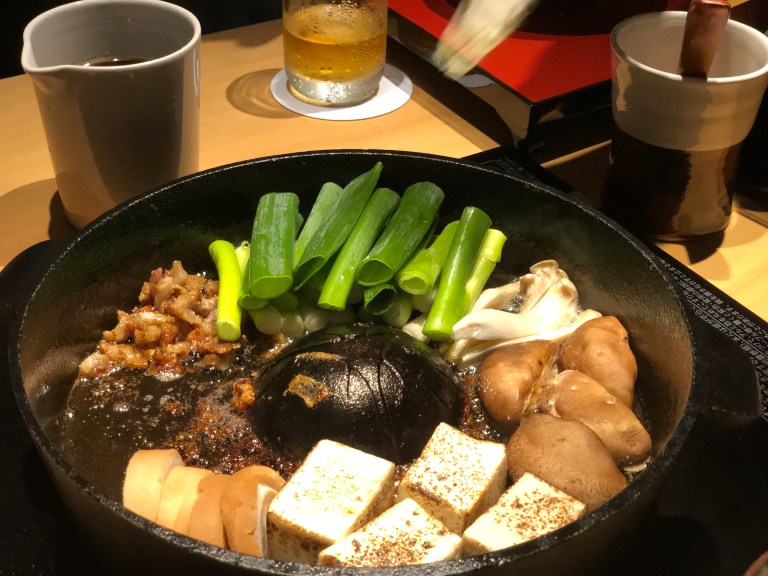
- Tsukijaki (hot-pot). You put pot in the middle of the table with boiling water and special set of spices in liquid form. You can order different types of food separately and then you put it on your own inside the pot to boil. Really nice to dine with your friends and if you go for Tsukijaki type – really tasty!
- Food from 7-eleven. It’s one of the biggest convenience shops chain in Japan. In any other countries you would expect that in such place food will be awful. But food from 7-eleven is absolutely amazing. It’s at the level that you can claim that some restaurants in Europe serve worse food. Especially tuna mayo onigiri is life-changing experience!
- Ramen. You can eat quite a good ramen in Europe. But in Japan almost every Ramen is amazing. Especially if you are in Tokyo, then you may find a lot of the small restaurants that serve only ramen and have only person in stuff. To optimise time you have to order food in the ticket machine. Not easy if you don’t speak Japanese, but worth effort!
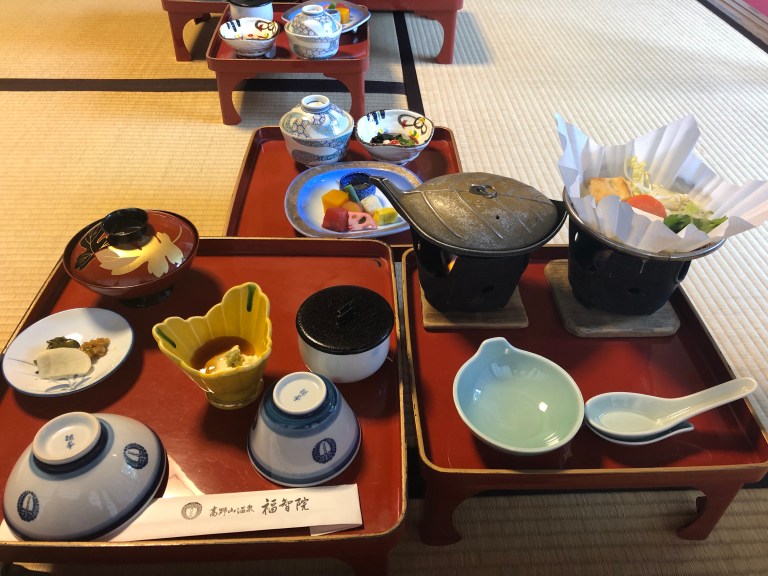
- Ryokan cuisine. Ryokans are traditional Japanese places where you stay for a night in a typical room with tatami. But also you can order a dinner. And it’s absolutely fabulous one! I can’t even name food that was in our dinner. I just know it was very tasty and full of different tastes!
How to pay?
Funny thing is that in Japan cards are not widely accepted. So you will find yourself using cash quite a lot. It is good to always have enough cash with you – Japan is one of the safest countries in the world, so there is no problem that someone will steal it from you and you will mitigate the risk of not having cash in a place where there are no ATMs. Unfortunately, most of the local ATMs charges you for the withdrawal. But that depends on bank that you have, your card issuer, etc. For me (using Revolut MasterCard) it turned out that 7-eleven bank ATMs are free of charge from 7-eleven bank, so I tried to use it throughout the whole journey.
How to make reservations?
You don’t need to book a lot of things upfront. Mainly hotels (you can easily use booking.com or special page for booking local Japanese guesthouses: LINK), night walk at Koyasan cemetery (Okuin), any airBnb experiences and museums at Naoshima. Of course you need you JR pass to be bought and received upfront and I highly encourage you to do the same with the SIM card – you can purchase it from the same place as JR pass and it will be cheaper and easier to use thanks to English instructions than any card that you will buy in Japan. All the rest things in my opinion can easily be booked at the spot.
 Ultimate Traveler