
On this page you can find details on how to travel around Iceland – when to go, what are the prices, etc. Technical details, but super important when you travel around!
When to go and for how long?
For us 9 days were ok, but usually people use 14 days for this route. We managed to see almost all the things we wanted and I think that we covered not only main spots, but also the less visited ones and some activities like hiking or snorkelling. You can easily make the trip longer and add different spots on the way, but I would rather discourage you from making it shorter.
We went there in September and this is optimal moment – it’s still not so cold, but already after the main season, so prices are a little bit lower and places are not so overcrowded as they can be during summer. It’s also the first month that you have chance for seeing northern lights, however puffins are already gone to the ocean, so most probably you will not see them at the island. Winter and Summer are ok, but try to avoid spring and fall, because of the extreme winds – local people told us that sometimes there are even warnings to not go outside because of that reason.
How to travel?
By car. There is no other option – public transport is very limited and often does not go to the most interesting parts of the island. When taking the car you have to remember about few important things:
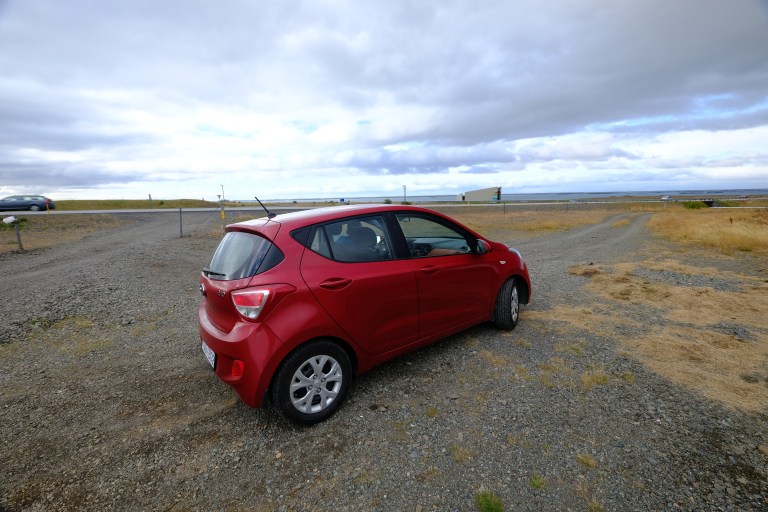
- Take full insurance. There are a lot of roads that may damage the car and also wind can easily destroy the door (it happened to us!). I also highly recommend the front window protection plan as it is quite common to get it broken on the roads with many small stones. I do not recommend taking the sandstorm protection and assistance (it covers only the help in case of loosing keys or finished fuel, which you can prevent by being reasonable during trip). We used Budget company and I can’t say a bad word about their service. Please note that insurance systems differ per company.

-
Be careful with sheeps. It may sound funny, but these sneaky bastards often just wait to jump in front of your car. If you see them around, just slow down. And if they do not want to go out, just use your horn. Apparently sheeps and horns do not like each other and it makes them run away. Sheeps, not horns.

-
Fuel. Station are all over the country, but sometimes it may be 80-100 km to the closest station, so you have to be reasonable and keep enough fuel on the way. Payment is always automatic and you need proper credit card to finalise the purchase. Station will make reservation on your card that is going to be returned after few days, so for some time you may see both reservation and real payment for the fuel – don’t get scared by this, your money will be returned. Be aware of prices – they may vary a lot between stations, so it’s good to check Reykjavik prices and on the way try to tank more on the cheap stations and used the expensive ones only for small additions.
- Roads and 4×4 car. We rented normal small car (Hyundai i10) and we were completely fine in most of the places. In Iceland there are few types of roads, but if you want to travel around then you will most probably travel on primary and secondary roads all the time. Difference between them is often based on how wide they are, but usually secondary roads are of less quality – without asphalt or with a lot of holes. With our car we managed primary roads without any problem, but in one or two places secondary roads were some challenge for us. Fortunately there was no rain, otherwise we could have some problems on them. Generally, you are complete fine with this kind of car, unless: you travel in winter (some of the roads are also closed at that time), you want to go inland, you travel with more than 3 people (not enough space for luggage) or you want to go more into highland or local roads. Here you can find the map of roads in Iceland (it’s worth printing it and bringing with you): https://www.goiceland.com/blog/roads-in-iceland/
- Hitchhikers. There is a lot of hitchhikers on the way and it’s worth taking them. Iceland is very safe country and you can meet a lot of interesting people on the way. In our case, one of our “guests” in the car quickly became part of our traveling team and joined us for the whole trip 🙂 We found her through local carpooling website (there is no Icelandic version of bla bla car).
- Good music. You are going to spend hours in the car. Literally, the car is going to be your home for this trip. You need music and you need a lot of it. I have few hundreds songs on my Spotify, but at the end of the trip we already knew all of them. Few times.
- Making groceries up-front. In many places there are no groceries shops for long long time. I really encourage you guys to buy food in Reykjavik and bring with you in a car. Usually you can eat something in the restaurants in the small cities, but sometimes you have quite a long distance between cities or the restaurant is crazy expensive. All kind of snack bars, nuts, fruits or some bread may help you not to die out of hunger. And avoid bankruptcy.
-
Additional driver. You are going to drive more than 2.000 kilometres. At some point most probably driver will need a change (unless you make the road longer than we did) or he may feel sick. In these cases second driver may be of great use. But you have to book it in advance with car rental company as otherwise the insurance will not work.
What are the prices?
Please find below the breakdown of the prices. Total cost of the trip for us was around 2000 EUR per person, but you can easily make it lower: take one – two persons more and make earlier bookings. Also you can skip eating in restaurants and try to replan your trip in the way to always sleep in the hostels instead of hostel. Big part of the price was made by additional activities, like hiking to the glacier. By skipping some of them you may reduce the costs in great extent (however you will miss a lot of fun). Main costs per person were:
- Flights from / to Amsterdam with check-in luggage: 270 EUR
- Car rental for 7 days with insurances: 210 EUR (420 EUR in total)
- Fuel: 130 EUR (260 EUR in total)
- Accommodation: on average 50 EUR / per night per person (we had 4 times dormitories and 5 days normal hotel room)
- Blue lagoon entrance:75 EUR
- Snorkelling between tectonic plates: 125 EUR
- Hike to the glacier: 150 EUR
- Whale watching: 80 EUR
What to bring with you?
Strongly depends on the moment of year, but tips for September:
- Credit card, but no cash. Or just a little bit of cash. In Iceland you can pay by card almost everywhere, sometimes it is even hard to pay by cash. For the whole trip we didn’t even see the Icelandic banknotes or coins and we didn’t have any problems with that. I have also heard about people that took a lot of cash with them and at the end of the trip they have problem with getting rid of it.
- Two pairs of shoes – it is very easy to get your clothes soaked during one of the activities or rain. As the weather is not the warmest one and you spend most of the time in the car, it is hard to get clothes dry again. Therefore second pair of shoes may be really useful. We got completely wet during whale watching, and my clothes were drying for 5 days. I was so happy to have second pair of clothes.
- Softshell – generally it is good to take warm clothes. However, the main reason of getting cold in Iceland is the wind. Good quality softshell with warm sweater turned out to be the best combination to survive September weather in Iceland.
- Power bank / map. Navigation for few hours drains battery quickly. Most of the time you can connect to the car usb (if it has one), but it’s good to have some back-up plan in case that your phone is not compatible or the car doesn’t have usb. You really don’t want to find yourself in the middle of the deserted road without map – either digital or paper one.
- Swimsuit. Almost every city has the geothermal swimming pool and often it is also the case for hotel and even hostels. Therefore, it is good to have swimming suit with you. And don’t forget about Blue Lagoon SPA at the end of your trip.
- Towel! In many swimming pools, hostels and SPAs towel is paid additionally. Also after acitivites like whale watching you want to get dry somehow. Therefore towel is necessary for the trip! Even in The Hitchhiker’s Guide to the Galaxy it was mentionesd how important is the towel for travellers 🙂
- Tripod. If you want to make some nice pictures of northern lights then tripod is a must.
How to see northern lights?
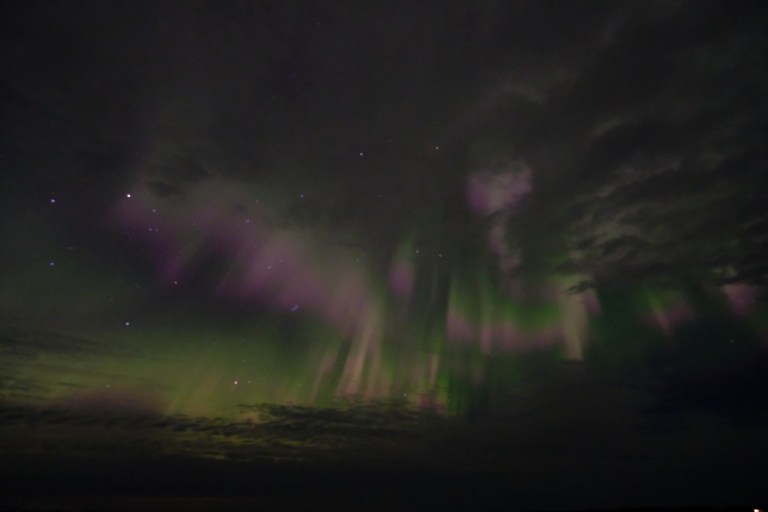
First of all you have to accept that northern lights on the pictures look nicer than in the reality. They have different colours than in the reality and are more visible. However, seeing them live is still amazing experience – you will see them dancing on the night sky and constantly changing. I can imagine people go to Iceland just to see it. We were quite lucky, because we tried to see northern lights two times and we had rate of success 100%, so I think I can share some tips:
-
Find proper day and moment by using an app. There are two elements necessary to be able to see northern lights: high KP level and sky without clouds. There are many apps and websites to track these two conditions and forecast them for next few hours. We used “Aurora” app, but local people told us that websites are better. Therefore you can wait for a good day and then do the haunting. Otherwise you will spend many hours in cold without high chance of success.
- Cold months – it is really hard to see northern lights in the summer. Haunting season starts in September, but the best moment to see them is winter. So if your main goal is to see northern lights, choose months closer to December / January for your trip.
- Find good spot and don’t rent any company. You won’t see northern lights in the city. Also all ideas – “we will stay in the city, observe sky and then go somewhere” are not good idea. Take your car, go outside of the city and be patient. The darker is the place is the better. At the beginning you may think that every cloud is northern light and be lost what to look for, but once it will start you will know they have started. It is hard to miss it. And you don’t need any company for this, there are better ways of spending money in Iceland.
-
Duration. You never know how long it will last. Sometimes it is few minutes, sometimes it is few hours.
What to take for photography?
Generally almost whole trip I used one lens: Fujifilm 10-24mm f/4. Iceland is mainly about landscapes and wide-zoom is perfect for that. I had also 35mm f/2 and 18-55 f/2.8-4, but both of them were almost not used at all. The only thing I missed was tele-zoom (something like 55-200). It is useful for many landscapes if you want to show glaciers and mountains in closer view and if you want to make some shots of nature (horses, birds including puffins, sheep). Remember about polarisation filter, second memory card and spare battery.
As there are a lot of activities and places where you need something strongly waterproof, consider taking some kind of GoPro camera. It is useful during snorkelling, hiking and whale watching, but also when you are close to waterfall and water is all over the place. For the last case I also used iPhone 7, which is waterproof as well and have small lens that makes it easier for not having the drops visible on your picture.
What to see and where to sleep?
Please find below the full itinerary of the trip. The best way to travel in Iceland is to ride using the ring road around the island and sleep everyday in different place. We designed the trip to include all the places from 500 list and in the way that you have mix of different experience (nature, physical activities, tourism, but also some rest in SPA). To be honest, I wouldn’t change a lot if I would have chance to make the trip again.
What to bring as a souvenir?
-
Icelandic sweater – crazy expensive, but Icelandic wool is know from being warm and breathable at the same time. This is most typical thing from Iceland, but wearing it you look like typical tourist (I did!) 🙂 Be careful with buying them in touristic shop in Reykjavik – they are most probably done in China
-
Magnets / mugs – typical souvenirs, but the design is really good at Iceland, so even typical souvenirs look really nice.
 Ultimate Traveler