Lately almost everyone wants to go to Peru. After spending 3 weeks there, I have no doubt why it is so. Peru has everything what you would like to visit – mountains, sea, nature, a lot of adventures, mysterious history and fabulous cuisine. Indeed it has everything to be one of the top tourist destinations in the upcoming years.
Below you can find list of the best destinations in Peru and itinerary that shows how to visit them in ultimate manner! If you need more details on when to go, how to move around or how to make proper acclimatisation – visit this page: Peru – FAQ
Top destinations in Peru
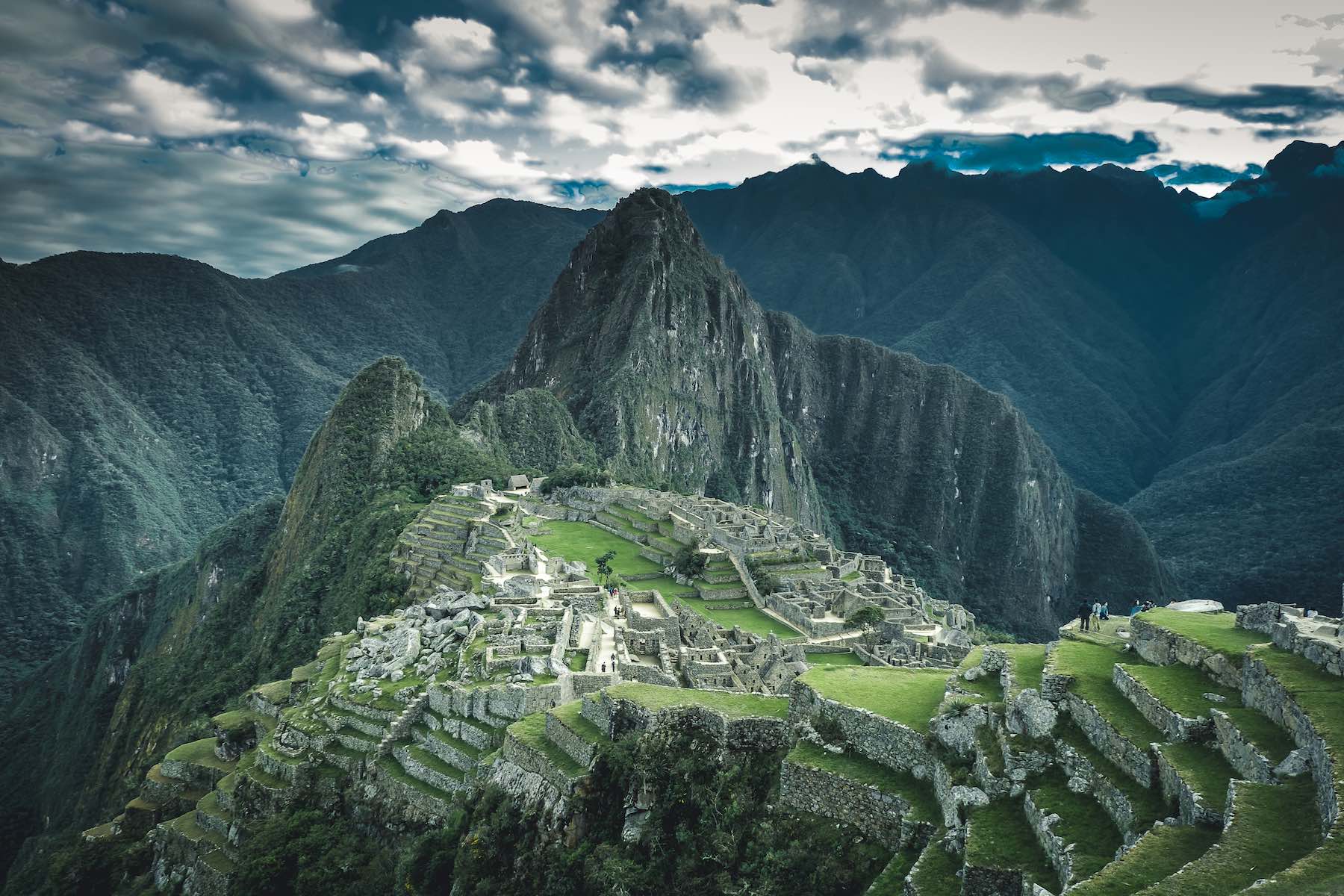
- Take part in Salkantay trek and see spectacular Machu Picchu at the end. This view will make it worth going through relatively hard trek at 4500m above sea level.

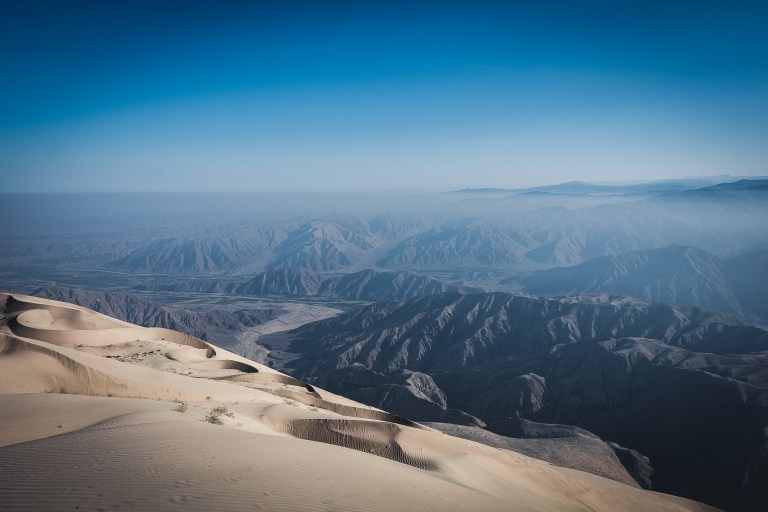
- Sand boarding at Cerro Blanco. It’s hidden gem of Peru. Climb yourself to the top of the highest dune in the world and slide down on snowboard! (sandboard?)
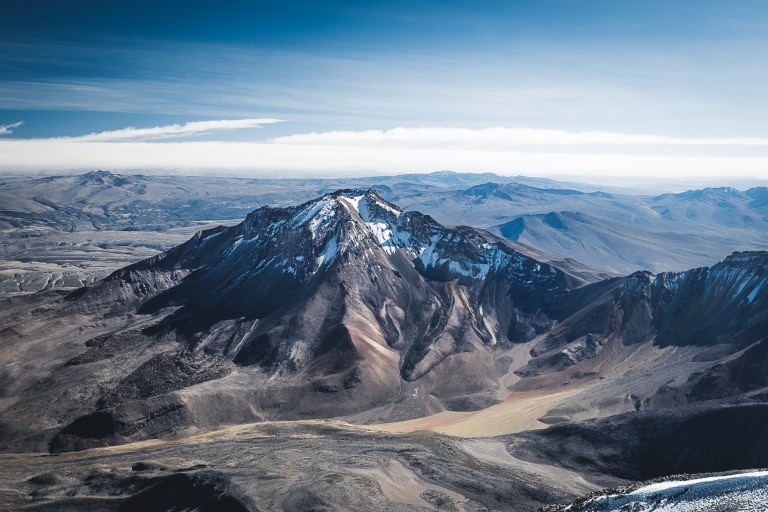
- Reach 6k mountain! Chachani is the easiest 6k mountain to reach in the world. You just have to walk. But don’t get fooled – the easiest doesn’t mean easy. You will still need to put crazy amount of effort in this challenge!
What to eat?
Peru is quite famous from its cuisine. And you will understand why when you will be there. Dishes vary between different part of the country, but everywhere food is very important. And even when you are in the middle of nowhere, you may be sure you will be fed well. The most interesting dishes:
- Guinea pig – I know how it sounds to eat ginny pig, but still we did try it. Unfortunately it is nothing special. Maybe it was just bad restaurant, but if you don’t feel like trying this dish, you won’t lose a lot.
- Alpaca steak – Personally I have no feelings about this dish, but other guys really enjoy it, so I think it may be worth giving it a shot!
- Ceviche – one of the most famous dishes from Peru. Marinated fish served with lemon, other seafood and onions. It’s really delicious, but remember to eat it when you are at the seaside, not when you are in the mountains.
- Lomo saltado – whenever you don’t know what to eat in Peru, you just go for Lomo saltado. You can’t get wrong with it. It’s just beef with rice and fries, but still very tasty!
- Potatoes and corn – Peru is a country of potato. Only when you are there you start understanding how many different potatoes you can have – sweet, violet or black – they even have their own potato festival. The same happens with corn – they grow it a lot, so you can find corn everywhere. Our favourite thing made out of corn was Chicha Morada – black maze juice.
-
Coca tea – you won’t get high from it. You will just feel more energetic. Coca tea was used since the beginning of time in Peru and it’s just their version of coffee. interestingly enough, even tough they grow coffee, they almost don’t drink it.
It’s worth mentioning that the best food in Peru is in Lima. If you go around Miraflores district, then you can find a lot of very good restaurants. My favourite one is Isolina Taberna Peruana (we even visited it twice) but I am sure you can find plenty of other good places.
What is important to know about Peru?
Peru derives its roots from Inca empire. It was one of the biggest empires in South America (with capital in Cusco), but it was destroyed by Spaniards. Many people think that Inca Empire is something very old that was existing in parallel to Roman Empire in Europe. You cannot be more wrong. Inca empire was established around 15th century AD, so very short time before America was discovered for Europeans. And also it is not like that Spanish people came in thousands and destroyed the empire. In fact Pizzaro expedition had less than 170 people and just one cannon. They were quite lucky as Inca empire was already in a very bad state and they just played well the situation. Also the fact that Spaniards were very similar to one of the gods in Incas mithology (thanks to long beards) helped them a lot.
Inca emprie is indeed quite fascinating. They had only 3 rules: don’t lie, don’t be lazy, don’t steal. They were very hard working and you can see it clearly when you arrive to old Incas city. They had great knowledge about stone carving, agriculture (amazing terraces) and astronomy, yet they didn’t know how to write. They administer great empire and they did it without having horses, but still they even didn’t invent a wheel.
Nowadays, most part of the Peruvian society are the people with Spanish origins, but there are a lot of Quechua people – they come from the same ethnic group as Incas (Inca was just the name on the royal part of society in the old days). Quechua people are very proud about their heritage and you can see that Inca culture still lives there – for example they often explain that they are catholic, but believe in Pacha mamma (mother earth) at the same time.
Currently Peru is still a country that needs a lot of development, but you can also see it’s slowly growing. It’s one of the safest places in South America, but still it doesn’t mean safe. To be honest in Lima we really felt this city is not safe, but everywhere else it was absolutely fine.
Itinerary
Day 0: Flight tot Lima
Day 1: early morning bus to Paracas, Islas Ballestas tour and going to Nazca in the evening
Day 2: Sand boarding at Cerro Blanco, Nasca flight, night bus to Arequipa
Day 3 (Arequipa): Monasterio de Santa Catalina, Walking around the city
Day 4 (Cusco): morning flight to Cusco, Plaza Mayor, Museo y Catacumbas del Convento de San Francisco de Asis, Sacsaywaman
Day 5, 6, 7 and 8: Salkantay trekk and Machu Picchu
Day 9: Sacred valley
Day 10 and 11: morning flight to Arequipa, Chachani
Day 12 and 13: Colca Canyon, going directly to Puno
Day 14: Puno and Lake Titicaca (Reed islands and Taquile island), night bus to Cusco
Day 15 (Cusco): Mercado San Pedro
Day 16, 17, 18 and 19: Choquequirao
Day 20 and 21: morning flight to Lima and Lima (Miraflores and Museum Larco)
Day 0:
Lima
We have arrived to Lima in the night and most of our time we spent on finding hotel. From the airport we just took taxi as public transport is not something you want to use when you just arrived to Lima. Unless your hotel is in Miraflores, then you can get direct bus to this district.
Day 1
Islas Ballestas
In the ver yearly morning we caught bus from Cruz Del Sur and went to Paracas. We had some troubles finding station in Lima as it turned out that every bus company has its own station, but fortunately the one indicated by google maps turned out to be the correct one.
In Paracas we had booked Islas Ballestas tour at 8 in the morning. Reason why we booked it so early is that there are only two time slots during the day – at 8 and at 10. So we decided to book earlier one as then if anything would go wrong, we would still have a chance to catch the next one. Getting bus from Lima at 4 was enough to be on time. Islas Ballestas tour operator picked up us directly from the station in the morning. During the trip baggage can be stored at the tour operator office. We booked the trip with Paracas Overland tour agency and it costed 20$ per person.

Islas Ballestas is really nice trip to the islands near Paracas. Around these islands there are many fishes and thanks to that also a lot of birds and sea lions. You can even see penguins! Due to the crazy amount of birds you have to be ready that all islands are covered in guano. It is a source of income for local people, but for tourists it’s just source of very bad smell.

All in all, the trip is really worth it. It’s rare chance to see sea lions so close in their natural environment. Guide that was going with us didn’t really speak English, but you don’t need guide to appreciate beauty of this place. Just remember about two things – take hat with you (you don’t want guano in your hair) and take telephoto lens.
Nasca
In the afternoon we went to Nasca. Time between tour and bus we have spent in some nice cafes in Paracas (the best one was Pisco & Ole, but it was rather hipster place). In Nasca we had some problems with finding our hostels, but at the end we managed and we really liked it – Nasca Travel One Hostel.
Day 2
Nasca
We spend almost 24h in Nasca, but we did quite a lot there. We have reserved two trips: sand boarding at Cerro Blanco and Nasca lines flight. To make both happening in one day we needed to reserve it through one company and state that we want to have both in one day. We reserved it at Nazca Flight. It wasn’t the best organised trip in my life, but still we managed to see both things.
Sand boarding at Cerro Blanco
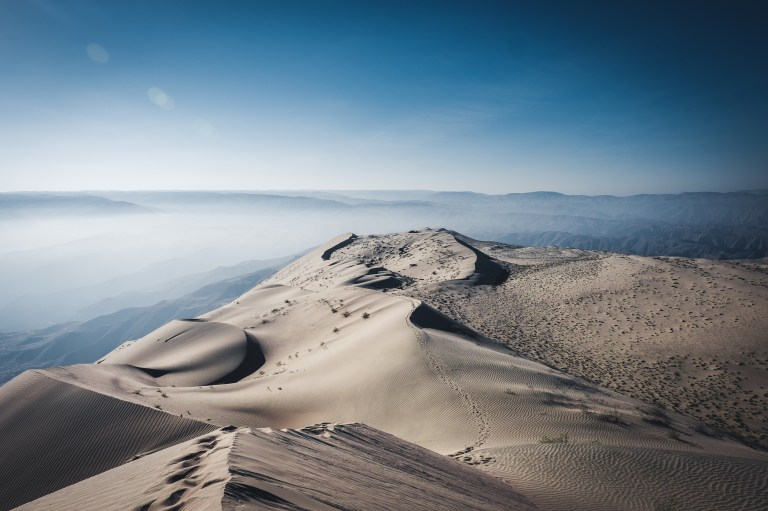
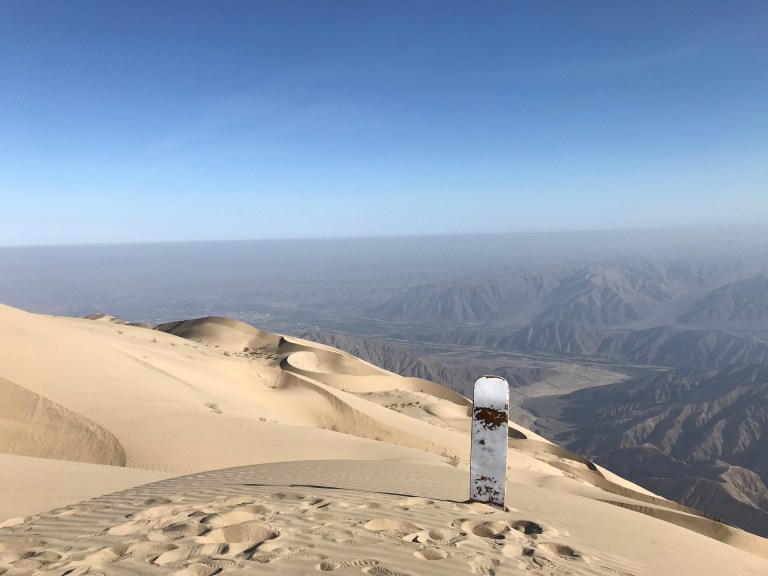
Cerro Blanco is a summit next to Nazca with a huge dune on one side. Arguably it’s the highest dune in the world (2000m tall) and it looks like a different world! Because of the altitude it is also good idea to make this tour to get acclimatisation before further challenges on the way.
We were picked up in the morning by very small car – it was way too small for five people. I think it is really dangerous to ride with such car, but sometimes you just have to accept that in Peru not everything will be so secure as in Europe or North America.

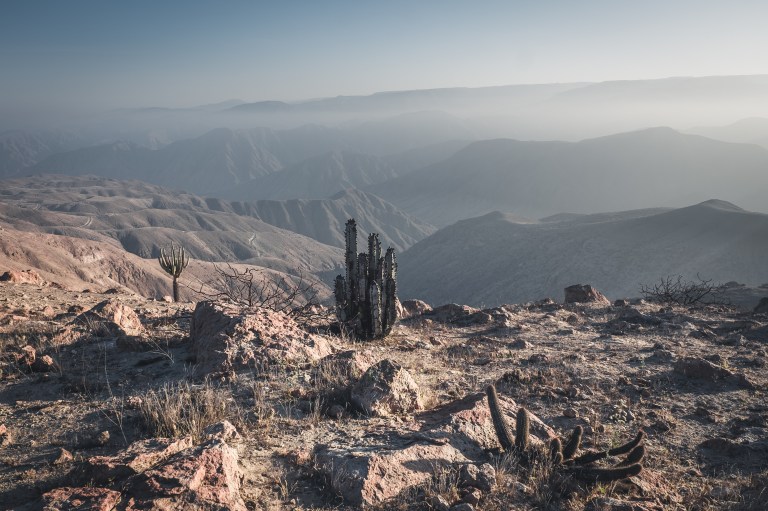
Trip started at 5:00 am. After 1 hours car dropped us one side of the summit and then we had to walk uphill for few hours. It was quite strenuous bearing in mind hour, altitude and few uphill walks in the sand. Despite being tired, the view on the way was amazing and worth the effort. And the view from the top was absolutely one of the best I have ever seen in my life.
When we reached the top, we got some lessons on how to ride snowboard on the sand and then we started going down. It took almost an hour to get to the bottom and it was really fun. Unfortunately due to the slope and poor quality boards most of the time we were sliding down sitting on the boards rather than standing. But still speed was quite high! The only downside was that after coming back to the hostel we had sand absolutely everywhere.
Nasca flight (#420 on the 500 list of ultimate traveller)
After the sand boarding we had some time in hostel to change clothes and then we were picked up for the flight over Nasca lines. Nasca lines were made by the Nasca civilization and no one knows why they were created and how they did it without seeing them from above.
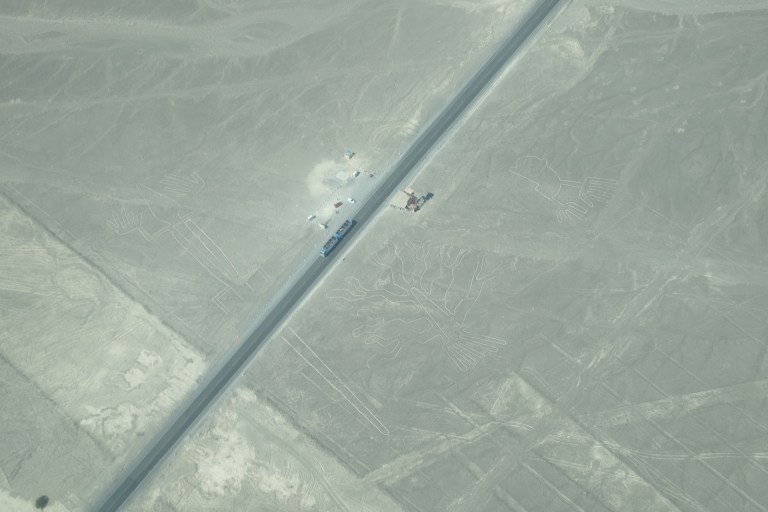
Flight is relatively short (20 minutes) and it’s very easy to get motion sickness. Take some pills if you have problems in normal transportation, because in such a small plane everything is doubled. Small tip – every figure will be seen from both sides of the plane. So don’t try to see it on the other side of the plane as it will cause additional motion sickness. Just wait for figure to appear on your side. And try to be careful with looking at the lines with telephoto lens – it makes you feel even more dizzy.

You will get map with all the figures and pilot will explain it on your headphones during flight. But be prepared that sometimes you may not be able to spot it, but once you will notice it, you will see it clearly. It was bigger problem for me than for guys, but be ready that it is not so visible from the first sight.
Day 3
Arequipa
We arrived to Arequipa after night ride in a bus from Nasca. A lot of people tells this city is dangerous, but to be honest we didn’t notice it. We really liked it and its colonial style. Especially the main square makes impression and it is one of the most popular pictures spot in Peru.

There are few nice things to see in the city, but the best thing to do is to just walk around and enjoy the atmosphere. From highlights there are two things that you can’t miss – Museum of Juanita and Monasterio de Santa Catalina.
Museum of Andean Sanctuaries
Regardless of the name, this is museum about just one person – Juanita. She was child from Inca times who was sacrificed in order to stop natural disasters. In fact the process was not cruel and it was perceived as a honour to be sacrificed. The girl was killed in high Andes, so she survived in quiet stable shape over centuries and once discovered she was taken to Arequipa in special freezer. In the museum you can find her mumified body, but also many other objects that give a lot of background about Inca empire and religion. It’s really worth visiting, even tough it’s a little bit creepy…
Monasterio de Santa Catalina
Old Spanish Female convent. Thanks to its saturated colours it looks really amazing and its worth spending a while there. We took guide and it was quite good idea as we got more understanding about the place.


Day 4
Cusco
Next morning we took flight to Cusco. Arequipa is already above 2000m, but when you land in Cusco (3400m) you will feel difference in air density very quickly. It’s quite shocking to see that all of a sudden things like playing table tennis requires you a lot of energy.
Try to make first day in Cusco rather not so strenuous – it’s important to get good acclimatisation and for that you need to take it easy. We spend first day in Cusco just walking around the city and feeling the atmosphere.
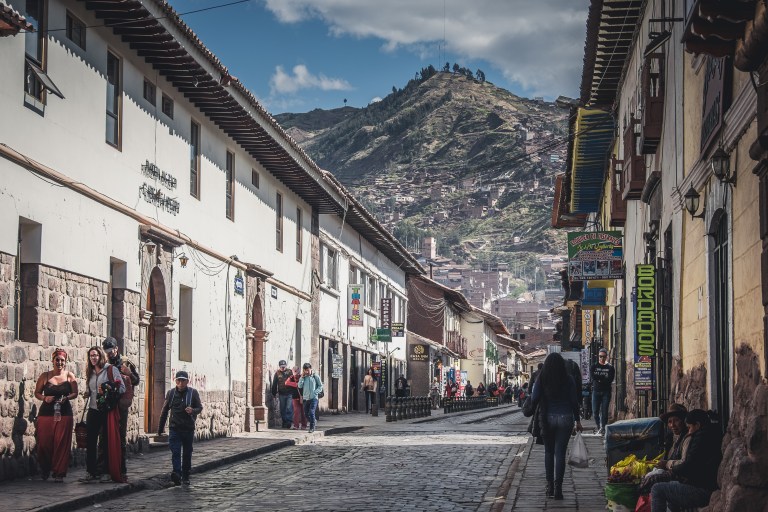
In the evening we went for briefing on Salkantay trek and later on for dinner. Surprisingly, there are not so many good Peruvian restaurants in Cusco, but there are a lot of good Pizza places. Our favourite one was Nonna Trattoria. But if you really want something more Peruvian then this more touristic place may be interesting for you: El Meson de Don Tomas.
When it comes to a hotel we tried 3 of them and we can fully recommend this one: Golden Inca. Also Pariwana Hostel is quite nice and well organised, but the problem is that a lot of people stay there to party, so you won’t get nice rest in the night – music will be loud and people will be shouting.
Days 5, 6, 7 and 8
Salkantay trekk
Being in Peru you have to do one of two treks that lead to Machu Picchu: Inca trail or Salkantay. The first one is more concentrated on old Incas ruins and it goes along road build by Incas. Salkantay on the other hand is more about nature, amazing views and incredible spots. We decided to go for Salkantay, because we are more toward nature, but it’s also very important to know that Inca trail trek has to be booked many months upfront as there is hard limit on amount of people who can be on the road during one day. If you will miss booking of the full trip on Inca trail, you may try to get one day trip, but I think that in such case you should just go for Salkantay. You shouldn’t look at Salkantay as worse alternative – it’s so amazing trekking that many times it was called one of the best trekking in the world.

You can book Salkantay in many companies around Cusco, but to be completely honest this trek was almost monopolised by the one company – Salkantay Trekking. They have really the best service and they are one of the cheapest companies. They also own the best accommodations on the way (for example famous sky lodges). As they are super popular, it’s better to book them much upfront. If you book in advance and make it for several people you make ask for small discount and getting for free sleeping bags and trekking poles. Small tip – don’t pay with Paypal as they will add a fee on top of it. I asked them for option to pay deposit with VISA and thanks to that I didn’t pay any additional amount. Cost of the whole trip is around 400$, but you have to add tips (everyone expects tip – chef, horseman, two guides) and shower fees on top of it. Remember to take some cash with you for these purposes.

You can do Salkantay trek in two versions: 4 days or 5 days. We did 4 days and it was quite good decision as we didn’t really have problems with such amount of walking. Rough planning looks like following:
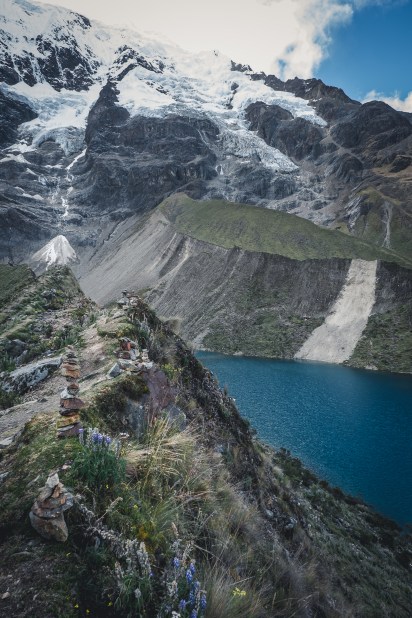
- First day – not so much walking as you have to get acclimatization. In the afternoon you can walk to Humantay Lake. It’s quite heavy as you will be hit by the altitude already, but it’s worth to do so to get accustomed. First night for me was the hardest and I really got problems with proper sleeping and breathing.
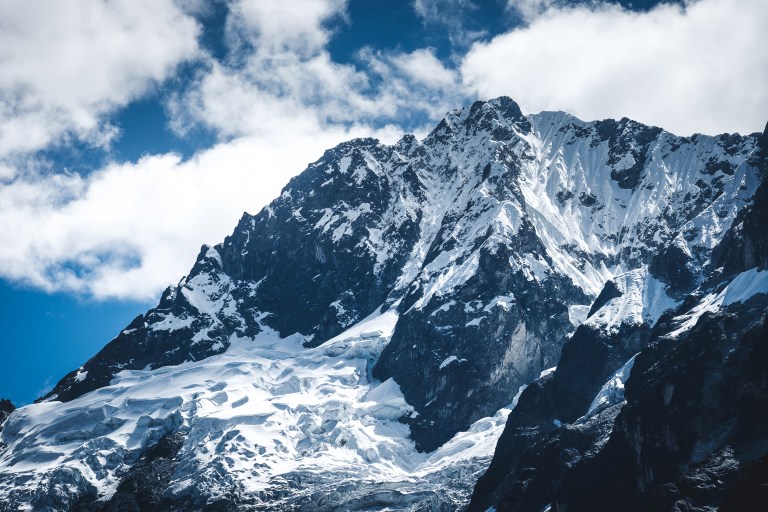
- Second day – it’s the hardest day. You have to go through Seven Snake Passage and you will get to the highest point of the whole trip (Salkantay pass at 4600m). After this point you will start descending and you will notice that with every step you feel better and better.
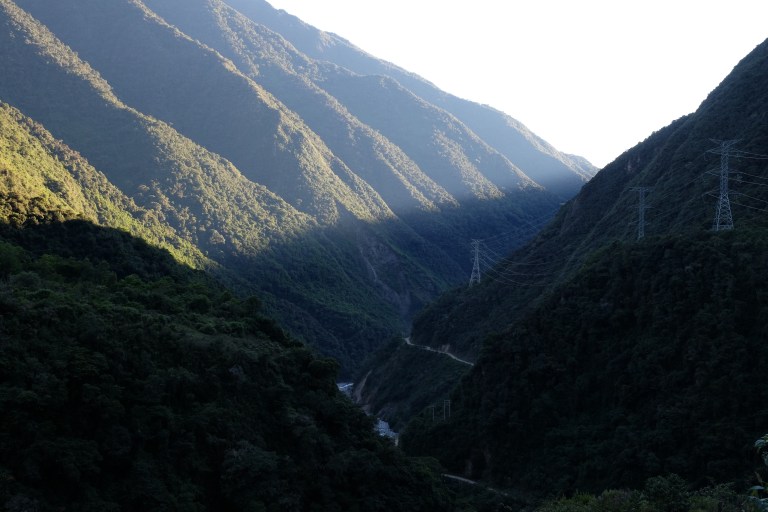
- Third day – landscape starts to be much more green and rich. There is really a lot of walking that day, but on the much lower altitude, so it’s not so hard. And finally you can wear shorts instead of long pants as it gets much more humid and warm.
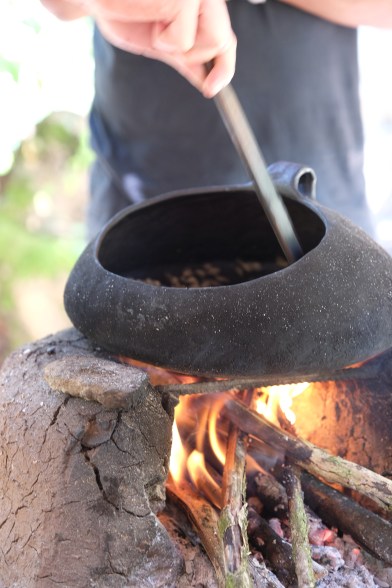
During day you will have option to visit “Inca Starbucks” where you can learn how coffee is made and taste coffee from beans that you will gather yourself. To be honest it’s one of the best coffees I have ever drunk in my life.
In the second half of the day you will take bus to arrive to the area of Machu Picchu. You will have to walk several kilometres along the railway (be aware of trains!) and at the end you will arrive to the Aguas Calientes – very touristic city at the bottom of Machu Picchu. You have a lot of restaurants, ATMs and shops there, so you can refill whatever you need. There are also hot springs if you like to rest a little bit.

- Fourth day – it’s fully about Machu Picchu. You will have to buy tickets the day before (you need passport for it) and then start lining up for the bus very early in the morning (around 4 if I remember correctly). And in this case 15 minutes make a big difference – line is growing very rapidly. You can alternatively walk more than hour to the top, but it’s good to save power for the rest of the day as there is not a lot to see on the way. The earlier you will be at Machu Picchu the better it’s for you – it gets full of people quickly. At the end of the day you will get train back to Cusco (tickets will be bought for you by the company).
Machu Picchu (#3 on the 500 list of ultimate traveller)
It’s really hard to prepare for what you gonna see. It looks impressive on pictures, but in reality it’s even more amazing. Ridiculously green with well preserved buildings, it’s worth all the money and effort to get there. There are strict rules how you can behave there, but your guide will explain it to you. Very important is that you can’t bring tripods with you or make jumping photos.
If you are unlucky, there may be heavy fog over the whole place and you won’t see a lot. Some people ask company to book their train tickets day later, so they have two days at Machu Picchu and even if they will have fog on one day, they will get a second chance. I would personally not do it as you may loose time and if on the first day there will be nice weather there is no reason to come back to Machu Picchu on the next day and go through all the hell with waking up early to catch the bus.

History of Machu Picchu is still quite unclear. Nevertheless, most guides are telling stories about city that was not found by Spaniards or that was the last capital of Inca empire. According to sources we found, it is not really true – Machu Picchu was just summer residence of royal family and it was never conquered as it was just not important enough to trigger effort by Spaniards. But regardless of being just summer residence, Machu Picchu is still amazing and it’s probably one the best things you can see in your life.
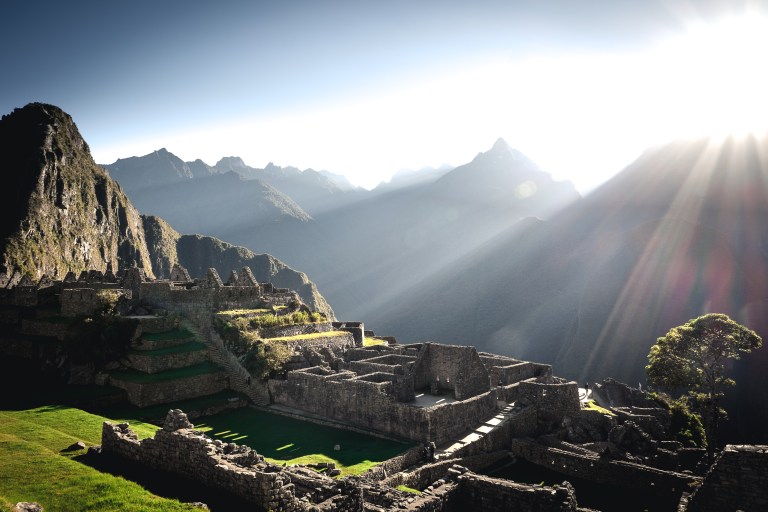
Additional nice thing is that there are lamas all over the city. Their main purpose is to keep grass in nice shape, but I guess they are there also to make it nicer for tourists. As you can see on the below picture, everyone wants to have picture with a lama.


Machu Picchu mountain
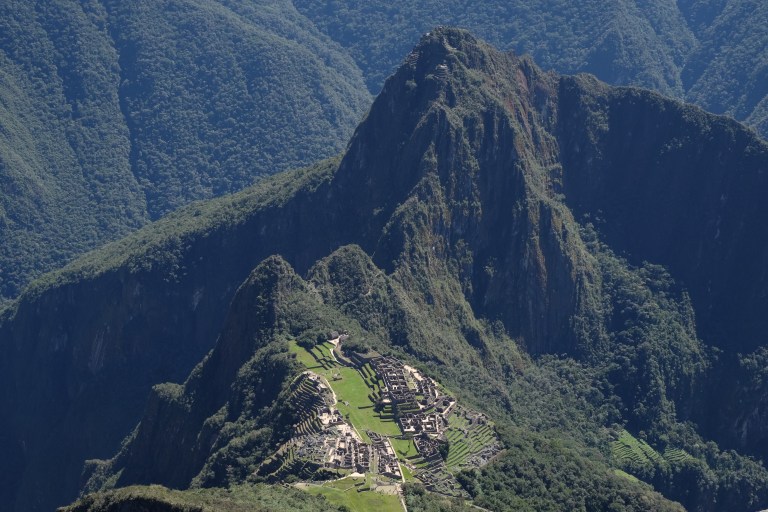
You can do additional hike at Machu Picchu – either to Huayna Picchu or to Machu Picchu mountain. You have to book them upfront, but as they are quite heavy after so many days of walking, a lot of people with tickets skip it once they are at the spot. I think it’s really worth doing it as view is amazing, but be ready for quite some additional effort. Book only one of them as you will not have power and time to visit both. And if you will have some energy left you may do some short hike to Sun Gate. Out of these two hikes, I would recommend Machu Picchu mountain as you are higher and you will see more of the area (and you will see Huayna Picchu as well).
Trekking tips
Details on how the trekking is organised and what to take are here: Peru – FAQ.
Day 9
Sacred Valley
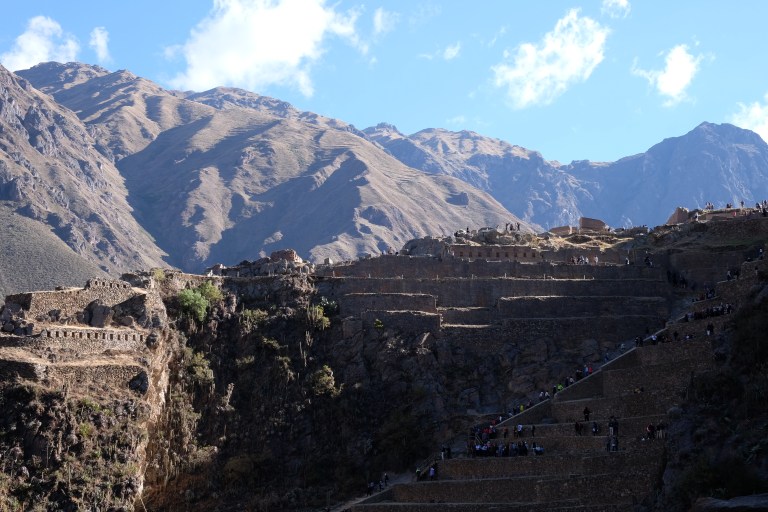
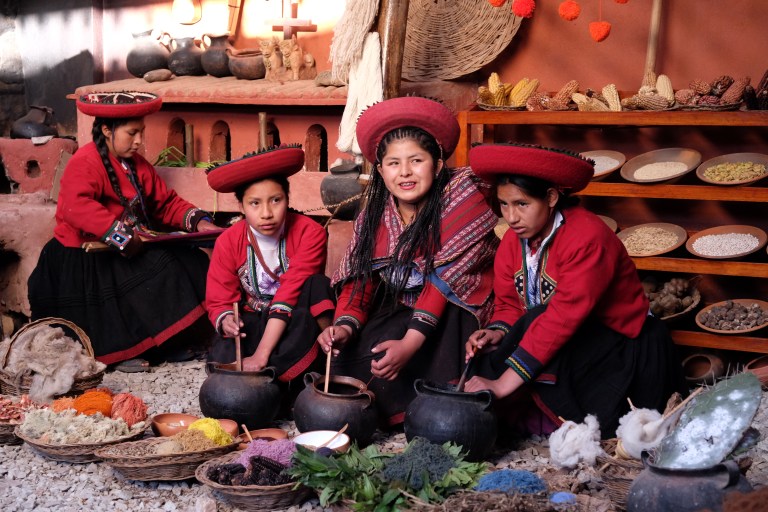
It is a valley close to Cusco which was one of the sacred places for Incas Empire. It is quite interesting to see all these buildings and Peruvian small cities, but you have to be aware that it is going to be very touristy. For us it was a good way to rest after Salkantay as most of time you are going to spend in the bus, but it would be also okey to skip it. As Sacred Valley is on the lower altitude than Cusco, many people do this trip before going to Salkantay in order to get acclimatisation at the proper level. We booked trip again through Salkantay trekking company.
Days 10 and 11
Arequipa
We had flight back to Arequipa in the early morning. We spent whole day on preparing for our big adventure – 6k mountain. We bought all necessary food and water and went for briefing with our guide. The best shop is on the main square of the city. It’s quite big supermarket. If you are looking for more proper meal we have been twice here: Crepisimo.
Chachani
This was our biggest challenge during this trip. Chachani is over 6000m tall and even tough it’s one of the easiest 6k mountains to climb, it still requires a lot of effort to get there. If you ever decide to go to Mount Everest, try to get to Chachani first to get proper feeling how it looks like.
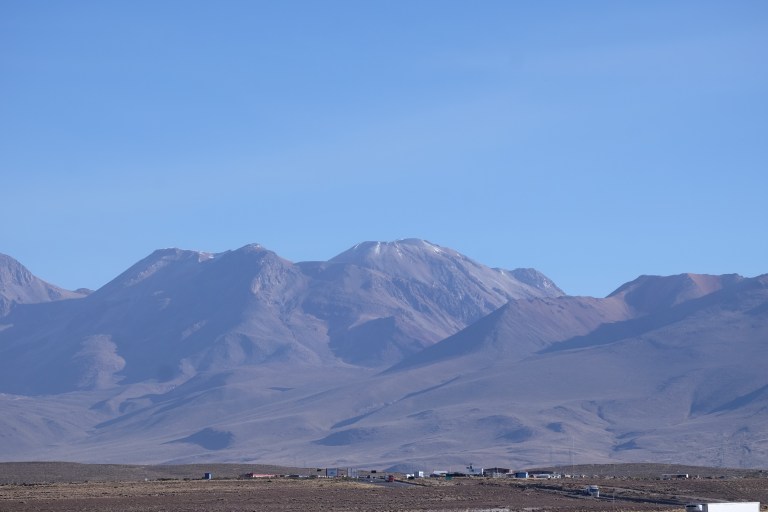
We booked our trip with this company: Peru Adventures Tours. Guide who went with us was very experienced and good, but company was not organised very well. For example we had to demand briefing session with our guide and until the very end if the day we didn’t know what is going to be exact schedule. But at the end we were happy with the handling of the trip itself.
Trip starts around midnight when you will be picked up from your hotel. You are going to be taken to off-road ride for about 2-3 hours. Don’t count on sleeping in such conditions. You will go to around 5000m, traverse for 1 hour, reach base camp and then start attacking the summit. It will take you around 6 hours to reach the top and then 1,5 hours to get to the bottom. Getting down is surprisingly easy as you have slope full of sand and you can literally just run down all the way.

Fortunately you don’t need any ice axes or crampons to get to the top. There is almost no snow on one side of the mountain. However, you have to prepare for real coldness. It’s important to have multiple layers and things like double gloves. Remember to eat lightly upfront (but with a lot of calories) and to put energy bars in easily reachable places – at the higher parts of the mountain you will not have power to take things out of the backpack (seriously). Take very good sunglasses and remember about walking poles – they are priceless there.
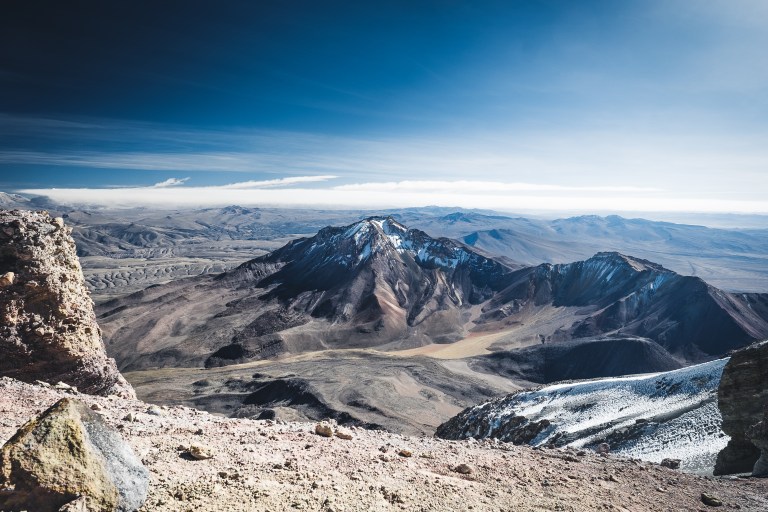
This climb is going to be hard. How hard – this depends on the level of acclimatisation – for example I had problems at Salkantay, but not so much at Chachani. On the other hand, one of the guys was really okey at Salkantay, but was almost dying at Chachani – he had problems with balance and was really powerless. Tricky thing is that altitude sickness does not relate to your fitness level – you can be super sporty, but if you don’t have proper acclimatisation, you will have problems (details how to make proper acclimatisation are Peru – FAQ. And even with proper acclimatisation it will still be hard climb – you will feel like every step means fight with yourself to make it. But luckily for us, even tough we had problems on the way, at the end all of us managed to get to the top!
Day 12 and 13
Colca Canyon (#481 on the 500 list of ultimate traveller)
Next day morning we were going to Colca Canyon – place that is treated as one of the biggest canyons in the world, deeper even than the Grand Canyon in USA. Just as a interesting side note – difference between Canyon and Valley is that Canyon is deeper than wider and Valley is the opposite.
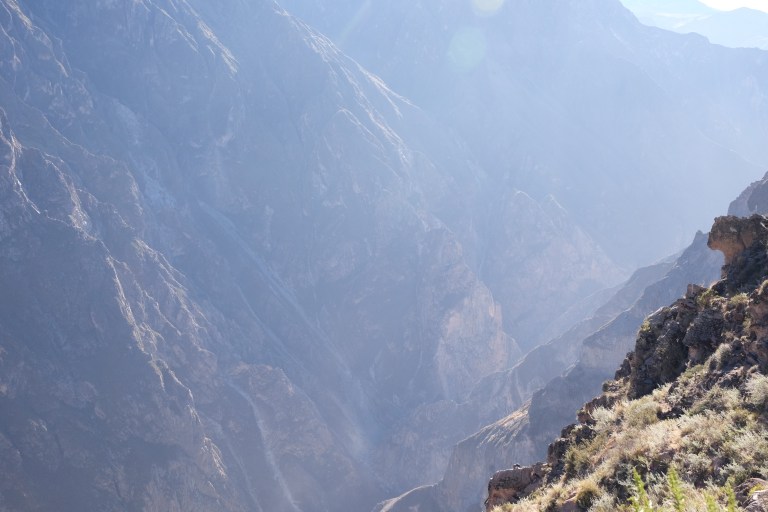
We booked the trip with Pablo tours. Their advantage is that they make tour in the opposite direction than other companies. Not going into details – but this makes perfect sense once you are there. We had really good guide during this trip – Wouter. He was supposed to start his own company one day, so before booking Pablo tours check with him if maybe you can go with him. His email address is Wallypachecos79@gmail.com. And don’t take private version of the tour. There is not a lot of need for this and you will pay much more for private car than for normal bus (we paid around 220$).
There are many different options of length of Colca Canyon tour, but I think 2 days is really optimal. But be careful – after many previous hikes you will be quite tired. At least I was very tired and was barely walking on the way back from the Canyon. But it is still worth it as during trip you will see several nice things:
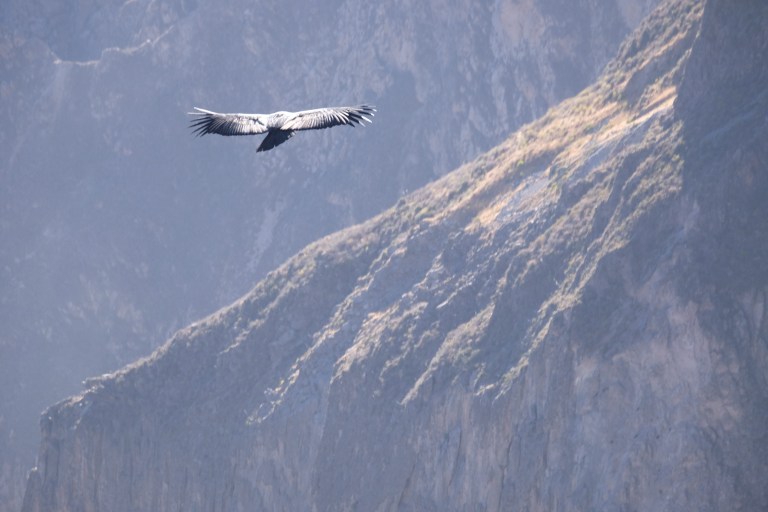
- Condors. They are very important for Inca culture and they really make great impression once you see them floating in the air.
- Oasis – it’s quite cool to see it in the middle of rocks.
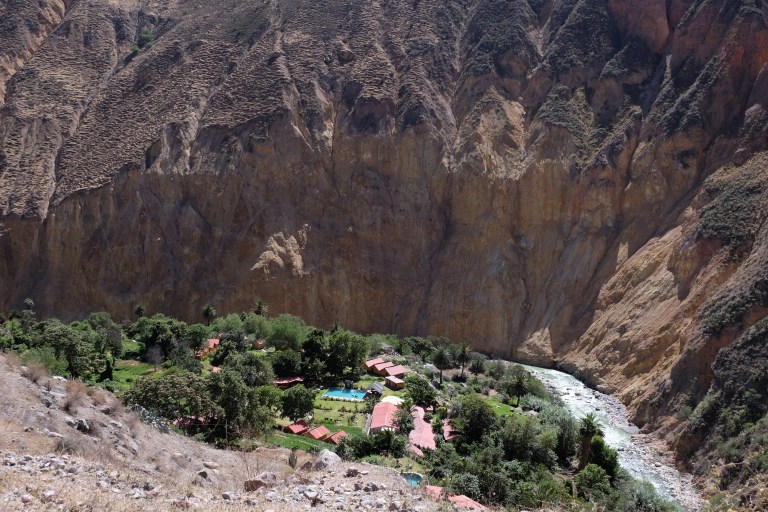
- Nature and calmness – you will sleep in the place where there is no electricity, no GSM range, no Internet, just nothing. It’s amazing to see that such places still exist.
Be careful with scorpions! They are very small, but most probably you will see at least one of them during your visit.
Way to Puno
Pablo tours also had nice option to start from Arequipa and later on be transported to Puno. It costs additionally, but saves you a lot of time. And as it turned out – way to Puno was an attraction on itself with many interesting spots like lamas herds and pink lake with flamingos. It gets quite cold on the way as the road reaches even above 4000m in many places.
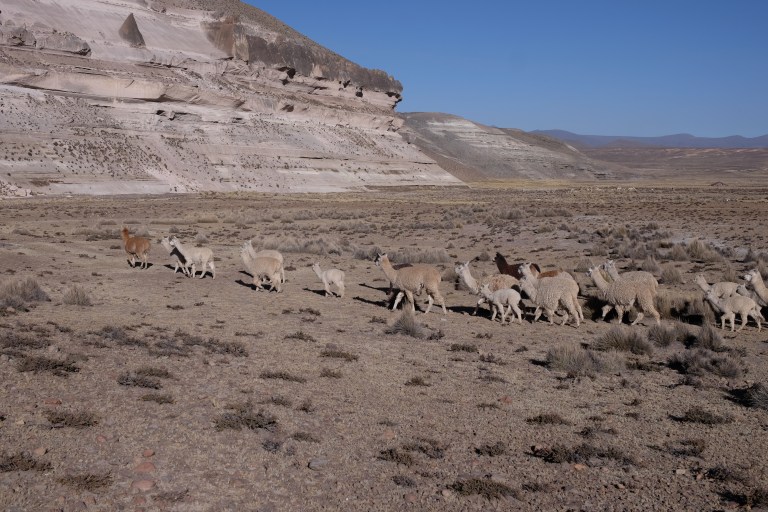
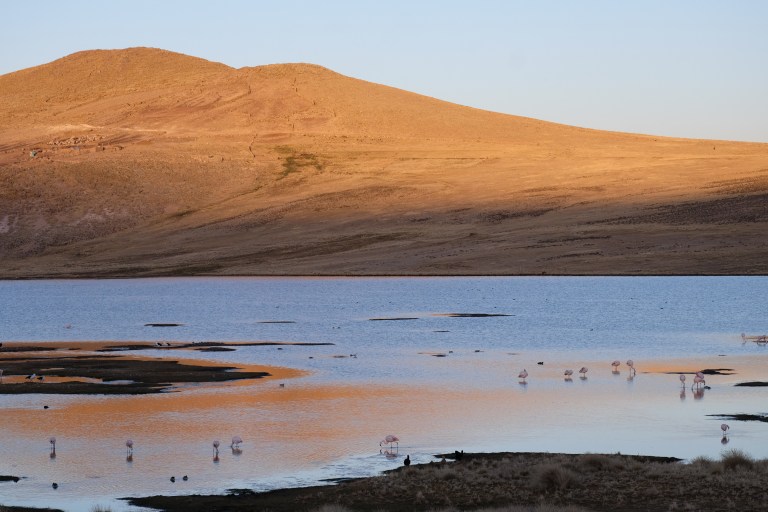
There was no problem with luggage in this case – when we started going to Colca we left big backpacks in the nearby hotel and we got them back when returning. Just notify tour operator upfront that you want to do such manoeuvre.
Day 14
Puno
In the evening we have arrived to Puno. This city is at really high altitude (4000m), so it’s better if you have proper acclimatisation before going there. There are not a lot of interesting places in the city except of nearby Lake Titicaca. You will even have problems with finding good hostel or restaurant there. Our hostel was rather not so good, but we found quite nice restaurant with Peruvian food – Mojsa.
Lake Titicaca
We have booked day trip to Lake Titicaca with this tour operator: Titicaca Peru. It was very cheap (30$), but also very touristic. It was really weird feeling to see this kind of trip. During this day you will visit two places – Reed islands and Taquile island.
Reed islands (#321 on the 500 list of ultimate traveller)
This is quite amazing place. Group of people that was running away from Incas few centuries ago created their land on the lake – they made islands out of reed. It’s shocking to see that stable island with people living every day there has been created completely out of reed. Of course it needs a lot of maintenance every day, but still it’s interesting to see how humankind is able to adapt to different habitats.
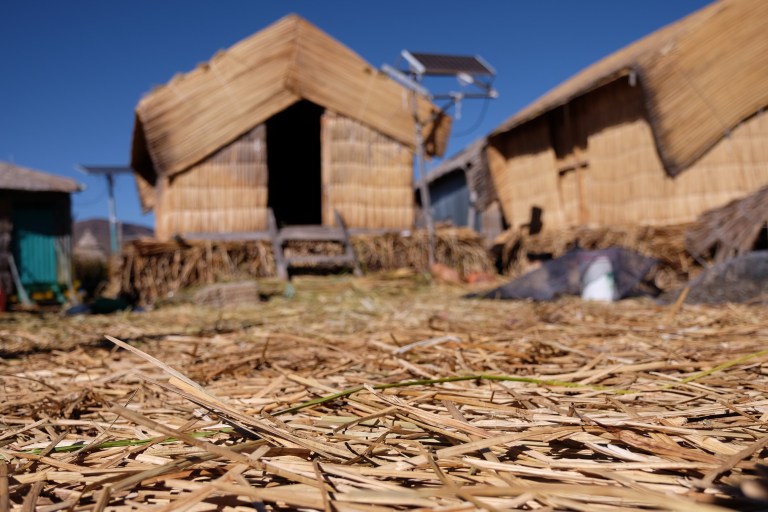

Taquile island
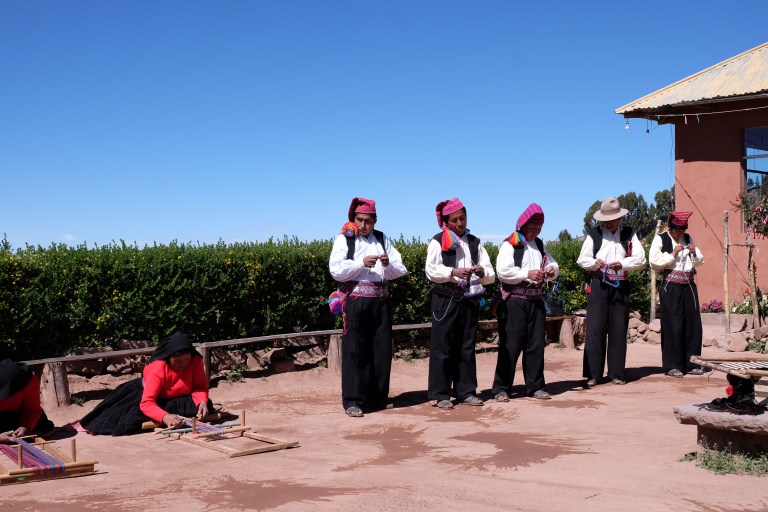
This island was much less interesting. It is very famous from its handcraft. Interestingly enough on the island every man is knitting. The better knitter you are the higher chances you have to find a nice wife. It was a little bit funny to see that your social status is communicated by the type of the hat you are wearing.
Day 15
Cusco
We had a night bus ride and we arrived in the morning again to Cusco. Below there are several places you may consider to visit in Cusco if you have day or two for it.
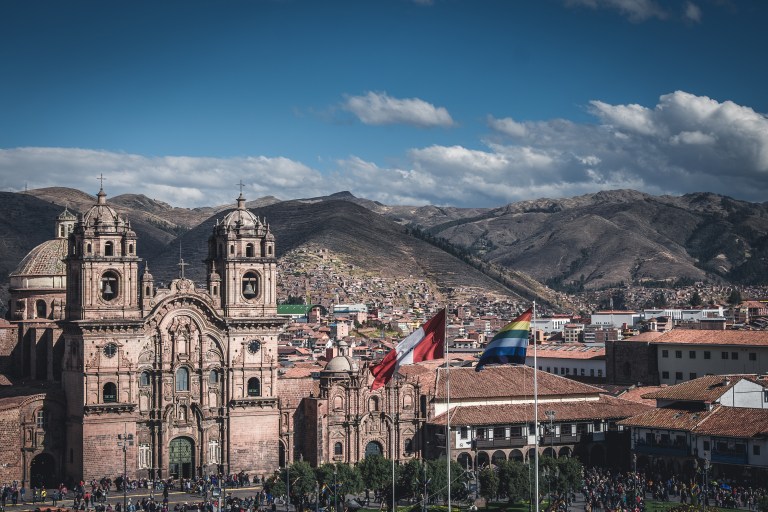
Plaza Mayor
Central place of Cusco. There are several churches around that you may consider visiting, but to be honest they are not really mind blowing.
Museo y Catacumbas del Convento de San Francisco de Asis
Interesting place where you will find the biggest painting in Peru and small catacombs with skulls. Unfortunately you can’t take pictures. But at the end of the tour there is really nice stall with souvenirs.
Sacsaywaman
Old Inca ruins above the city. Entrance is quite expensive, so we decided not to enter, but route itself leads you above the city, so you have a nice view on the whole valley.

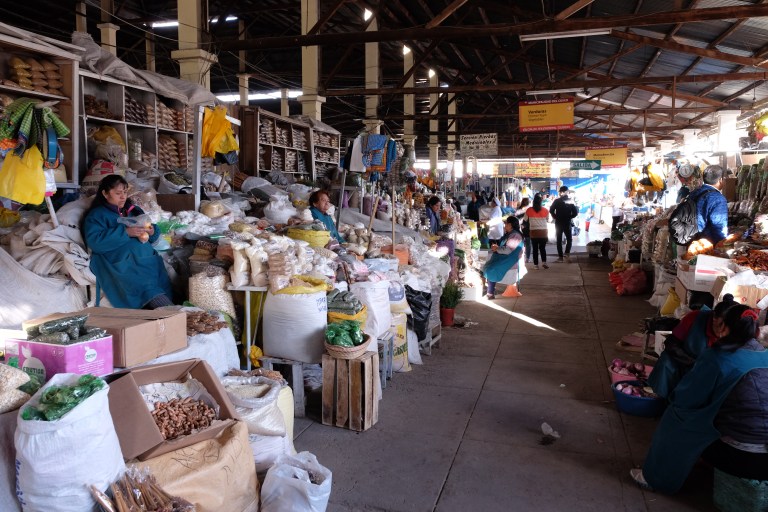
Mercado San Pedro
The best place to buy souvenirs in a cheap price. It’s good to make short walk around even if you are not going to purchase anything.
Day 16, 17, 18 and 19
Choquequirao (#137 on the 500 list of ultimate traveller)
This was our last trekking during the trip. Again we booked it with Salkantay trekking, but this time there was no one except of us on the trip, so we almost had private tour. We booked 4 days, but as we were quite accustomed to walking long distances we did this trip in 3 days and were picked up earlier. To be completely honest you could organise this trip yourself if you want to save some money and don’t want to feel like weird tourist, surrounded by as big crew as the group itself.

Choquequirao is also old Inca city, but in opposite to Machu Picchu was a real city, not just royal residence. As it’s quite hard to get there (you can only walk 2 days there and 2 days back) you will not encounter so many tourists. I think that except of us there were only around 20-30 other people at the same time in the whole city. It’s still well preserved and maintained. Main highlight is the view on the city from nearby hill and Lama terraces on one side of the mountain.


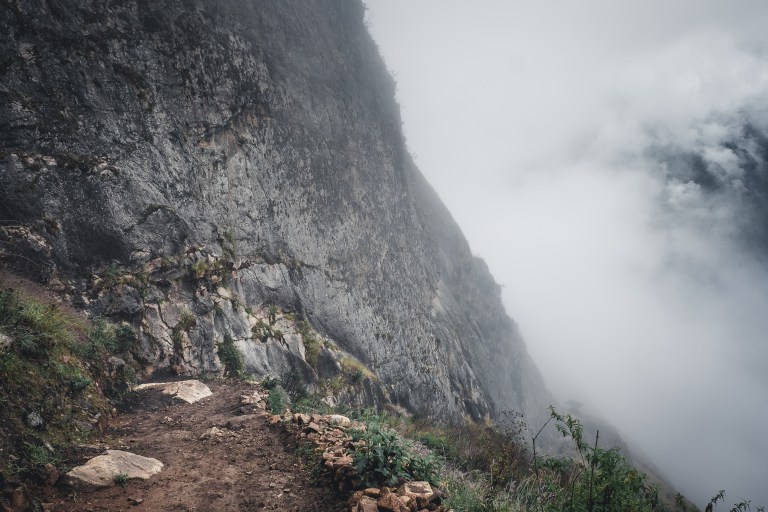
Trekking to Choquequirao is different than on Salkantay. It’s much lower altitude and much warmer. It’s also more green, but there are not so many amazing landscape views. You can find several “guest houses” on the way, but don’t count on room or warm shower. You can just get a place for your tent.
I think it’s really worth to go to Choquequirao. Especially until cable car will be build and tourists will start flourish to the city. It’s a very calm place where you can really experience Inca culture even if it is not so beautiful as Machu Picchu. Route is less busy and you will feel much more fun to walk there as the altitude is not so high.
Tips and tricks on what to take and how to prepare are very similar to the ones about Machu Picchu and you can find them here: Peru – FAQ.
Day 20 and 21
Lima
Finally we have arrived to Peru capital flying there from Cusco. To be honest I didn’t like this city so much. It’s quite unsafe and there are not really many interesting places. We have walked around the city and were completely not impressed.
Museum Larco
The only nice things in Lima was food in Miraflores, cliffs (probably it would be cool to hire paraglide there) and Museum Larco. Especially the last one was really worth visiting. It takes just 1-2 hours to make the whole tour, but there are a lot of interesting objects there.

Summing up
If you like nature, adventure and trekking – Peru will be ideal for you. Just stay out of Lima and enjoy everything else Peru can offer to you. We really enjoyed our trip and we can’t wait to come back one day. Especially because due to the time constrains we skipped one important place – Amazon jungle. I am still waiting for option to see colourful parrots in Manu!
 Ultimate Traveler