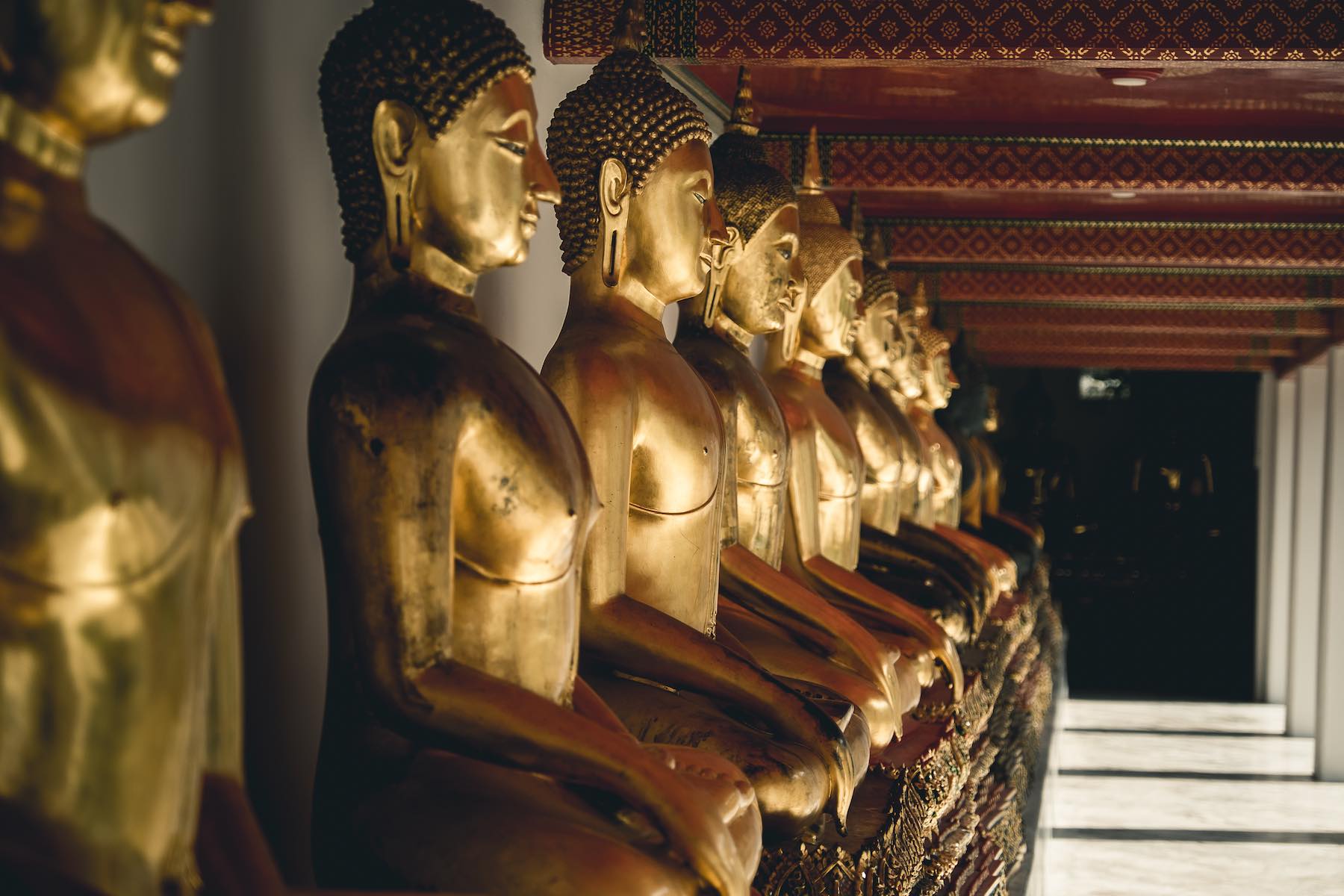
We spent almost whole December in Southeast Asia. We decided to skip family Christmas to get 3 weeks in 3 countries: Vietnam, Cambodia and Thailand. Even with 23 days it is still not enough to see these countries completely, but with proper organisation it’s possible to see quite a lot there. However, that means it will be intensive!
Below you can find list of the best destinations in Southeast Asia and itinerary that shows how to visit them in ultimate manner! If you need more details on when to go, how to move around or what are the prices – visit this page: FAQ – Southeast Asia (Vietnam, Cambodia, Bangkok).
Why you should go to Southeast Asia?
- Food! Thailand and Vietnam are known to have one of the best cousins in the world and we can fully confirm this. Pad Thai, Pho, fresh coconuts and many many more. Also coffee in Vietnam is something unforgettable due its specific, vanilla kind of taste.
- Diversity. Each of those countries is completely different with its people, cousin, climate and history (often tragic one) and each is worth being experienced.
- Something completely different. You thought that crossing street is normal, easy-peasy thing? Not in Vietnam. You thought that Amsterdam is big? Go and see Bangkok. You thought that you have seen amazing temples or churches? Wait to see Angkor Wat complex. Everything you took by granted in Europe or North America is different in Southeast Asia.
Top destinations in Southeast Asia
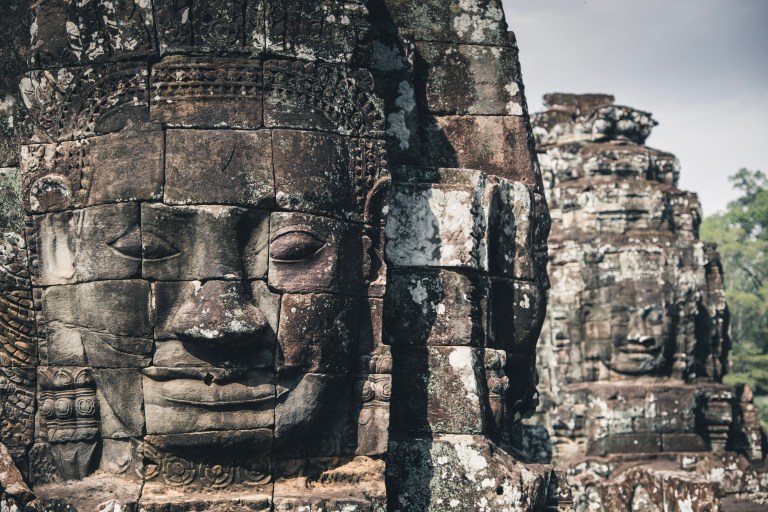
- Walk around mysterious faces of Bayon in Angkor Wat complex
- Take a boat in “Descending dragon” Halong Bay

- Dare to drink the coffee that was pooped out by the weasel
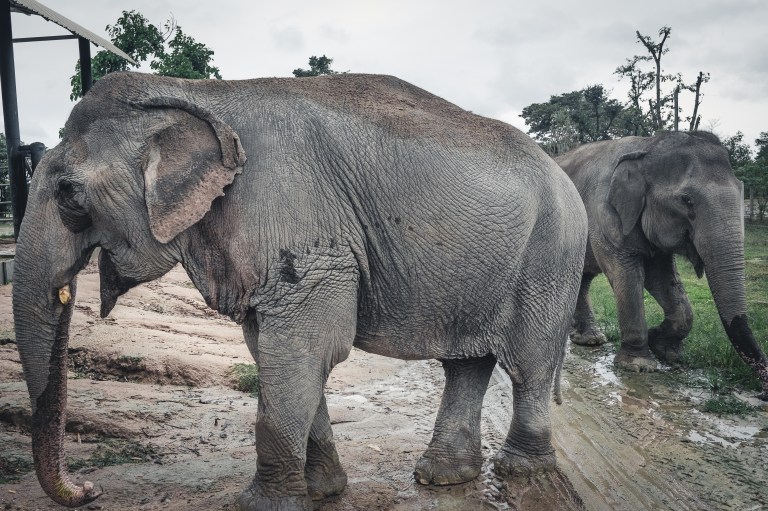
- Take elephant for the walk in an elephant sanctuary
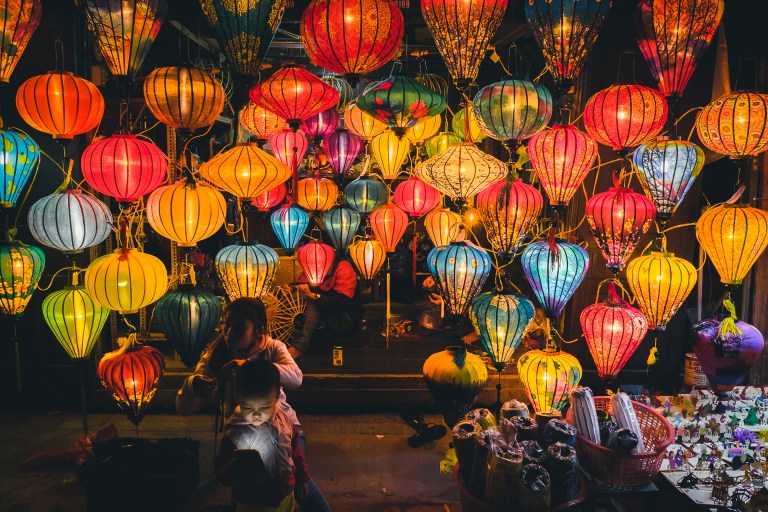
- Experience magical Hoi An
What should I know about each of these countries?
Thailand is the most developed country out of these three. Bangkok often seems richer than many European cities and prices of real estate could surprise people in Amsterdam. However, the main difference between Europe and Thailand is the society structure. Rich people have even more money than rich people in the Netherlands, but poor people have very bad life conditions. It’s quite surprising that there are not a lot of social tensions in Thailand and rich people live very close to poor ones – you often see nice building next to almost completely destroyed wooden hut.
Thais are nice people, but they do keep distance toward foreigners. They are very proud about the fact that Thailand was never colonised by any European super powers of that age. But for me personally, the most interesting discovery was that Thais are very superstitious and they do believe in ghosts (being Buddhists at the same time). One example of this is the small dolly-like house at the entrance to the main house – it is called “spirit house” and it’s a home for spirits guarding the family.
Vietnam is much less developed, but from my perspective it is one of the most interesting country I have ever been. It’s combination of inherited poorness with current rapid growth, governing communism with dynamic capitalism and sad history with hopefully bright future. Vietnamese people are well known from their dedication – they have been always fighting with global superpowers for the independence. First, for 1000 years they were fighting with China, then with colonial France and in 1960s with USA during Vietnamese war. Especially the last one was very harmful and caused many bad things to the whole nation. Pictures of the war are really moving and it is shocking that still today there are people born with defects caused by “agent orange” (napalm). However, it is worth to know that nowadays USA and Vietnam start to cooperate more and more together. In 2000 there was even the first visit of American president (Clinton) in Vietnam after war. Reason for that is quite easy – strategic enemy of Vietnam for century was China and temporary support during Vietnamese war was very quickly finished afterwards. It sounds almost impossible that no longer than 5 years after end of the Vietnamese war, China and Vietnam had war between each other.
Nowadays Vietnam has rapidly growing population, 93 million inhabitants and almost full employment (they are very proud of this). This causes situation in which human labour is very cheap and it is much easier to hire new worker than optimise things or hire managers. You just throw more people to solve any problem. This causes very weird situations when in restaurant or bars there are more waiters than clients or strange inefficiencies when 3 people checks ticket in museum 3 times over 10 meters path.
The least knowledge I have about Cambodia. This country suffers until today from genocide of the red khmers and their communistic leader Pol Pot. During their regime the amount of people killed (in relation to size of the population) is one of the highest in the history of humankind. Some of the estimations say something between 10% up to 25% of the population being killed at that time. I think the most shocking is that Pol Pot was never sentenced for his crimes. He was killed during military operations, but he was never trailed.
It is good to be aware that prices in Cambodia are set completely different than in the Western world. For example it is quite shocking that Snickers bar costs 3$ (imported products are expensive) and 1 hour foot message cots only 4$ (everything which is based on the labour is very cheap).
Itinerary
Day 0, 1 (Bangkok): arriving to Bangkok, Khao San Road, Sky bars
Day 2 (Bangkok): Wat Pho, Wat Arun, Wat Traimit (Golden Buddha), China town, Jim Thompson’s House
Day 3 and 4 (Hanoi): morning flight to Hanoi from Bangkok, Old quarter, Ho Chi Minh Mausoleum, Temple of Literature, Lotte tower, Hoan Kiem Lake, Tran Quoc Pagoda, Le Thai To Str.
Day 5 and 6 (Halong Bay): Halong bay cruise, getting back to Ho Chi Minh and catching night train to Dong Hoi
Day 7 and 8 (Phong Nha caves): picked up directly from Dong Hoi to trip to Phong Nha National Park: paradise cave and dark cave, Tu Lan Cave, Dong Hoi transport
Day 9 (Hue): morning train to Hue, Imperial citadel, Thien Mu Pagoda &Â Tomb of Tu Duc
Day 10 and 11 (Hoi An): morning train to Da Nang and taxi to Hoi An, Hoi An old town, My Son temple & bike tour
Day 12, 13 and 14 (Ho Chi Minh city): flight to Ho Chi Minh in the morning from Da Nang, Cu Chi Tunnels, War Remnants Museum, Reunification Palace, Notre Dame Cathedral &Â Central Post Office, Bitexco Tower and Sky Deck, Backpacker district,
Day 15, 16 and 17 (Angkor Wat complex): flight in the morning from Ho Chi Minh city to Siem Reap, Small and big circuit in Angkor Wat, evening flight to Bangkok
Day 18 (Ayutthaya)
Day 19 (Elephant Sanctuary)
Day 20 and 21 (Bangkok): bike tour, Grand palace, Chatuchak Weekend Market
Day 22: flight back home
Day 0 and 1 (Flight & Bangkok)
We flew from Amsterdam through Dubai. Flights to Bangkok are usually the cheapest flights from Europe to Southeast Asia and even including local flight to Hanoi, it’s a better solution. We decided to stay few days in Bangkok and then make a second leap towards Hanoi. Flight to Bangkok took two times 6 hours, but after arriving we were quite tired due to the time zone difference – it seems like flying east is usually more burdening than west. Just for your information time difference is +5 hours in comparison to Amsterdam.
Bearing in mind the above, it’s good idea to plan your first 1-2 days a little bit easy to get used to the time zone change and jet lag. Of course we skipped this part and started our typical fast pace trip directly after going out of the plane.
Ah, I would almost forgot. We booked tickets with Emirates (they were the cheapest airline on this route!) and I can fully recommend flying with them (even tough they probably completely don’t need my recommendation). The quality and comfort of both flights were nice, so ads don’t lie in this case. The only annoying thing was my travel buddy – Lukasz for the whole flight was thinking how to get upgrade to the higher class. He even found on the Internet that if you have broken belt then they will give you upgrade. After reading this, he was so disappointed not having broken belt during rest of the flights that I was ready to destroy his belt for him. Luckily, I stopped myself from doing this and we landed without any problems in Bangkok.
Khao San Road
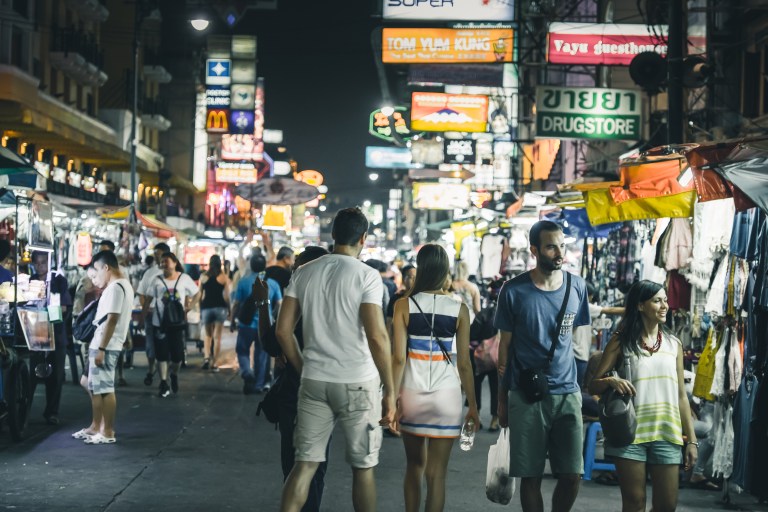
Already first evening after arriving to Bangkok we went for the dinner and Khao San Road – quite famous street among tourists, where you can find typical things for which people come to Bangkok – street food, bars and clubs. It very crowded, but still worth visiting to understand this side of the city.
Sky bars
Bangkok is quite known from its sky bars. However, be prepare that if you want to enter there, you will need to wear long trousers. It’s contra intuitive as Bangkok is very hot city, but it’s quite widely accepted policy – we couldn’t enter most of them as we didn’t have long trousers. However we were lucky as in one place they didn’t really pay attention and allowed us to enter (most probably, because there were not so many customers at that time). It’s really worth to get there, as view on the Bangkok from the top is spectacular!

Day 2 (Bangkok)
We decided to devote this day to see the main tourist attractions in Bangkok. In the morning we picked up transportation by the boat. It’s nice to see Bangkok also from the side of the water.
Wat Pho (#325 on the 500 list of ultimate traveller)
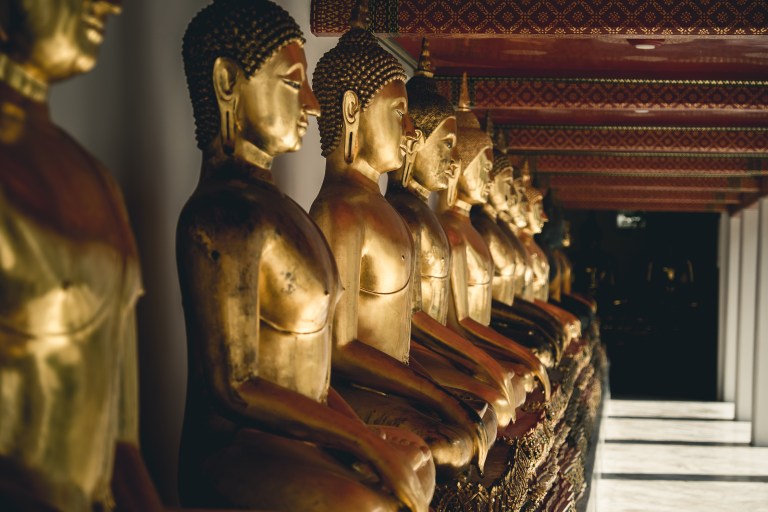
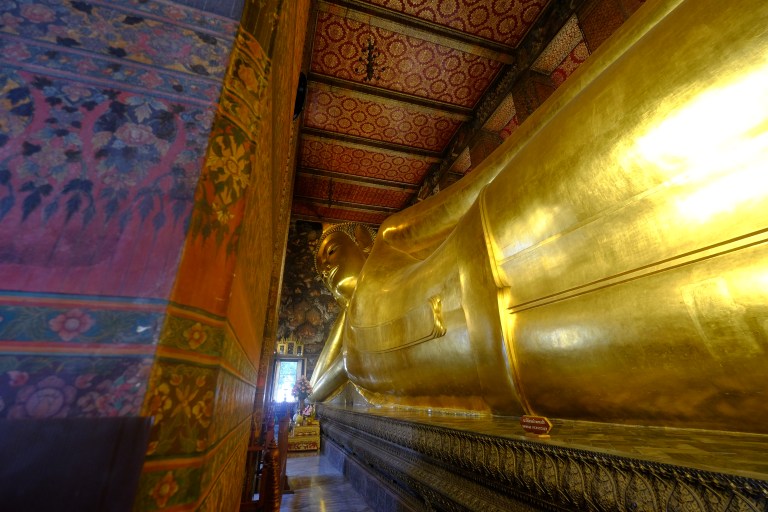
First we tried to visit Grand Palace, but unfortunately it was national holiday and therefore crowd was quite heavy and site was open only for few hours. We decided to do other places first and the most obvious choice was Wat Pho – second biggest attraction of Bangkok. It’s a temple complex with one of the biggest reclining Buddha statute in the world – its length is more than 45 meters. Except of this, you can find many many more Buddha statutes and pagodas and all of them are quite impressive.
Wat Arun
We decided to skip this site as you can’t go in anyway. We only found a nice spot to take pictures from distance.

Wat Traimit (Golden Buddha)
It’s the biggest golden Buddha statute in the world, which is made completely with real gold. It is indeed impressive (and quite expensive), but I found Wat Pho much more interesting.

China town
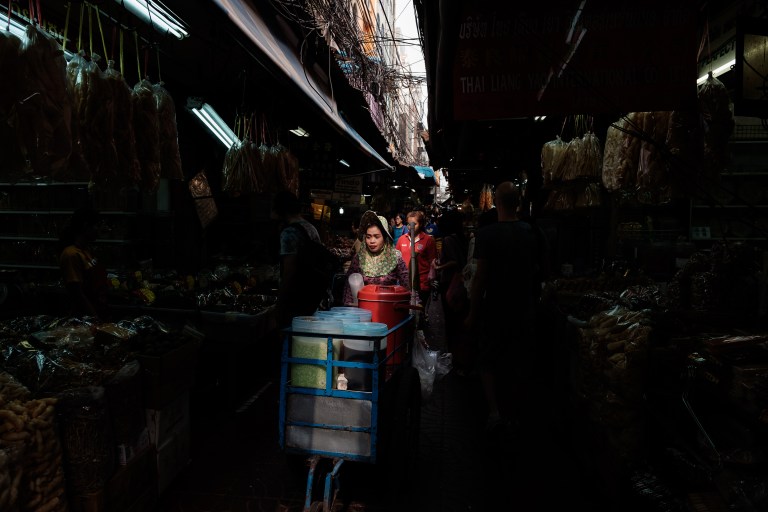
I found this part of Bangkok very different as Chinese minority is quite big there and their China town is distinctive from other parts of the city. It’s very crowded, full of shops, street traders, small and big markets. I can imagine many people are coming here to make their groceries or just eat something. You can easily spend few hours on going between these shops and streets.

Jim Thompson’s House
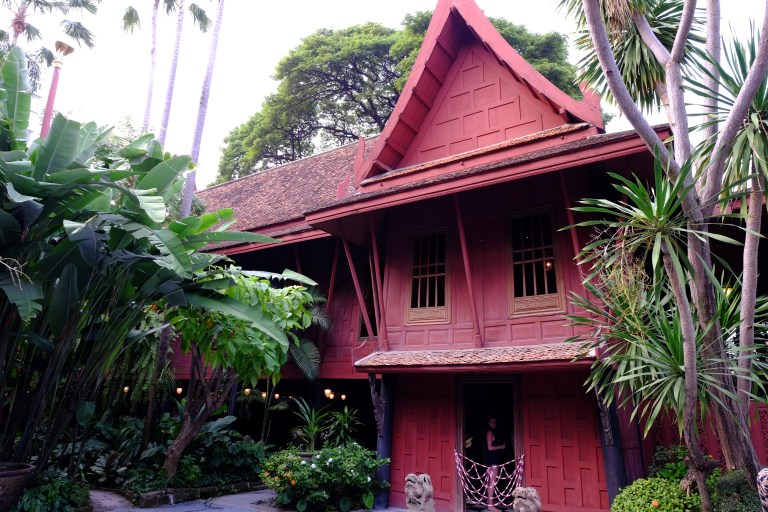
Jim Thompson was a guy who after visting Thailand fell in love with this country and decided to move there. He was an architect and therefore he built his house using typical Thai architecture. He even brought typical Thai houses from the countryside and build his apartment in Bangkok. Worth visiting, but if you will miss it, then you will be also fine.
Day 3 and 4 (Hanoi)
On Tuesday morning we flew to Hanoi in Vietnam. We had flight with AirAsia and that was one of the nicest flights we had during this trip (except of course the flights with Emirates!). The only funny thing was that you “book” your meal upfront during buying the ticket. Not everyone gets this meal, so I guess you can skip it during reservation and you will get cheaper price (but I’m not fully sure about it).
Once we have arrived to Hanoi we took Uber to get to the city centre. To be honest, I was quite shocked with the fact that Uber is present in Vietnam, but throughout the trip it turned out the best way to go around the cities. In Hanoi specifically we mostly walked, but time to time we were using such option. It’s worth mentioning that the price of Uber in Vietnam is really cheap (with two people in the cab long trip is almost equal to the normal public transport in Western Europe). Please also note that public transportation in Vietnam is not the best one so you will be rather not using it.
We slept in Moon hotel. It was okeish, I can’t say a bad word about it, but it also didn’t surprise me positively with anything. I would say for the price it’s ok. We even saw some people coming over from other hotel, which turned for them to be a disaster. After coming in, they will ask you to sit down for a moment until your room is ready and they will use this time to try to sell you trips. But this schema will repeat over and over in all the hotels in Asia and there is nothing to be annoyed with. You can use this occasion to get some interesting isights about the city, get some free maps, etc.
Regarding food you will probably just eat in random places around the city during walking, but for coffee I can recommend Highlands coffee chain and for eating Apron Up Restaurant (66 Bat Su Street). It’s much nicer to sit on the 1st floor, food is very good and waiters are often local students who are eager to talk in English and learn that language. It gives you some chance to get more local information and insights, which is not so easy in Vietnam.
Old quarter (#31 on the 500 list of ultimate traveller)
Our hotel was located in the Old quarter of Hanoi. The whole district is on the #500 list and it is there not without a reason. When I was imagining Asia before this trip, in my mind it looked exactly like this place. Old buildings, small shops everywhere and whole life happening on the street. People sit there whole day, talking with others or running their shops. Sometimes “shop” is highly exaggerate word as in reality it’s just two baskets full of fruits or sweets, which are carried whole day on someone’s shoulders. It’s looks quite sad and it’s hard to believe that people are able to make living out of this. Interestingly enough, you can find any type of goods sold in that way, sometimes even toilet paper.

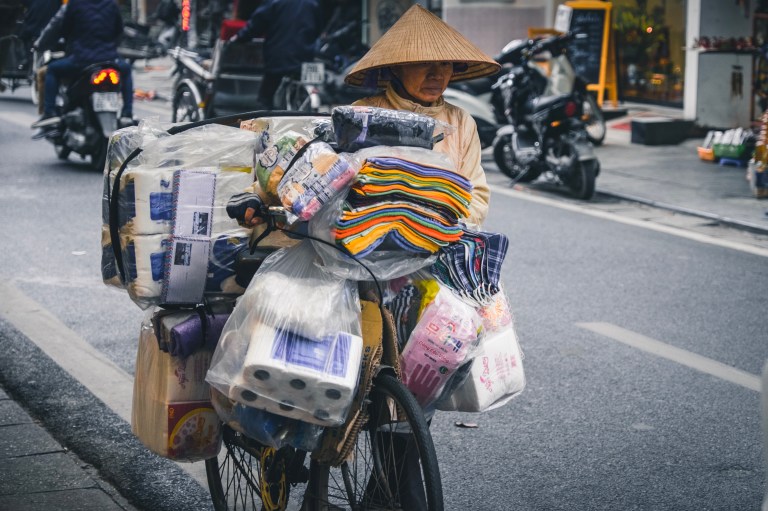
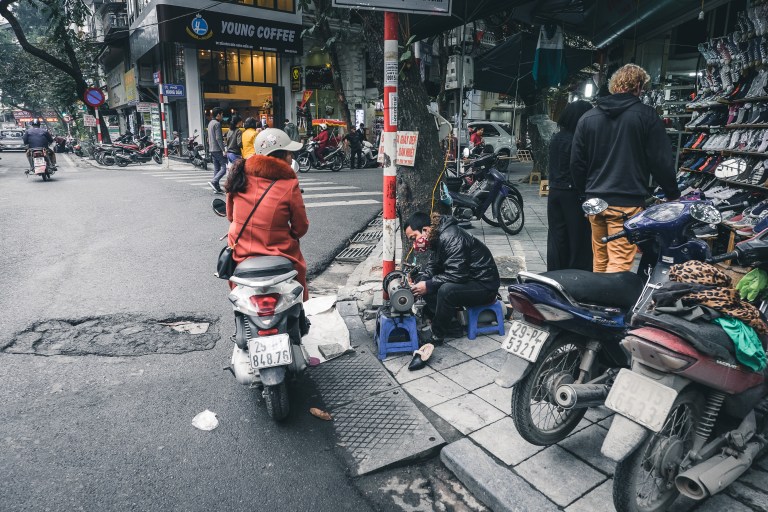
People also eat on the street. Or get shaved. Sometimes you can even find people getting haircut on the street. And in the evening in some places you will see bonfires (!) on the pavement in front of the building. When the day is finished, small merchants sleep in their tiny shops only to open them early morning next day. All life happens on few square meters of the shop and pavement next it. This creates amazing atmosphere and even tough there are a lot of tourists, you still feel this is fully authentic and immersive experience of Vietnam.
The most shocking part of old quarters (and all Vietnam big cities) is road traffic. Cars are not so popular, but scooters, motorbikes and bicycles are everywhere and they make continuous flow of vehicles. It’s hard to fully explain it, but you see it as a kind of “scooter river” that has no gaps inside it. It’s important to notice that zebra crossing and lights weren’t adopted well in Vietnam and no one really pay attention to them. These all together makes things like crossing the street almost impossible. Many times I was just hiding behind local mother with children as it was the only way to get to the other side. After some time you start getting the whole concept – secret lies in keeping constant pace when crossing. Scooters are not riding fast and they keep constant pace. It means you have to do the same – enter the street even if you see them riding and just walk forward. Don’t speed up your pace and never stop. Keeping constant pace allows others to predict your movement and scooters will start to go around you. It’s almost like going to the river – water will just continue to flow even if you are in it.
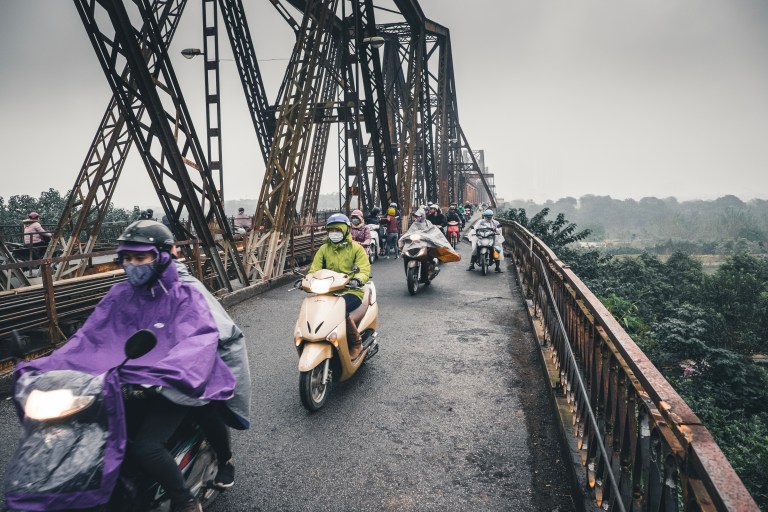
Scooter is “the thing” for ever Vietnamese person. It allows you to get to work, buy groceries, pick up children from school and many many other things. Every family has at least few scooters and life of many people is happening without even getting out of it – for example they have their shoes repaired while sitting on the scooter. If you want during your trip, you can order Uber Moto instead of normal car to get this experience in full, but I leave it for your decision once you will see and experience traffic yourself.

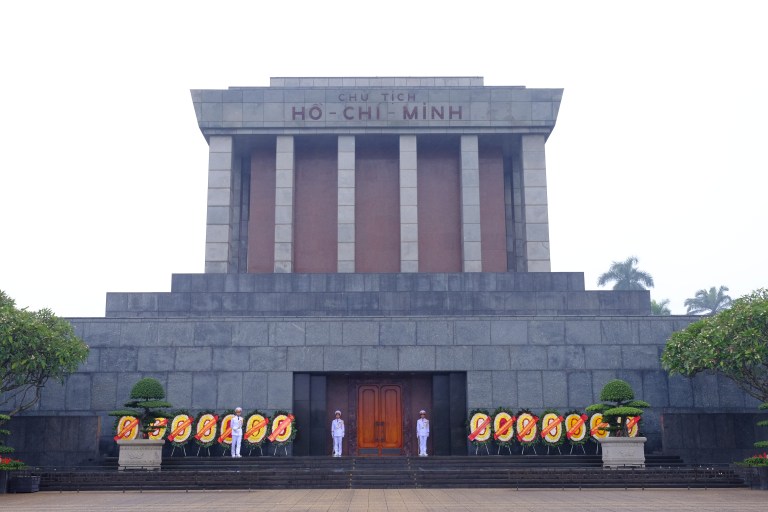
Ho Chi Minh Mausoleum
I never fully got idea of mummification, but in Communism countries it’s somewhat popular. Russia has its Lenin, Vietnam has Ho Chi Minh. But jokes aside, it’s one of the most important places for Vietnamese people. Ho Chi Minh was their leader who won war with colonial France and led the nation during war with America. I can imagine that for them Ho Chi Minh is a national hero. And he also developed sandals made of tires. That’s creative recycling (and good for environment)!
Unfortunately you can’t enter the mausoleum, but nearby there is museum fully dedicated to tell the story of this Vietnamese leader. We decided to skip it (mainly due to lack of time and lonely planet not advising us to visit that place), but it may be indeed interesting place if you have some more time.
Temple of Literature
Oldest university / school in Hanoi. Advertised as a one of the biggest attraction in Hanoi, but to be honest I wasn’t so impressed. I think it’s worth more to spend this time in old quarter. But I may be biased by pouring rain during our visit.

Lotte tower
Hanoi does not have a lot of tall buildings. One of the exceptions is Lotte tower. It’s located quite far from the city centre (you should rather take Uber there), but it’s worth visiting. There is a department store on the ground level with luxurious brands you would never expect to see in communistic Vietnam. There is also a very nice cafe at one side of the store where we drunk one of the best coffees during our trip. It was the first place we really saw a lot of rich people (often very young), so it seems like a place for elite of Hanoi.
On -1 level you can find supermarket of much better quality than normal shops in Hanoi. Next to the shop you can also find entrance to the observatory deck which is located at the very top of the tower. It’s really worth visiting, but often there is a fog above certain height and you won’t see anything, so check this before you enter. Hanoi may not be the most spectacular city you have ever seen from the height, but still it’s nice view, especially in the night or late evening.

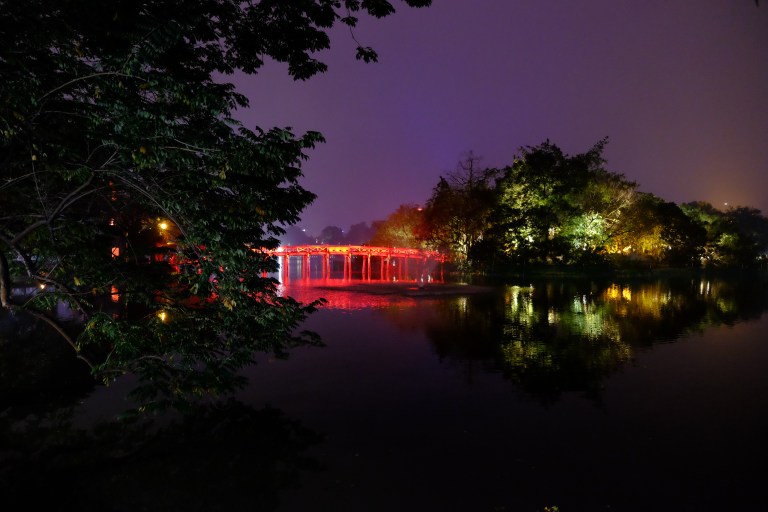
Hoan Kiem Lake
Very big lake in the middle of the city. Especially beautiful during night, worth walking around a little bit. Especially around Ngoc Son temple, where beautiful red bridge is located.
Tran Quoc Pagoda
We got there by accident, but it’s really nice place to visit. It’s buddhism pagoda – I asked few people what exactly pagoda is, but the only answer I got explained me that pagoda is place devoted to gods, whereas temple is a place dedicated to ancestors. But in Vietnam religion is understood differntly than in Western world. Most of the people declare themselves as Buddhists and Confucius at the same time. But I’m not really specialist in this area, so I will stop here before I will make some major mistakes. The only thing that is still worth mentioning is that they leave food at the alters of temples. No special food, but just everyday one – cookies, bananas, etc. We were a little bit surprise with that and we still don’t know what’s happening with that food afterwards.

Le Thai To Str.
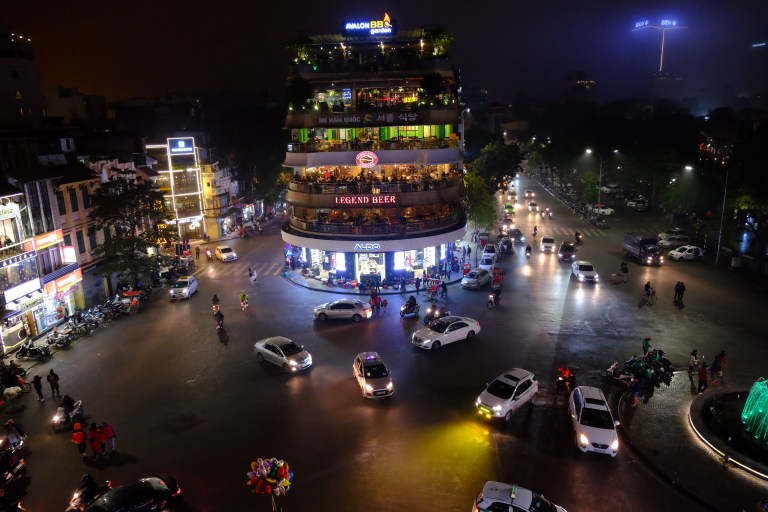
It’s next to the Hoan Kiem lake, on its west side. It’s most European place in Hanoi with many restaurants, bars, coffee places. Especially in the night, it’s one of the few places that is full of live after 10pm. However, you still won’t find there clubs. I recommend to go to Coffee Club at the top of one of the buildings, take some drink and just watch what is happening below on the square. Traffic is crazy and it goes in all directions, which makes kind of amazing spectacle.
Long bridge
Nice to see, but don’t try to go on the other side. It’s crazy long and there is no really space for pedestrians there. We tried to cross it, but after 15 minutes of dangerous walk we gave up and came back.
Leftovers: Imperial Citadel & Water Puppets
These are two places we didn’t manage to see. Imperial citadel does not seem like a very interesting place, but Water Puppets is something we really wanted to visit. Unfortunately we came to late as the last show was cancelled that day. A lot of people advised us to go to Water Puppets, so if you have some time – try it out!
Day 5 and 6 (Halong Bay)
On Thursday morning we left hotel with our baggage and we went for the trip to Halong Bay. Probably you can discuss to leave luggage in the hotel as well, but we knew that we will not have time to pick it up afterwards.
Halong bay (#65 on the 500 list of ultimate traveller)
It was one of the highlights of our trip and one of the best places to visit in Asia. To go there you have to buy trip with travel agency as the entrance to the site is strictly regulated. It’s very important to chose proper agency – you can hear many outrageous stories from people who chose cheaper companies. It’s really worth to invest a little bit more and enjoy your time there. We took trip based on Lonley Planet travel recommendation and it was perfect choice, so I can forward the recommendation for Vega Travel agency. Be careful as many people try to piggy back on their reputation and use very similar names for their business. The best option is to book it upfront: http://www.vegatravel.vn. We went for 2 days & 1 night trip. We started on Thursday morning and came back on Friday afternoon. I think it’s perfect duration, but you cannot get wrong with taking longer trip.
Halong bay is an emerald water bay with thousands of green small islands of the pillar shape spiking out of the water. It looks just amazing and outstanding. Some people say it’s not worth going there as it’s full of garbage and full of people. To be honest I haven’t seen so much litter and hundreds of ships and boats around were not a problem – they give even more charm to the bay. Especially, because the area is very big and you don’t feel there so many people around, except of one island where you can get out of the boat and climb to the top of the hill. That’s the only place where you really feel too much crowd. Next to Halong bay there is also Bai Tu Long, which is much less popular, but it may be also interesting place. We didn’t go there, but I’m leaving it here for your inspiration.
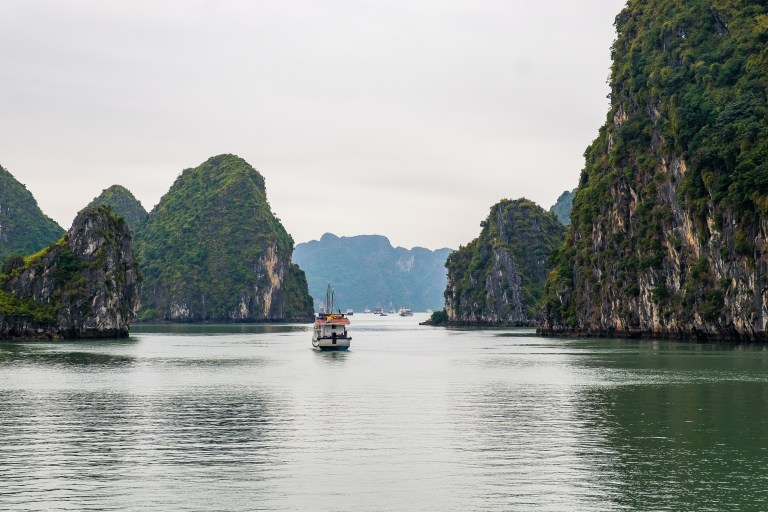
The bay is on the UNESCO world heritage list and it’s one of the highy visited place in Vietnam. One of the most iconic spots in the area is even illustrated on the Vietnamese banknote. In Vietnamese the name of the place can be translated as the “descending dragon”. According to the legend when Vietnamese people where fighting to establish their country, dragons descended from heavens to help them. They created emerald wall to protect Vietnamese soldiers and the wall after years turned into the islands.
Halong bay is located around 150 km from Hanoi. You will be picked up from your hotel and then the ride takes few hours. It’s really interesting to observe how big and spread Hanoi is and how the life of people looks like outside the main part of the city. To be honest I didn’t spot any non-urbanized area between our hotel and Halong bay. On the way you will stop in the pearl factory, but it is not so interesting. Then you will be onboarded to boats. Ours was very comfortable and we enjoyed it a lot. Two important things – take a lot of mineral water with you – there is water on the boat, but I wouldn’t use it for brushing your teeth and for sure not for drinking. During trip you will get food (delicious), but drinks you have to buy on your own – that is where your own water comes in handy, even if you want to drink some beer or other drinks additionally. Also remember to have small change in dollars – it will make payment much easier and will allow you to pay tips for the crew (it’s not necessary, but kind of expected).
During cruise you will go between the islands fo many hours, you will visit one of the islands where you can climb to the top of the hill and you will have some time of canoeing. Especially the last activity is super cool – we did it in late afternoon when all the people were back on the boats and therefore we could appreciate beauty of the place from the level of the water without any distractions. We even spot some monkey on one of the islands.

The only thing that was annoying during our cruise was the weather – it was kind of cold and foggy for the whole time. But I guess we were just unlucky – my friends who where in the same place few day later enjoyed Halong bay in full sun.

At the end of the trip you will also visit limestone cave. It’s big and make nice impression, but you will see even more impressing caves in Vietnam later on during your journey.

“Sleeping” train to Dong Hoi
After coming back to Hanoi, we took night train to Dong Hoi. It was quite a long journey not in the best conditions, but still – being in Vietnam and do not take sleeping train is a kind of a crime. Be ready for very bumpy journey with some cockroaches onboard. As I wrote before – take the 4 people carriage and be ready that you will not be willing to use toilet for the whole trip (10 hours).
Day 7 and 8 (Phong Nha caves)
We arrive in the morning to Dong Hoi from where we were picked up by the private transport organised by Farmstay – it’s a group of hostels around Phong Nha city, which is one of the most popular places to stay for foreigners. They have also quite a variety of trips you can book. However, they are not organised by Farmstay, but by the cooperating travel agencies. Still it was good for us to book with Farmstay as they organised our pick up and after it was finished, they dropped us at our hotel.
Phong Nha is the region full of caves. They were used during Vietnam war for North Vietnam soldiers as a protection from bombing. They are also great shelter – cold in summer and warm in winter, they keep the same temperature for the whole year. Nowadays, the whole area is part of the national park around Phong Nha city (very small city). You cannot just enter the National Park on your own – it’s still full of bomb and landmines after the war.
Phong Nha National Park: paradise cave and dark cave (#168 on the 500 list of ultimate traveller)
On the first day in Phong Nha we have decided for the typical tour around the area – paradise cave and dark cave. They are the highlights of the area and they are very easily accessible. It takes almost whole day to visit both places, but everything including the meals and transport is included in the trip. Take with you towel, clothes for change, some small change for deposit and very important – things for swimming.
Our first stop, Paradise cave is the biggest dry cave in the Asia. It’s really huge and someone put great effort in lightening up the whole place, so in effect it makes great impression.

After lunch we went for next attraction – Dark Cave. It’s much smaller and there is no light inside it. To get there you have to canoe or swim. In Dark Cave the nicest part is the “mud” section, where you can get fully covered in mud (accordingly to the guide, it’s good for you skin 🙂 . After the visit in the cave you can take a while to enjoy river next to it, with zip line and canoes. It’s quite fun, but in December it was cold so after short time we run back to the bus.
Bamboo cafe & Heritage by night hotel
We ate dinner in Bamboo cafe, which is one of the best places in Phong Nha. It looks like hipster restaurant in Europe and the food is really delicious. I highly recommend this one!
We slept in Heritage by night hotel. It’s really cheap and for this price it was quite decent. It even had pool, which we noticed only 5 minutes before leaving (anyway it was too cold to enjoy it).
Tu Lan Cave (#168 on the 500 list of ultimate traveller)
Next morning we started second trip to Phong Nha National Park. This time we chose Tu Lan Cave as it was more adventurous trip than the day before. We took one day trip, but I think it would be interesting to take 2 /3 days tours during which you sleep inside the cave.
We reserved tour with Oxalis, which turned out to be really good choice (thank you again Lonely Planet!). Trip was professionally organised, everything was explained to us clearly and I felt safe during the whole trip.
To be honest we thought it will be easy-peasy tour like the day before. It wasn’t. This time we entered real Vietnamese jungle and there was no doubt regarding this. I noticed that it will be much more adventurous the moment we were proposed to change our shoes to Cambodian military shoes. This change was very good choice – you are going to walk in the mud you have never seen before, so don’t even try to take your own shoes. Also try to wear clothes that you are ready to throw out after the trip. For example, I have fall down to the mud and thanks to that my trousers cannot be fully washed until today.
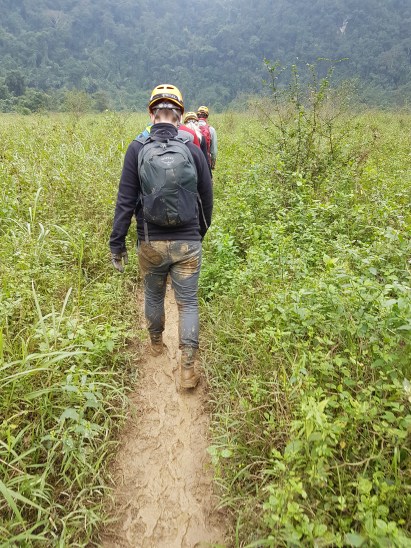
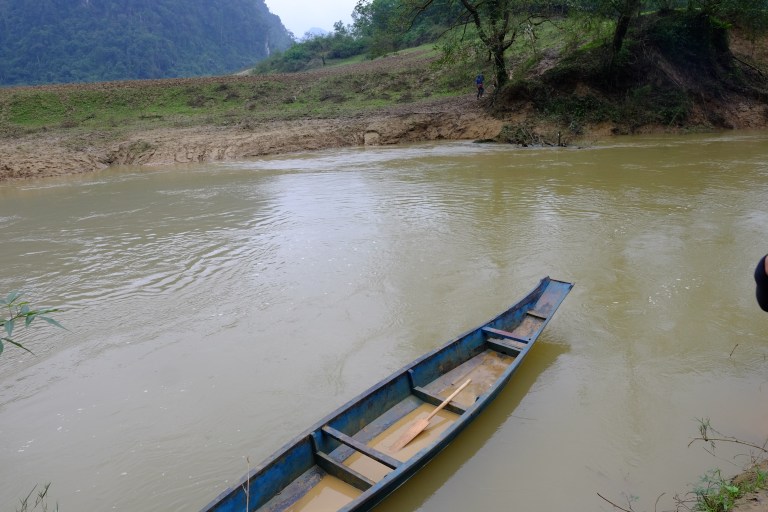
The main adventure of the trip is that you will have to go on rough terrain with mud and stones, often climbing up or down at the same time. You will also have to cross the river with strong current on a very small and wobbling boat (it was sinked when we arrived to the river!). But the biggest challenge is waiting for you in Tu Lan cave. It’s much less spectacular than Paradise Cave, but inside you will meet spiders big like fist (they look scary, but they are rather not dangerous), you will have to go down 15 meters on the ladder and swim in the underground river to get outside (you can also take the boat, but I recommend to swim!).
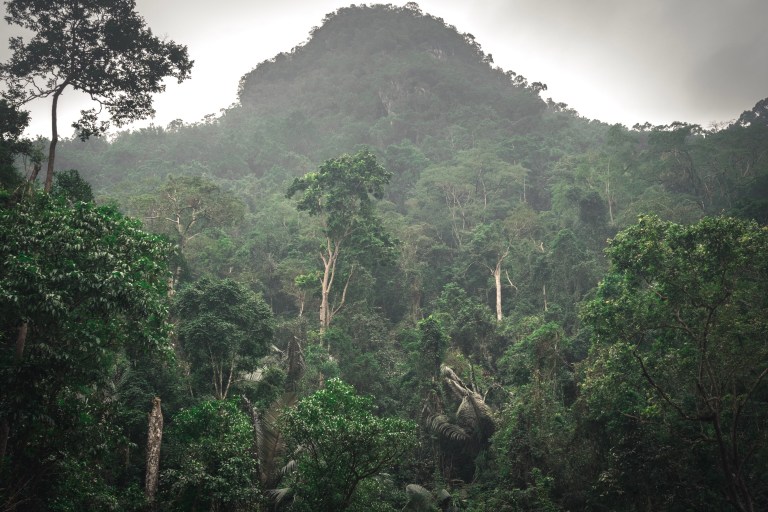
But if you are willing to take the adventure, there is a prize waiting for you – amazing views and nice feeling of getting warm next to bonfire with delicious food in the middle of the jungle. One of the King Kong movies was shot in that region and I can imagine why guys from Hollywood chose this place.

Dong Hoi
After the adventurous trip we came back to Phong Nha and took private transport to Dong Hoi. We just asked at the hotel reception to organise it for us. It was relatively cheap bearing in mind the distance. Taking bus on this route is not the best idea – you have to fit to schedule and it takes much longer.
Day 9 (Hue)
There is not much to see in Dong Hoi, so we just made a short walk in the evening and very next morning we took train to Hue (just one very important remark – take soft seats. Never ever hard seats. They are cheaper, but they are just park benches in the train). Hue is the old capital of Vietnam and it is really interesting place to visit. One day is enough for that, but missing this city would be kind of shame.
Imperial citadel
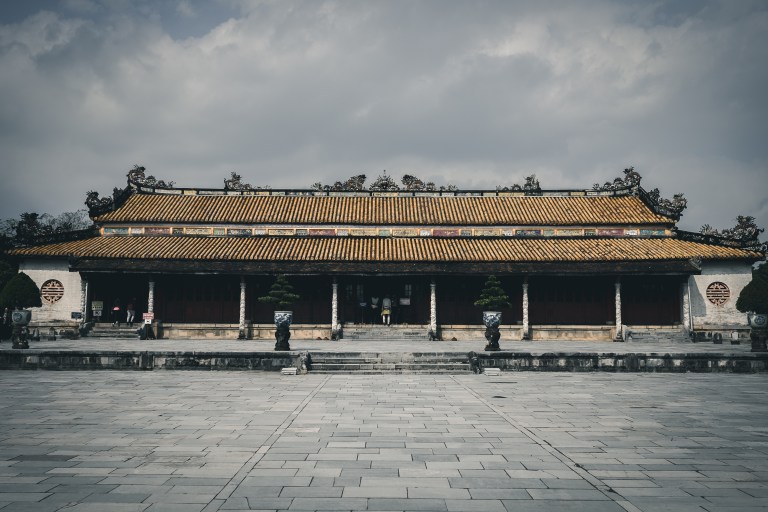
The biggest highlight of Hue is the house of Vietnamese emperor. Inside you can also visit “Purple city”, which is the same as forbidden city in China – quarters with access only for emperor and his closest family. Some parts of the citadel is destroyed, but still it is worth visiting.

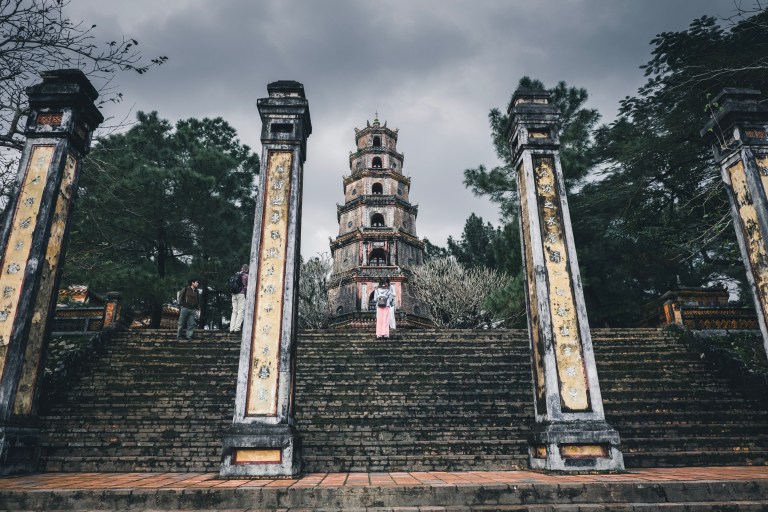
Thien Mu Pagoda & Tomb of Tu Duc
Located a little bit outside the city. We were thinking about taking bikes to get there, but it was too rainy to go for this option. Instead we took cab. It was quite hard to catch Uber, so we just negotiated with taxi driver. Important – use Uber as reference price, add a little bit extra and during negotations do not agree to use counter and get fixed price instead. The best option is to go away at some point – usually this makes most of the drivers agreeing to your price. You may get better price if you will hire driver to visit both Thien Mu Pagoda, Tomb of Tu Duc and bring you back to city. Otherwise they know they will have problems with catching client for the way back.
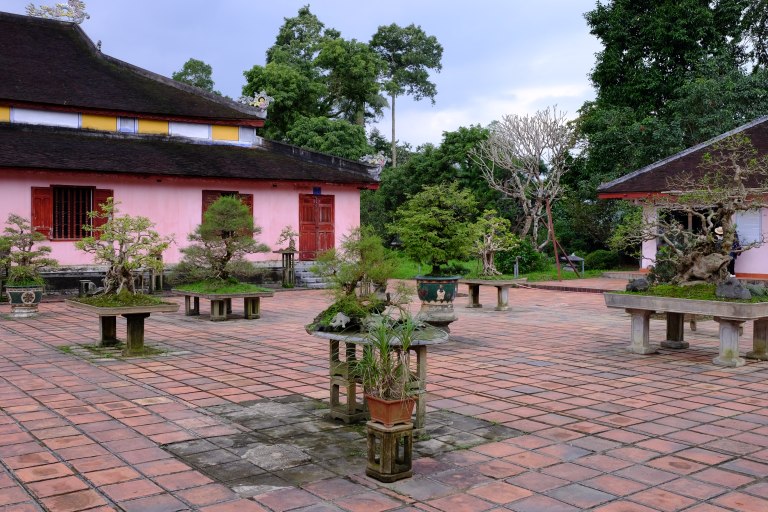
Thien Mu Pagoda was very nice place and I liked it a lot. It was a little bit destroyed and that gave place mysterious character. I liked a lot the bonsais trees at the spot. Tomb of Tu Duc on the other hand wasn’t impressive for me. It was quite big (it took us 1 hour to go around) and some places were nice, but I think I wouldn’t miss anything if we would skip it.
Day 10 and 11 (Hoi An)
In the morning next day we again took train to get from Hue to Da Nang. It was the most pictures train ride in my life – you see sea on one side and mountains on the other. There is not a lot to do in Da Nang except of seeing “dragon bridge”, so we rather quickly took taxi to Hoi An. It’s quite a distance, but thanks to negotiations with taxi drivers we got cheaper price than with Uber. Again, be very strict in negotiations and if you are in small group they can use smaller car to propose you cheaper price.Once we arrived to Hoi An we were positively surprised with the quality of our hotel (Hoi An Field Villa & Spa). It was a little bit expensive (30 EUR per room), but we needed to rest a little bit after all the adventurous of the previous week.
Hoi An old town (#83 on the 500 list of ultimate traveller)
Hoi An is magical city and it reveals it magic only after sunset, when thousands of lanterns are lighted up all around the city. This makes amazing impression and it was in top 3 places of our trip. City is very touristic, but still it’s worth spending few days there. In the summer it’s probably a little bit less crowded as a lot of people go to the nearby beach.

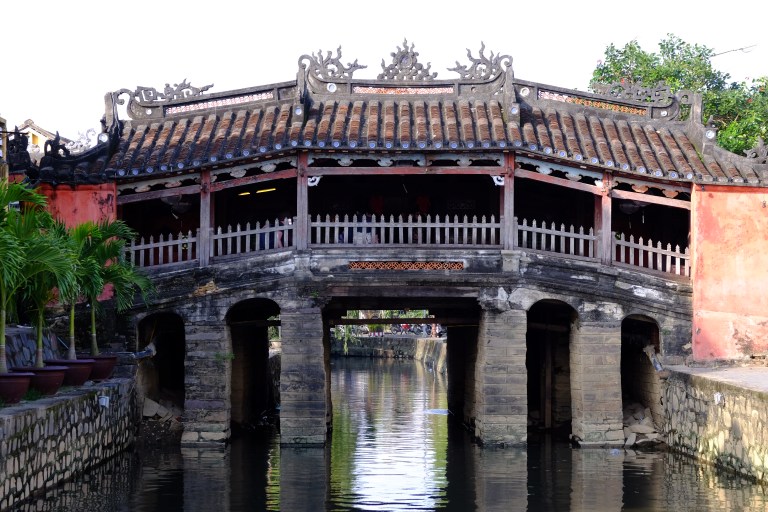
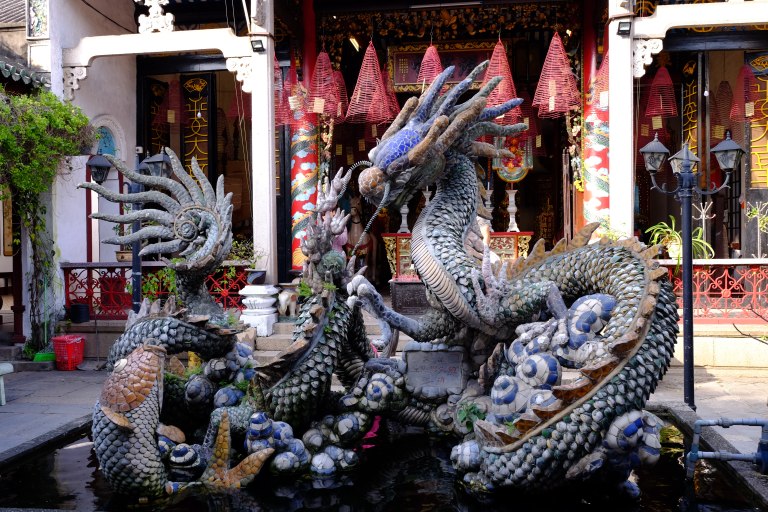
To experience Hoi An to the fullest you should walk for few hours after sunset and visit few spots during the day. You should buy one ticket which give you option to visit 5 spots around the city (out of around 20). The main places you should visit are: Japanese Covered Bridge and Quang Trieu (Cantonese) Assembly Hall.
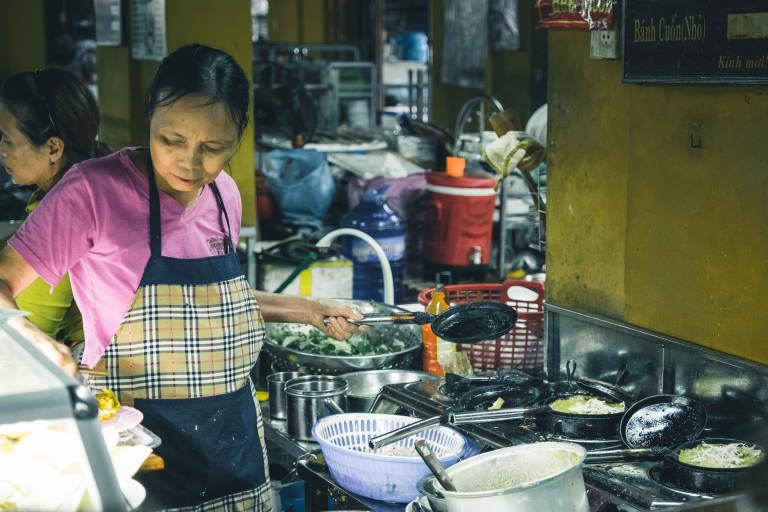
For eating we can recommend two places: Morning glory, which is the most famous restaurant in Hoi An and Market with street food in nearby city centre. First one was not as expensive as we were afraid of, food was very good, but to be honest we expected something more from such a famous place. The market on the other hand was very cheap and the food was awesome. But keep in mind it’s rather heavy and sometimes you can get bad bacterias while eating street food there. One advice – all the stalls are working together – each produces 1 or 2 dishes which are shared among other ones. Therefore, it really doesn’t matter which stall you will chose for sitting. Outside the market there are also several places where you can eat Durian – the most stinky fruit in the world, which is also quite tasty (if you will be able to sustain the smell). Worth trying!
Tailored suit & leather goods
Hoi An is well known for their tailoring skills. You can find many many tailors where you can get bespoken handmade suits for a cheap price. If you have only short time in the city they can make it in less than one day and in the worst case – send you a package. Additional thing is that if you like the suit then you can order new one even remotely after coming back home and they will send it to you (as they have your measurements). Lukasz ordered one suit and I think he is quite happy with it (especially bearing in mind how cheap it was). You can also get other clothes – shirts, jackets, trousers, etc. We were advised in our hotel to use BeBe tailor (hotel gets small fee from them), but Lukasz decided to go for other tailor, which was recommended in TripAdvisor. Generally, I think the quality in most of the places should be similar.Similarly to suits, you can also order handmade shoes, wallets and other leather goods. They are very cheap and made according to your wish (design and material). They are of acceptable quality – my wallet survived already few months and it’s still working. However, don’t expect the same quality as buying one for example in Italy. We ordered our wallets in Leather World based on the hotel recommendation. If I remember correctly it costed something like 25$ per wallet.
My Son temple & bike tour
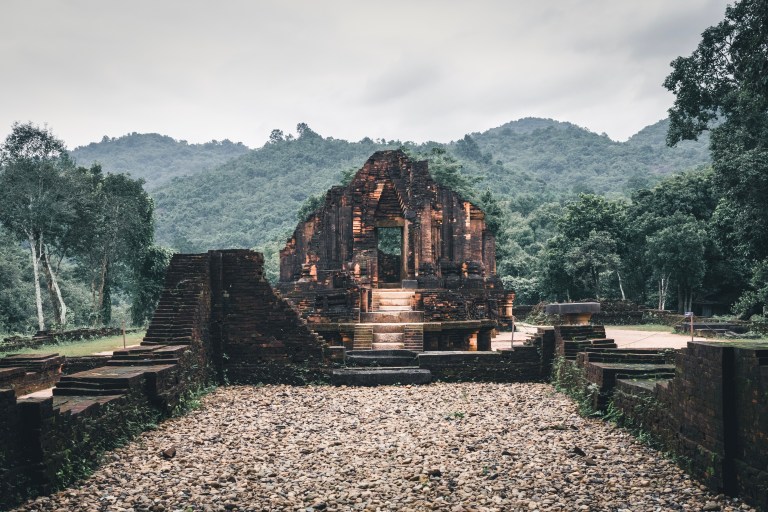
We finished most of the things in Hoi An on Tuesday, so we decided it will be nice to do some activity on Wednesday. We decided to go for bike tour to My Son, which is complex of Hindu and Buddhists temples in the middle of the jungle. Many people told us it’s smaller version of Angkor Wat, but to be honest it’s completely different level and it cannot be compared with astonishing Angkor Wat. But still it’s a nice place to visit and it’s amazing to know that it was lost for centuries until French re-discovered it. Unfortunately the whole complex was heavily destroyed by American bombs during Vietnam war. They still try to restore whatever can be restored.
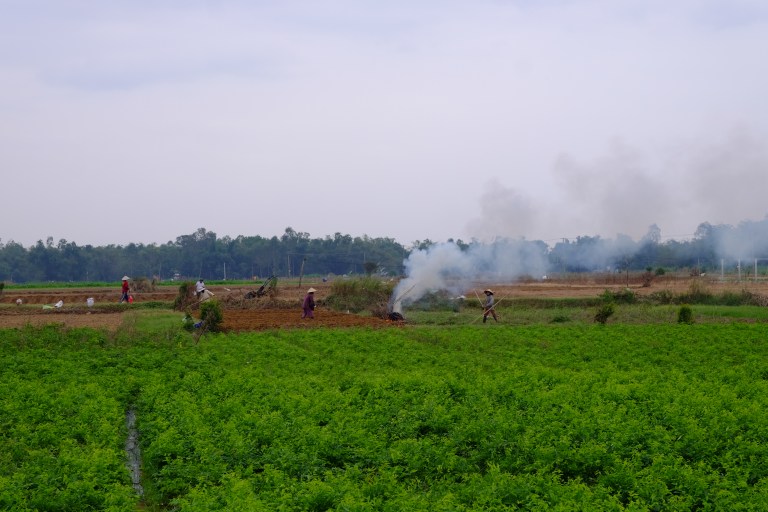
The bike trip was quite intensive (we did 40 km in few hours), but really interesting. We went through Vietnamese villages, rice fields and markets, so we had chance to see places that normally you don’t see while travelling between big cities. We chosen Phat Tire Ventures (Holy Moly Biking tour) to make this trip and it was very good choice – equipment and bikes were in perfect condition and everything was organised smoothly. I highly recommend taking this trip to see real life in Vietnam!
Day 12, 13 and 14 (Ho Chi Minh city)
On Thursday morning we took a cab back to Da Nang and from airport we flew to Ho Chi Minh city (also called Saigon – both names are equal and people tend to use Saigon even more often). First impression was that we are in different country. Saigon is completely different than the north of the Vietnam – more developed, full of skyscrapers and much richer people. You can find Starbucks on every corner and many other western brand (including McDonalds!). It’s kind of weird having Prada shop next to the monument of Ho Chi Minh (communist leader fighting with French colonialism).
We tried to understand why Saigon is so different and we found two reasons – just historically it was always better developed and second of all – it is a centre of rice trade. Currently Vietnamese government tries to make Saigon playing the same role for Vietnam as Shanghai is playing for China.We enjoyed Saigon a lot. It’s much more “Western” than Hanoi, but still it’s very different than any western big city. Still, scooters are the main way of transportation and it is even harder to cross the road here than it was in Hanoi. But this city has a climate that it’s hard to reproduce. It is like taking Vietnamese culture and mix it with American and French culture at the same time. However, I think we devoted a little bit too much time to this city. We spent there 4 days, but 3 would be enough.
Cu Chi Tunnels (#306 on the 500 list of ultimate traveller)
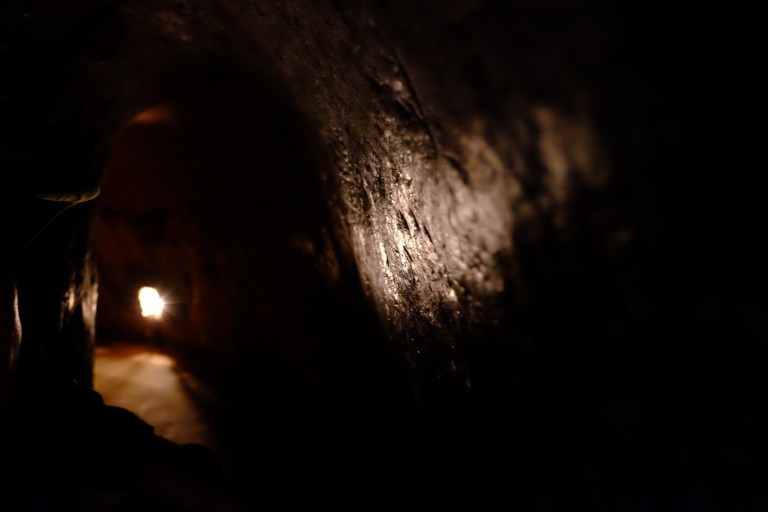
On Friday morning we went for trip to Cu Chi Tunnels. This is a complex of tunnels which were used by Vietkong to fight with Americans and South Vietnam soldiers during Vietnam war. It was very complex system with proper air filtering and hidden entrances. Americans couldn’t even enter them as they were too big for that – they took soldiers from Philippines to help them fighting.Nowadays, it is very tourstic place, but still very interesting to see and it’s one of the most important points during your visit to Saigon. The most scary part of the tour is the exhibition of the traps used during war. You will be even able to walk short distance in the tunnel. Be careful if you have claustrophobia or you are very tall – they are really really narrow and short.
We booked trip with Les Rives company – the one with speed boat. We didn’t want to loose too much time for commuting to the tunnels. We also thought about booking Can Gio forest tour, but after reading many negative reviews on Internet, we decided to skip this one. Especially idea of being bitten by aggressive monkey made us not liking it.
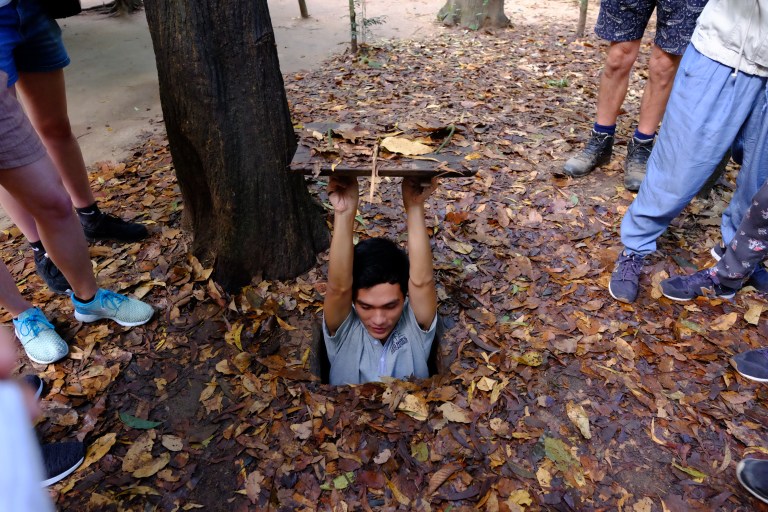
War Remnants Museum
This museum shows history of Vietnam War. You see quite a lot of propaganda there, but anyway it makes strong impression on people visiting it. Especially top floor with photographs taken by American journalists during the war. It takes around 1,5 – 2 hours to go around.
Reunification Palace
Governmental building used by government of South Vietnam before it was taken over by North Vietnam. Nowadays it shows history of fall of South Vietnam. Quite interesting and worth visit (it takes around 1 hour).
Notre Dame Cathedral & Central Post Office
Reminiscence of French colonialism era. Interestingly enough, in Vietnam there is quite big minority of catholics (especially among old elite of the country). Both landmarks are for rather quick visit, few pictures and going further.

Bars & restaurant
Saigon is full of nice bars and restaurants. One thing that I really encourage you to try is bubble tea – it’s a tea with milk and Tapioka jellys. It’s very popular all over the Asia. It has very specific taste, but you can get used to it and even start liking it.
My favourite spot in regards to nightlife is Walking Street Nguyen Hue. Next to it there is a building with flats which were converted from inhabited ones into the bars and restaurants. It’s really hipster place, because building looks like people still live there, but each flat is now different restaurant or bar. The view from the upper bars is just amazing. I could spend hours just looking from there on the main square and walking people.
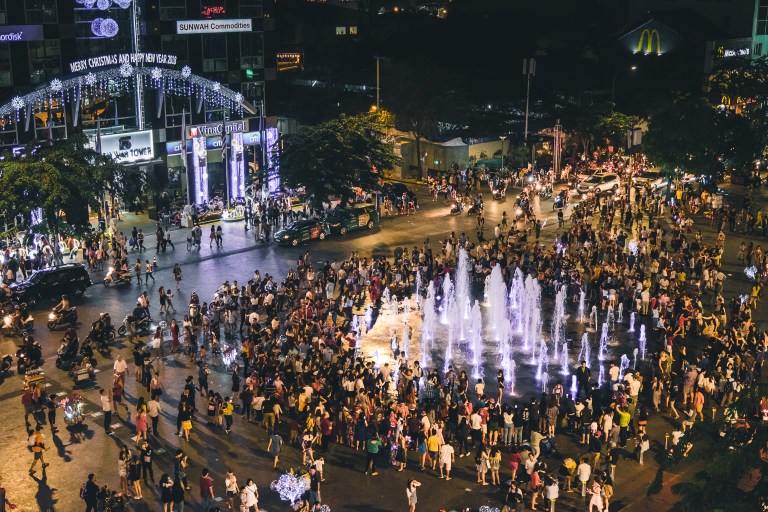
Bitexco Tower and Sky Deck
You can also go the sky bar in the one of the highest buildings in Saigon – Bitexco Tower. Entrance is through shopping mall and you can chose whether you want to go to Restaurant or Cafe. Prices there are quite high even for European standards, so I would rather recommend going to Cafe. View is nice and you can easily see how big Saigon is.
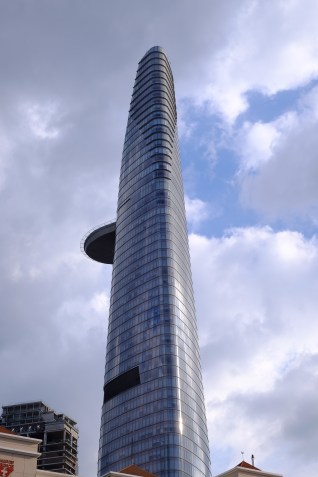
Backpacker district
This is a place we found only on the last day of our stay in Saigon. It turned out that most of the nightlife is concentrated in this area. We found crazy amount of bars and people walking on the streets. If we would know this before, most probably we would visit it a little bit longer or second time. It was really cool! It’s located around Pham Ngu Lao Street in west part of the city.
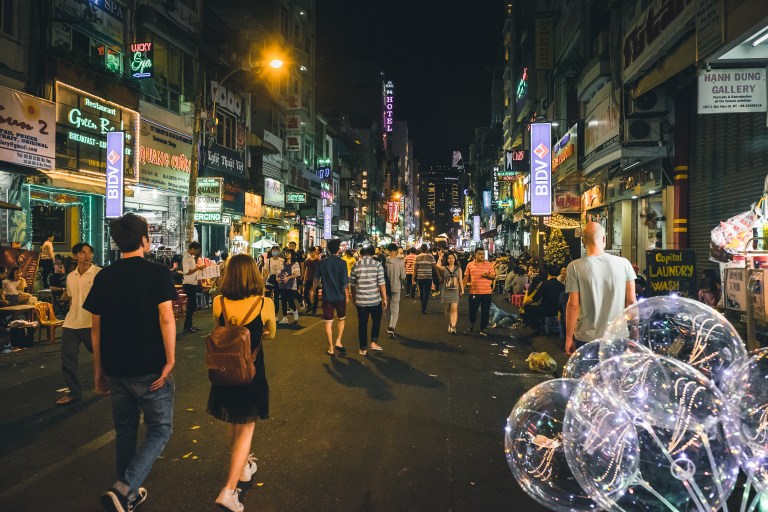
Kopi luwak
As I mentioned already – if you are fan of coffee you will like Vietnamese coffee. And if you will like Vietnamese coffee you will love Kopi luwak. This is one the most expensive coffees in the world, produced only in few countries. For some people it’s a little bit disgusting as it was pooped out by weasel-kind of animal and afterwards just cleaned and roasted in order to be served for people. Regardless how disgusted you are with the production process, you should try it. Coffee from Vietnam is tasty, but in this version it’s just awesome. We tried to buy some of these coffee and brew it back in Amsterdam, but we couldn’t copy this amazing taste from Saigon. And because it’s Vietnam, even the most expensive coffee is still relatively cheap (if I remember correctly – around 9 EUR). I recommend to choose good place for tasting – we tried it in Trung Nguyen Legend Cafe chain.
Leftovers: Binh Tay Market – it was closed once we arrived there, but after seeing stalls in neighbourhood I don’t think it’s really worth going there.
Day 15, 16 and 17 (Angkor Wat complex)
On Sunday we had a flight with Cambodian airlines to Siem Reap, which is a city located next to the Angkor Wat complex. Unfortunately it was quite heavily delayed, so we almost completely lost this day waiting for the flight. We have heard that such things happen quite often in Cambodian airlines, but I’m not really sure if choosing different airlines would have helped at all – it’s still the same flight even if people bought tickets in different airlines. But fortunately we got hotel room for few hours and they brought us back to airport for next flight.
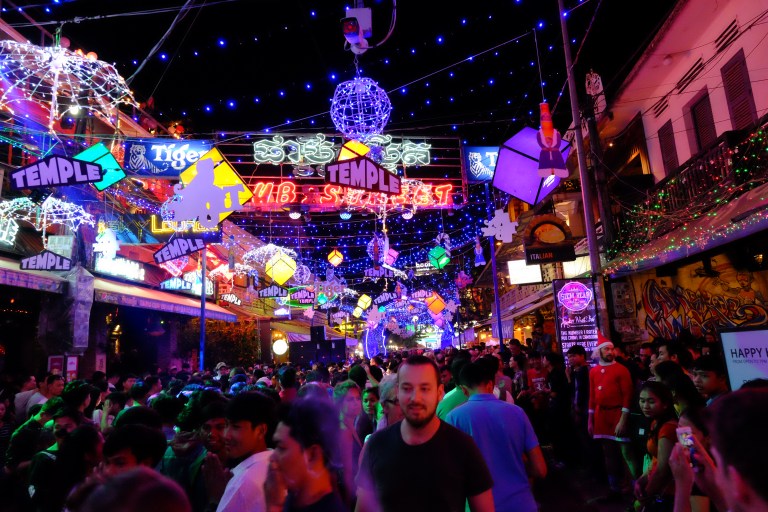
After we finally arrived to Siem Reap, we got visa quite quickly and Tuk Tuk driver organised by the hotel was waiting for us already in front of the airport (it was free of charge service). We took “Golden Mango hotel”, which had it flaws, but was relatively ok, especially for the low price and tasty breakfasts. It was quite far from the city centre, but tuk tuks are so cheap that it didn’t really matter so much.Siem Reap is interesting place. I wrote above already about the “clean” dollars banknotes and strange pricing policies, so I will not repeat myself here. One more interesting thing is that I imagined Cambodia as completely different country and I was surprised how “partying” Siem Reap was. But I guess it was mainly due to touristic character of the city. It would be very interesting to go in the future also to different parts of Cambodia to experience it fully.
Angkor Wat complex (#1 on the 500 list of ultimate traveller)
This is legendary place among travellers and one the top sights to visit in the world. To be honest, Angkor Wat by itself was ok, but the whole complex around it was stunning if you combine it together. The name Angkor comes from the name of the Khmer empire that was ruling in southeast Asia between IX and XV century AC – the complex around their capital (Angkor Thom) is nowadays called “Angkor”. In today Khmer language it also means “city”. The whole complex was built over the time of Khmer empire rule, but most of the buildings were constructed in XII century, when Ankor Thom was the most populated city in the world. Only constructions made out of stone were able to survive to our time, so we can still see city walls and temples around.
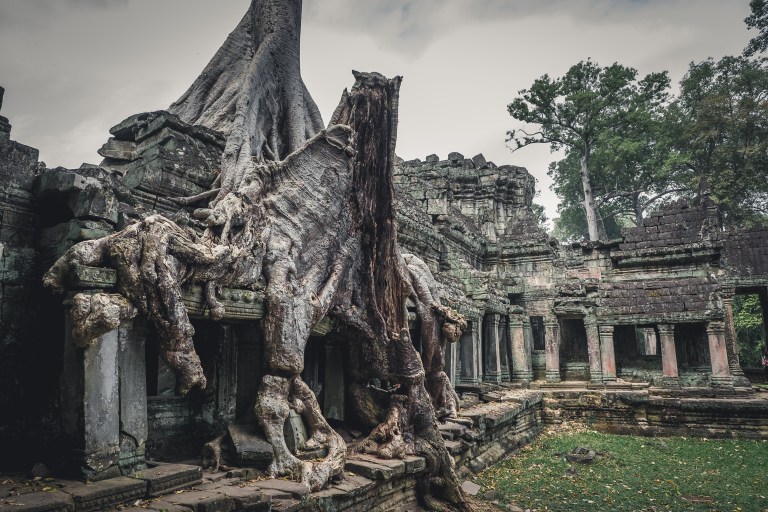
Angkor complex was forgotten for few hundreds years and during that time nature destroyed most of the buildings quite heavily. Especially trees are responsible for big part of destruction. The whole complex is still being renovated, but you can imagine greatness of the city in old days by looking on what has been already done. To be honest, the fact that temples are partially destroyed and covered by trees is one of the reason why it looks so unique. It seems like a very mysterious place with many secrets.
The best way to visit the complex is to hire Tuk Tuk driver for the whole day, so he will go with you from one spot to another and wait when you will be visiting each spot. You can potentially think about taking scooter yourself, but in the hotel they told us it’s forbidden due to too many accidents with tourists, but we can still try to rent it in places outside the hotel. I am not really sure if the hotel guys were not saying this to sell their drivers service, but looking into how the people were driving in Siem Reap, I’m quite happy we just hired tuk tuk driver. I think the other potential option is to rent bicycles, but for that you need much more time than our two days at the site.
In case of our hotel they have pre-approved routes – it means you don’t pay the driver per hour, but for the whole route. There are two options – small circuit and big circuit. Both costed 15$ per tuk tuk (so the more people you have the better). Small circuit consists of the most “iconic” spots of the complex and I think it’s better to start with this one. Big circuit on the other hand can be extended with some temples that are further away from the Angkor Wat. As you see, it means that 2 days is enough to see most of the things. We planned 3 days, but unfortunately we had delayed flight on the first day. If we would have 3rd day, we would make maybe 1 or 2 temples that are further away, but I’m not sure how much value it would add. Anyway tickets are sold in several options, but the most popular one is 3-days ticket. It costs 62$ and it cannot be transferred (they take picture of you). Ticket is checked on entrance to the complex and separately at each site, so don’t forget it from hotel! It doesn’t make any sense to buy it upfront, you can do it once you are entering the complex.
Small circuit consists of:
- Banteay Kdel and Sras Srang

- Ta Phrom
- Ta Keo – temple with many steps. At the beginning we thought we cannot go up, but then we found out you can get to the very top without any problem.

- Thommanom
- Victory Gate
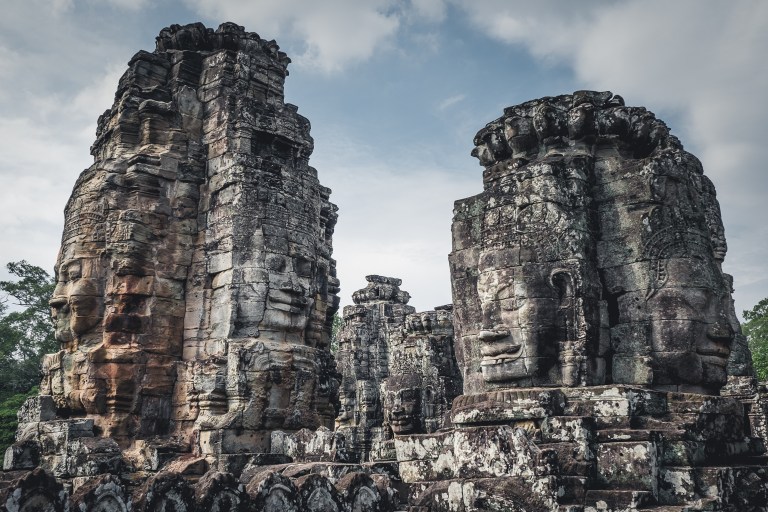
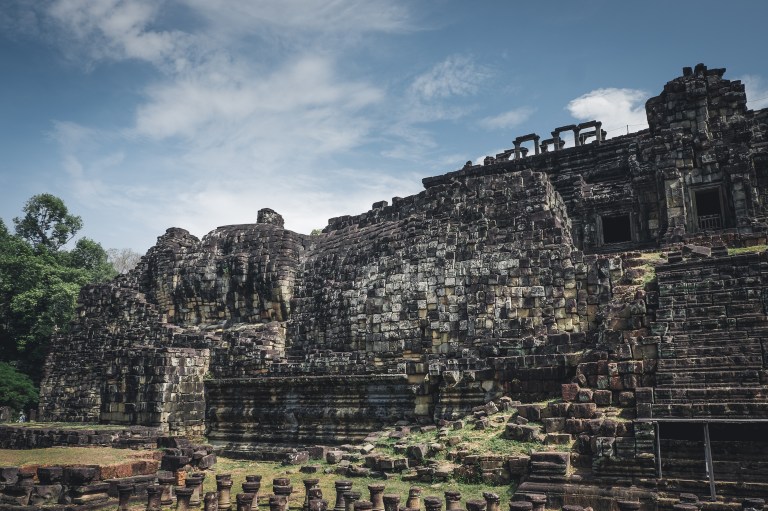
- Bayon – my favourite place in whole Angkor Wat complex. It’s a temple full of mysterious faces (most probably representing Buddha), which gives you shivers while looking at them. I could wander there for hours.

-
Angor Thom – the capital city itself. The most interesting part is the elephant terrace with sculptures and lying human (Buddha?) on the side of one building.

-
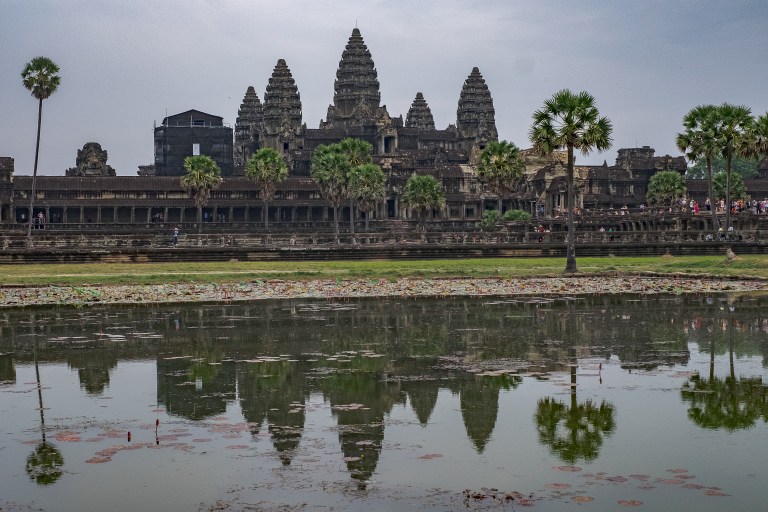
Angkor Wat – the most famous spot of the whole complex. It is hard to believe that it was constructed in XII century during only 35 years – it’s really big. We hired guide to explain us things there – it was ok, but nothing special. If you will negotiate hard for the price, then it is worth to get it. You can also come for sunrise here (with additional small fee for the driver), but unfortunately the weather was rather bad during our visit, so we decided to skip it (it’s also very crowded)
Big circuit consists of:
- Pre Rup
- East Mebon
- Banteay Srey (with additional fee for tuk tuk driver of 20$)
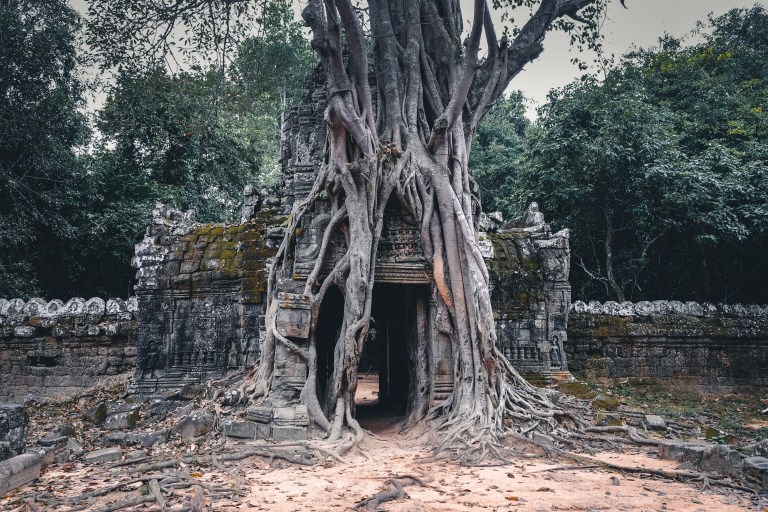
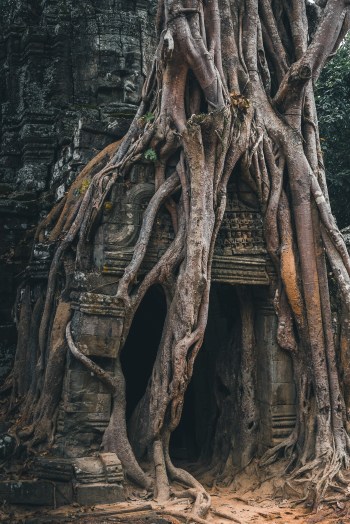
- Ta Som – my favourite door entrance. It looks like from some fantasy movie!
-
Neak Pean – not really interesting, but it is worth visiting as Khmer empire built artificial lake for this temple. Also entrance to it look nice.

-
Preah Khan – it’s a place that you see the most how easily nature can destroy buildings made by humans.

Day 18 (Ayutthaya)
On Tuesday evening we took a flight back to Bangkok. This time we had to use hotel and we decided to go for Trang Hotel. It wasn’t the best hotel I have ever been, but it was quite new, clean and relatively close to the city centre.
Ayuthaya (#114 on the 500 list of ultimate traveller)
On the next morning after coming back to Thailand we decided to go to the former Thai capital – Ayuthaya. This time we didn’t hire any travel agency as it was possible to organise it by ourselves. The best way to get to Ayuthaya is by train. But be careful as tickets are often sold out, so it is good to be on the station at least 20-30 minutes before departure.
Ayuthaya used to be capital of Thailand and also one of the richest cities in the world due to the location on the trade route between India and China. However as the time passed by and sea trade became more popular, lack of access to the sea made Ayuthaya loose its position for the south port – Bangkok. But thanks to this time of greatness, we can now visit many amazing buildings in Ayuthaya.
After arrival to Ayuthaya station we found many tuk tuk drivers willing to take us around all the historical sites, which are scattered all over the city. It is the most convenient way of going around – you hire driver for 4-5 hours and he takes you from one place to another and waits while you are visiting the spot. We didn’t really have other choice as weather during our visit was rainy all the time, so biking or hiring scooter wouldn’t be the nicest thing to do. In better weather I can imagine it may be much nicer to bike than go in Tuk Tuk.
The most important things to see in Ayuthaya are:
- Wat Ratchaburana
- Wat Phra Si Sanphet
- Wat Chaiwattanarm
- Wat Mahathat – here there is the famous head in tree. It’s head of Buddha which fell down and over years tree grown around it. It makes impression, but in reality it’s much smaller than it looks on the photos.

- Wat Yai Chai Mongkol – it’s one of the most interesting spots thanks to the buddha statues which are dressed in yellow fabric and very big reclining Buddha.

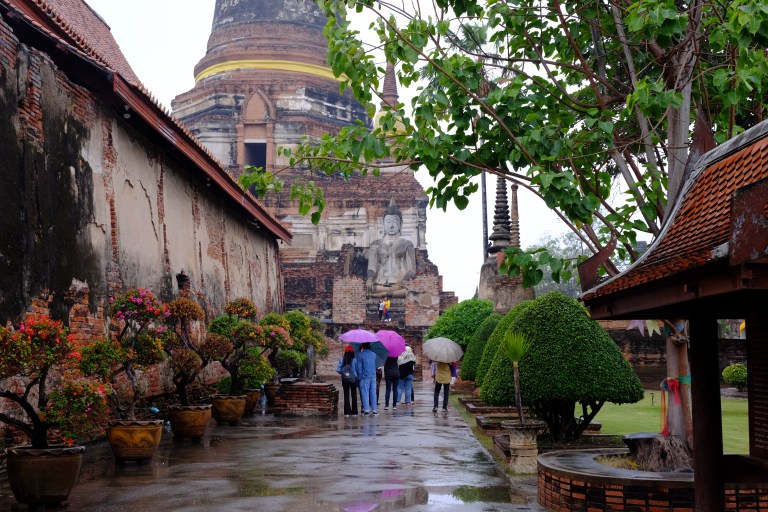
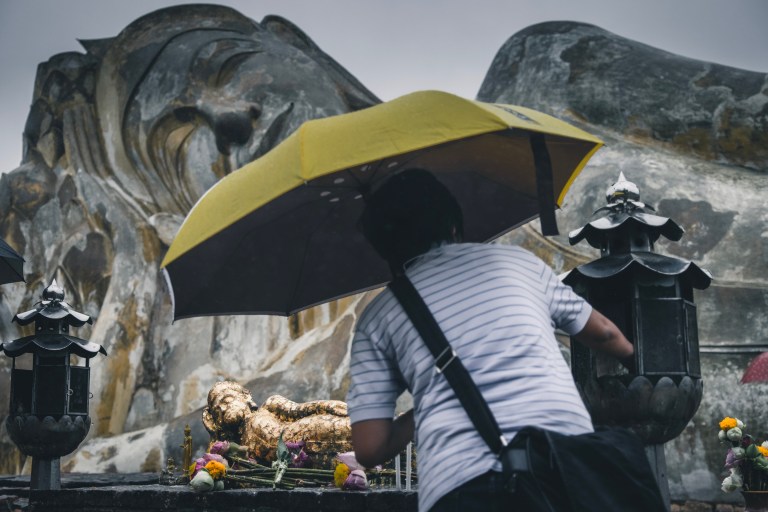
- Wat Lokkayasutharam – huge reclining Buddha next to small one. It looks intriguing together.
-
Bang Pa-In palace – if you have time.
-
Phra Mongkhon Bophit – unfortunately it was closed during our visit.
Day 19 (Elephant Sanctuary)
WFFT Elephant Sanctuary
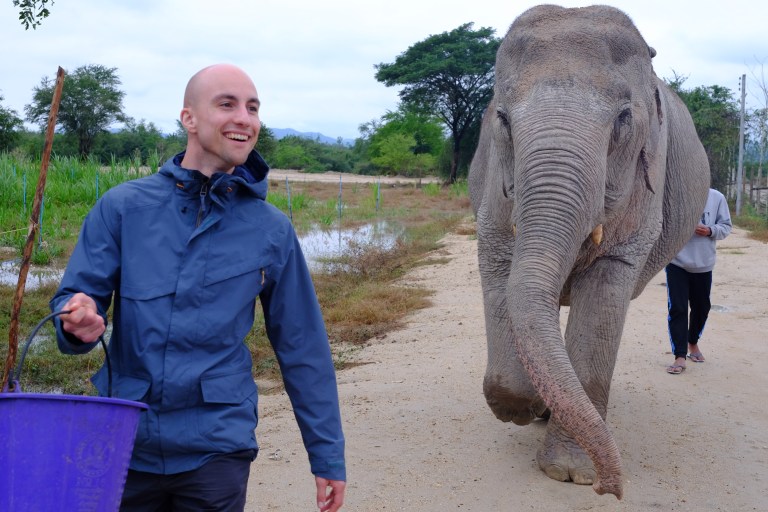
One of the last days of our trip we have decided to use for fulfilling one of my biggest dreams – meeting elephant roaming free. At the beginning I just wanted to book an elephant ride, but after a moment I thought that it cannot be good for these animals to carry humans on their backs. After quick research my suspicious were proved – NEVER EVER RIDE ON THE ELEPHANT. It’s very harmful for their back and the way they are bring to this industry is more than terrible. Instead, I decided to book trip to Elephant Sanctuary. Unfortunately most of the sanctuaries are located on the north of Thailand, which is too far away for one day trip. After some research I found this organisation: https://www.wfft.org/full-day-experience/They had quite good reviews on Internet in regard how they treat animals and they also organize transport from and to Bangkok (with additional fee of course). Based on this I decided to book trip with them and it turned out to be a very good decision. They take care of animals (not only elephants, but also any other animal that they were asked to take care of) in a proper way as far as I was able to judge it and the trips are one of the ways to fund their work.Sanctuary is mainly concentrated on buying old elephants from industries where they are used in harmful way. They always pay amount that is enough for retirement for the elephant owner, but not enough to buy new elephant. Elephants bought from industries are the ones that were broken by the poachers – it is really painful process during which the will of the wild animal is completely broken. These elephants are having their retirement in the sanctuary and people can interact with them freely as they are used to have these kind of interactions. But sometimes it happens that the sanctuary buys young elephant that was not broken yet (for example with broken mother). In such cases they cannot release him to wilderness as he would not know how to survive, but they also have to keep such elephant separately from people – at the end even tough we like elephants, we cannot forget that they are huge wild animals with strong territorial instinct and they can be very dangerous for humans.Whole trip was very interesting and I really enjoyed it, but the highlight was the ability to go for a walk with an elephant. It turned out that they are somewhat similar to dogs – if you have food they will follow you, but if it’s finished, they will quickly loose interest. To be honest it was quite scary experience as elephants are very big animals, but at the same you feel amazing going hand in hand with this smart creature.

Day 20 and 21 (Bangkok)
Last two days of the trip we spent in Bangkok trying to finish main touristic spots, but also to see less known part of the city.
Bike tour
That is something found by Lukasz and I must admit at the beginning I was quite reluctant to book it, but after taking part in it I can’t do anything else than highly recommend it to everyone! This tour is something that will show you different face of Bangkok. It is organised by company established by Dutch guy and they run this trip for quite a long time already (30 years). Their name is Co van Kessel and you can find link here: https://www.covankessel.com/
During the trip you will get bicycle and you will ride around the city. It is sometime very hard to go between people on the crowded streets, but it is possible (I was surprised by that to be honest). You will take the train and go with bikes to the suburbs, where you are going to find canals. Later on I found that whole Bangkok used to have canals, but now they are transformed into normal roads with exception of few districts where you can still see them. The only challenging thing during this trip is that you have ride on the bike roads over the canals and those roads are very narrow and there are no barriers to protect you from falling into canal if you take wrong turn.During the trip you will see many poor houses (but nothing to compare with slums) and the real life of people living in the suburbs. But you will also see many rich houses and beautiful buildings around. You will also experience a lot of different means of transport – train, bike, boat and bus. It’s really worth going there!


Grand palace (#499 on the 500 list of ultimate traveller)
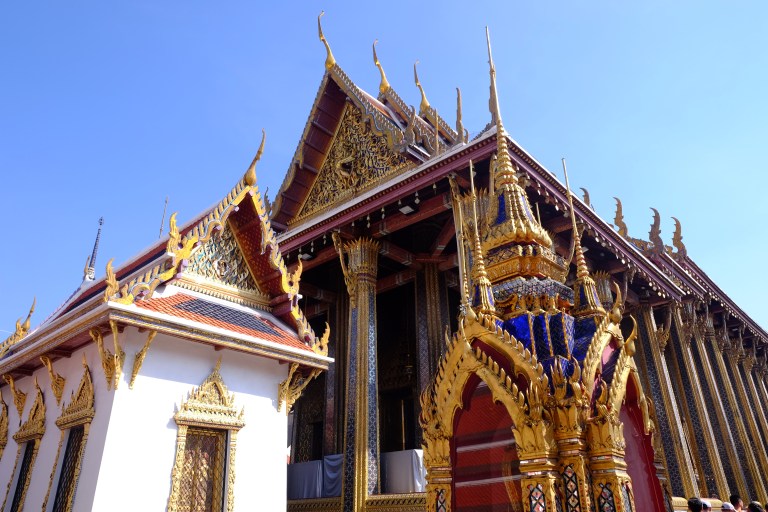
We were supposed to do it on the first visit in Bangkok, but we didn’t manage. Therefore, we decided to try it again during our last day there. Grand palace is a place where King of Thailand has his seat. It’s beautiful building with amazing paintings on the wall. It’s relatively small and it will take not a long time for you to go around. Just be aware of crazy amount of people visiting the site.
Chatuchak Weekend Market (#300 on the 500 list of ultimate traveller)
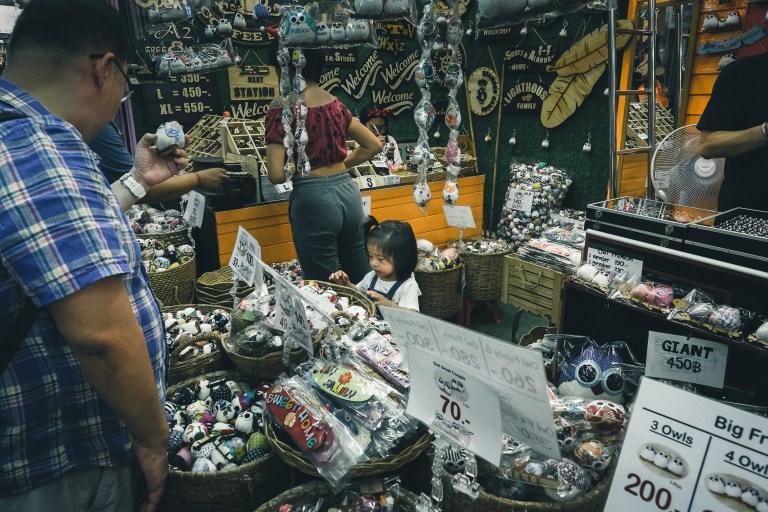
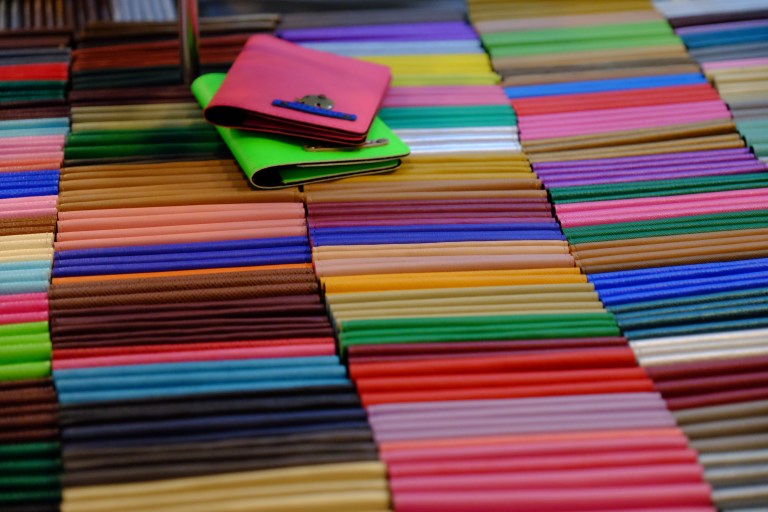
I think you can buy almost anything there. Food, clothes, sweets, leather goods and everything else that you can imagine. It’s open only on weekends and it will take you few hours to go around – it’s so big that there have to be road signs where to go. It’s also a good place to buy souvenirs.
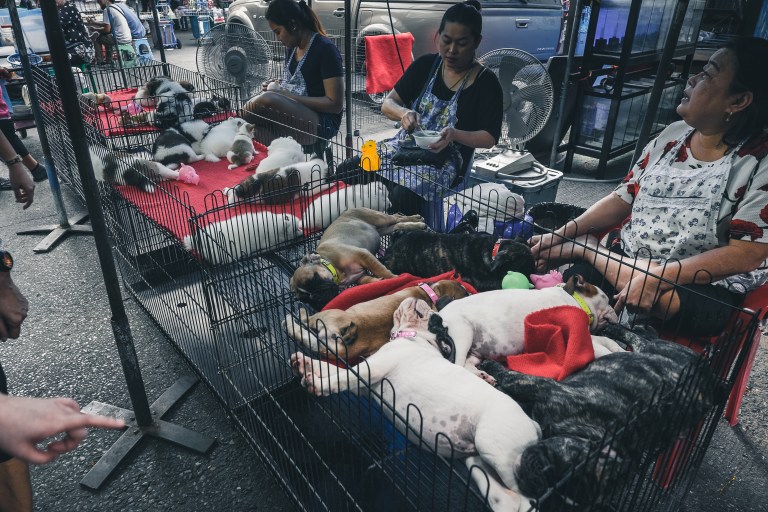
There is also separate section with animals and many of them are very exotic (and held illegally). It is interesting to go there, but it is rather scary to see conditions in which those animals are kept.

Leftovers: Damnoen Saduak Floating Market. It looks amazing on the photos, but many people told us it’s typical tourist trap, so we decided to skip it this time.
Summing up
On Sunday morning we caught our flight and started our journey back. We were tired, but also very happy with all the experiences of previous 3 weeks! Now it’s your turn to visit Southeast Asia!
What left to visit for the next time?
- Laos – there is so much to see around that we didn’t manage to even cross this country. We have decided to leave it for a separate trip.
- Southwest Vietnam – Mekong delta and Phu Quoc islands seems like very interesting places. First one is great to see how rural life looks like in Vietnam and second one is the best place together with Hoi An for resting and “typical” holiday. Phu Quoc has much better weather and even in December it may be a good choice for snorkelling. It’s a little bit pity we didn’t manage to see this region, but we will try again in future!
- North Vietnam – Se pa is well known as an amazing place, but in December it is quite cold there, so we decided to leave it for the other time.
- Cambodia – we saw only Siem Reap and Angkor Wat, but decided not to go to other places in Cambodia (like the capital, Phnom Penh). Rationale for this decision was that Cambodia is the least developed country from the region and as it was our first visit in Asia, we have decided to come back once we will be a little bit more experienced travellers.
- Thailand – we have seen only Bangkok, Ayutthaya and elephant sanctuary in the south. We skipped both North and South as we have decided that both regions deserve separate trip. We plan to combine North with Laos in one trip at some moment in future.
 Ultimate Traveler